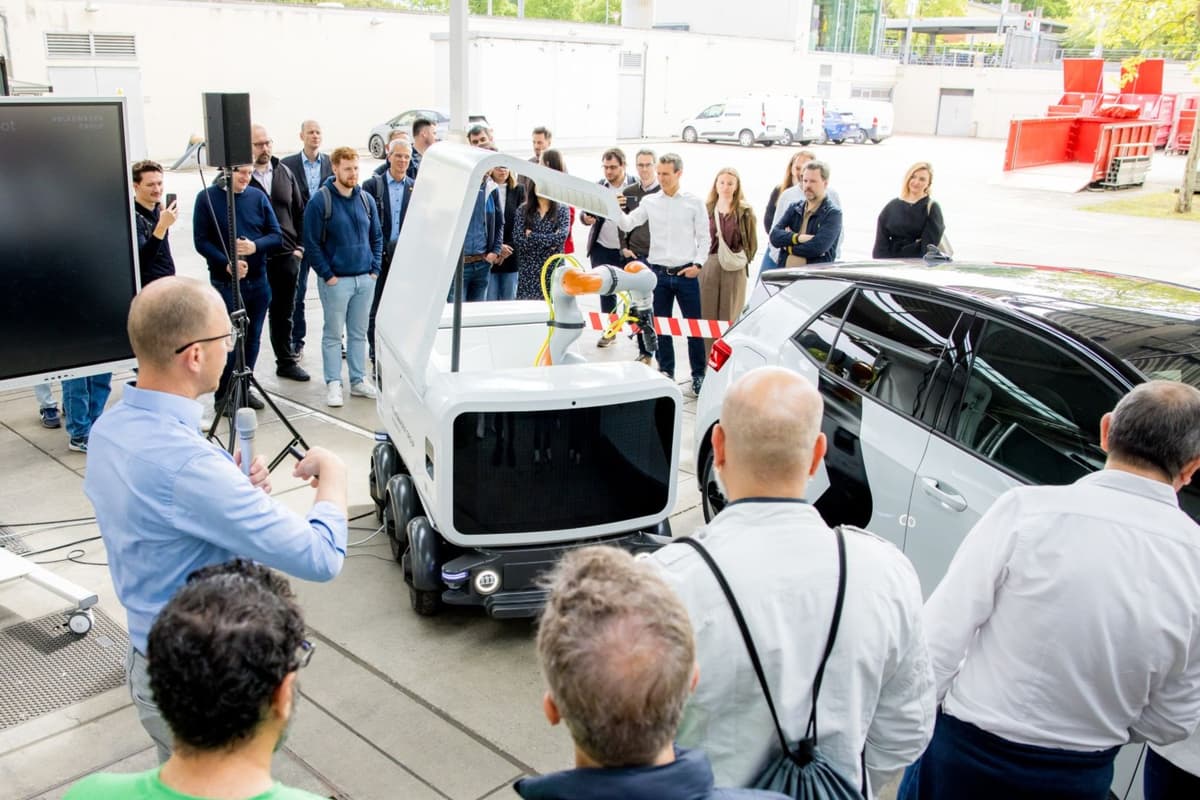
VW Unveils Mobile Charging Robot Prototype in Dresden
Why It Matters
The robot expands charging coverage in dense or infrastructure‑constrained zones, accelerating electric‑vehicle adoption and supporting future autonomous fleets. Its deployment showcases how automakers can leverage robotics to solve real‑world charging gaps, a critical barrier to broader market penetration.
Key Takeaways
- •VW's robot integrates arm, cable, and 55 kWh battery on six wheels
- •Prototype aims to supplement scarce chargers at Dresden Ostra Sports Park
- •Autonomous charging can serve locations lacking fixed infrastructure
- •Two units slated for development and field testing under EU project
- •Collaboration includes Fraunhofer IVI Mobility Data Space for smart‑city integration
Pulse Analysis
Volkswagen’s latest prototype pushes the mobile charging robot concept beyond the laboratory. While Dutch startup Rocsys pioneered fixed‑arm chargers for autonomous logistics, VW’s six‑wheeled unit bundles the arm, power source and cable into a compact vehicle that can navigate to a parked EV and connect the plug without human intervention. Equipped with a 55 kWh battery, the robot can travel short distances within a campus or parking complex, offering a flexible alternative to permanent charging stations that are costly or physically impossible to install.
The rollout at Dresden’s Ostra Sports Park addresses a common bottleneck: insufficient public chargers in high‑traffic venues. By integrating with the Fraunhofer IVI Mobility Data Space, the robot can receive real‑time demand signals, schedule charging sessions, and feed usage data back to city planners. This data‑driven approach aligns with the European Union’s “MOBILITIES for EU” smart‑city agenda, which emphasizes interoperable, user‑centric infrastructure to accelerate electromobility adoption across urban environments.
Looking ahead, the technology could become a cornerstone for autonomous vehicle fleets, robotaxi services, and logistics operators that need on‑demand power without dedicating valuable real estate to static chargers. If the two pilot units prove reliable, manufacturers may scale production, and municipalities could deploy fleets to underserved neighborhoods or event venues. Volkswagen’s investment signals a broader industry shift toward mobile, AI‑guided charging solutions that complement traditional infrastructure, potentially reshaping the economics of electric‑vehicle deployment worldwide.
VW unveils mobile charging robot prototype in Dresden
Comments
Want to join the conversation?
Loading comments...