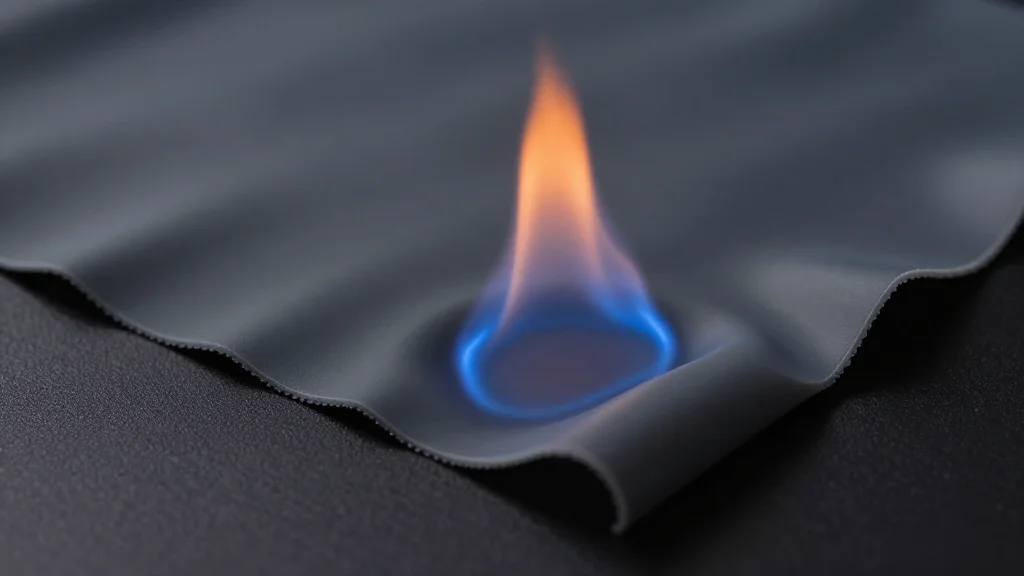
WACKER’s Ceramifying ELASTOSIL Silicone Drops 1,300 °C Thermal Runaway Flame to Below 150 °C in Barrier Tests
Why It Matters
The innovations address two persistent EV‑pack challenges—thermal‑runaway containment and reliable potting—potentially lowering safety‑related redesign costs and simplifying manufacturing logistics. Meeting stringent European containment rules could accelerate adoption across global OEMs.
Key Takeaways
- •ELASTOSIL CM cuts 1,300 °C flame to under 150 °C in tests
- •Ceramic transition occurs above 600 °C, forming heat‑blocking barrier
- •New potting compounds prevent filler settling, simplifying storage and handling
- •Thermal conductivities 1.6 W/m·K and 2.4 W/m·K suit battery power electronics
Pulse Analysis
Thermal runaway remains the most feared failure mode in electric‑vehicle battery packs, prompting regulators and manufacturers to seek robust barrier solutions. WACKER’s ELASTOSIL CM offers a liquid‑applied silicone that vitrifies into a ceramic at temperatures exceeding 600 °C, creating a hard, heat‑impermeable shell. In independent testing, the material reduced radiant heat from a 1,300 °C flame to under 150 °C, comfortably satisfying Europe’s five‑minute containment requirement for passenger evacuation. This performance not only improves safety margins but also enables designers to use lighter, flexible fabrics without sacrificing protection.
Beyond flame shielding, WACKER tackled another pain point: the tendency of filler‑laden potting compounds to settle during long‑term storage. The newly launched ELASTOSIL RT 7616 TC and RT 7624 TC maintain a high viscosity (5,500–8,000 mPa·s) while remaining bubble‑free when dispensed into sub‑millimeter gaps. Their thermal conductivities of 1.6 W/m·K and 2.4 W/m·K are well‑matched to the cooling needs of battery chargers, DC/DC converters and inverter coils. By eliminating the labor‑intensive redispersion step, manufacturers can reduce assembly time and lower the risk of performance variability.
The market implications are significant. As OEMs scale up EV production, any material that simplifies safety compliance and streamlines assembly gains a competitive edge. WACKER’s dual offering could become a standard in next‑generation battery enclosures, especially for European manufacturers facing stricter containment mandates. While cost data remain undisclosed, the reduction in engineering redesigns and labor savings may offset premium pricing. Competitors will likely accelerate their own ceramifying and non‑settling formulations, driving broader innovation in battery‑pack thermal management.
WACKER’s ceramifying ELASTOSIL silicone drops 1,300 °C thermal runaway flame to below 150 °C in barrier tests
Comments
Want to join the conversation?
Loading comments...