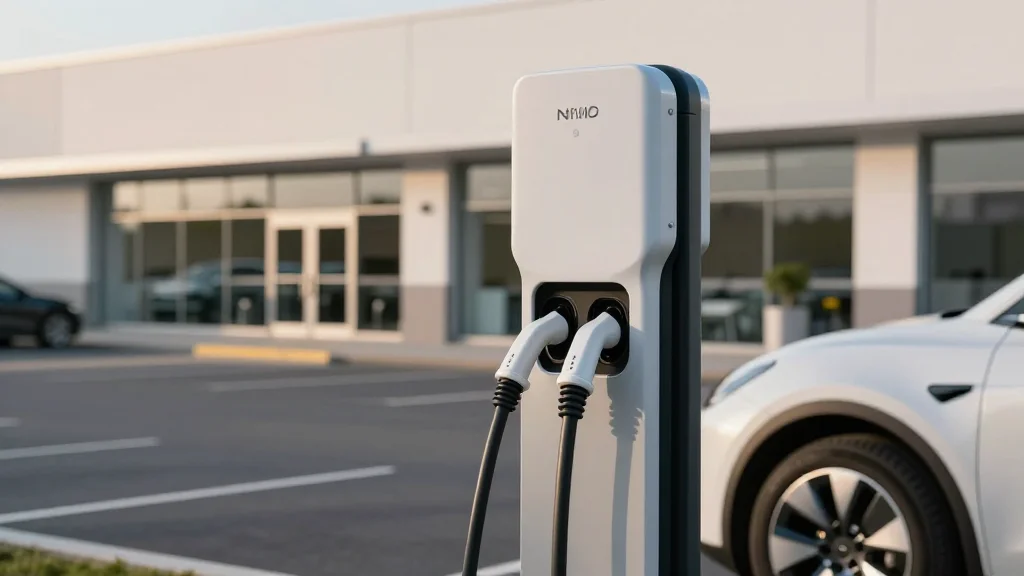
Walmart Is Rolling Out Its In-House DC Fast Charging Network at a Rapid Pace
Companies Mentioned
Why It Matters
By building a proprietary fast‑charging ecosystem, Walmart can control pricing, data and customer flow, positioning itself as a key player in the EV infrastructure race. The move also pressures traditional charging operators to innovate and offers shoppers a convenient, retail‑anchored charging option.
Key Takeaways
- •Walmart operates 31 DC fast‑charging stations with 112 dispensers.
- •All chargers are 400 kW, supporting NACS and CCS1 connectors.
- •Texas hosts half of Walmart’s EV chargers, 15 locations.
- •Walmart aims to install chargers at thousands of stores by 2030.
- •Drivers must use Walmart’s app; average price $0.48/kWh.
Pulse Analysis
Walmart’s decision to develop an in‑house DC fast‑charging network marks a strategic shift for the retailer, moving from a passive host of third‑party chargers to an active infrastructure provider. Leveraging 400‑kilowatt units from Alpitronic and ABB, the company offers both NACS and CCS1 plugs, catering to a broad swath of electric‑vehicle models. This high‑power approach reduces charge times dramatically, making Walmart parking lots viable quick‑stop destinations for drivers on long trips. By integrating the service with its own mobile app, Walmart captures valuable usage data and can fine‑tune pricing, currently averaging $0.48 per kilowatt‑hour.
The rollout’s geography underscores Walmart’s data‑driven site selection. With fifteen stations in Texas, six in Arizona, three in Florida and two in Oklahoma, the retailer concentrates on markets with strong EV adoption and ample real‑estate capacity. The app‑only payment model differentiates Walmart from competitors that rely on credit‑card readers, potentially streamlining transactions but also raising the barrier for occasional users. Nonetheless, the competitive price point and the convenience of charging while shopping could attract a loyal customer segment, especially as EV ownership expands across the United States.
Looking ahead, Walmart’s ambition to install chargers at "thousands" of locations by 2030 could reshape the retail‑charging landscape. Such scale would give the retailer leverage over pricing standards and could pressure public networks to accelerate upgrades or lower rates. Moreover, the extensive footprint offers an opportunity for ancillary services—such as solar‑powered stations or bundled loyalty rewards—enhancing the overall value proposition. As automakers push for broader fast‑charging availability, Walmart’s aggressive expansion positions it as a pivotal partner in the nation’s transition to electric mobility.
Walmart is rolling out its in-house DC fast charging network at a rapid pace
Comments
Want to join the conversation?
Loading comments...