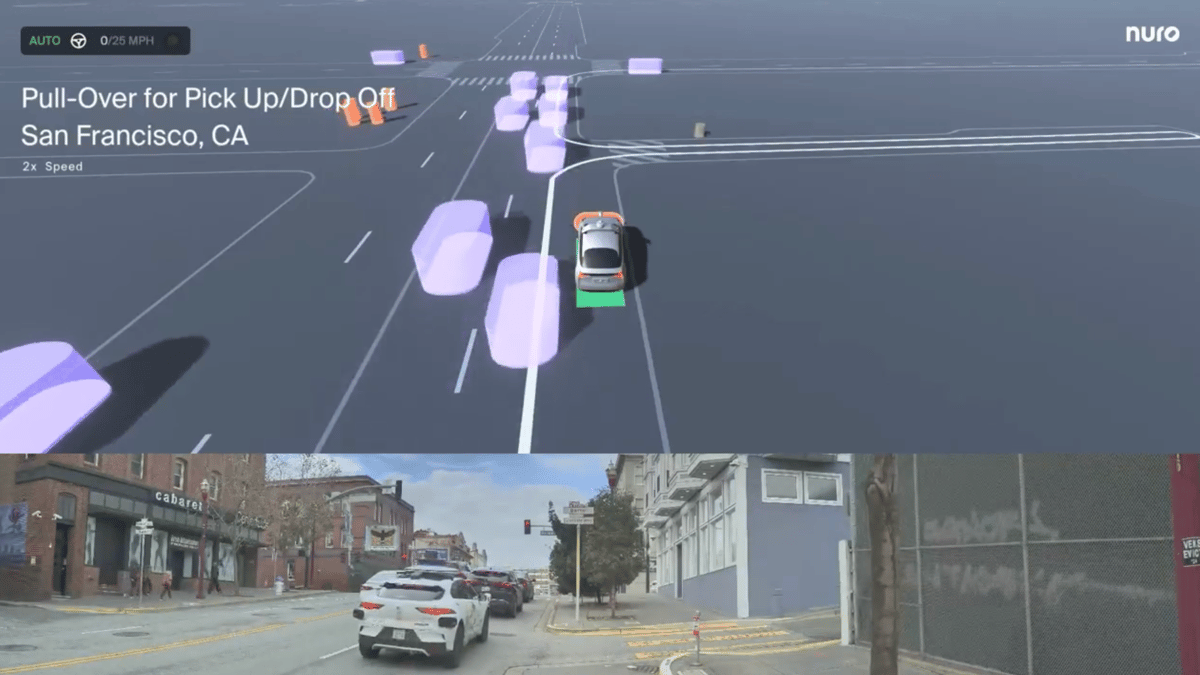
Example of a Pick Up / Drop Off Maneuver by Nuro-Lucid-Uber Test Vehicle
•March 4, 2026
0
Key Takeaways
- •Nuro driver software integrated onto Lucid Gravity platform
- •Uber operates autonomous robotaxi in San Francisco
- •Demonstrated seamless pick‑up/drop‑off (PuDo) maneuver
- •Shows luxury EVs can serve robotaxi fleets
- •Indicates growing regulatory acceptance for driverless services
Summary
A joint demonstration in San Francisco showed a robotaxi built on Lucid’s Gravity electric‑vehicle platform, powered by Nuro’s autonomous driver software and operated by Uber. The vehicle performed a seamless pick‑up/drop‑off (PuDo) maneuver, highlighting the integration of high‑end EV hardware with a proven driverless stack. The test illustrates how modular software can be deployed across different chassis, accelerating autonomous fleet rollout. It also signals growing regulatory tolerance for driverless services in dense urban settings.
Pulse Analysis
The autonomous mobility sector is reaching a tipping point as technology providers, automakers, and ride‑hailing firms converge on a single vehicle platform. Nuro, known for its low‑speed delivery bots, recently extended its proprietary driver stack to the Lucid Gravity electric‑vehicle chassis, a luxury sedan originally built for high‑performance passenger travel. By pairing this hardware with Uber’s on‑demand network, the three companies created a fully driverless robotaxi capable of navigating San Francisco’s dense streets. The demonstration underscores how modular software can be ported across disparate vehicle architectures, accelerating time‑to‑market for autonomous services.
The Lucid Gravity platform offers a 400‑mile range, fast charging, and a spacious interior, attributes that translate into higher utilization rates for robotaxi operators. Nuro’s driver software leverages high‑definition mapping and predictive perception to execute precise pick‑up and drop‑off (PuDo) maneuvers, reducing passenger wait times and improving safety margins. Uber’s role as the service operator provides immediate access to a large rider base and real‑world data streams, allowing rapid iteration of routing algorithms and pricing models. Together, the partnership demonstrates a cost‑effective pathway to scale autonomous fleets without sacrificing vehicle quality.
Regulators in California have gradually opened corridors for driverless testing, and the successful PuDo showcase signals growing confidence in safety standards. As municipalities observe reliable autonomous operations in high‑traffic environments, licensing frameworks are likely to evolve, paving the way for broader commercial deployment. Industry analysts predict that the blend of premium EV hardware, proven autonomous stacks, and established ride‑hailing platforms could compress the timeline for mass‑market robotaxis by several years. Stakeholders—from investors to city planners—should monitor this collaboration as a benchmark for future autonomous mobility solutions.
Comments
Want to join the conversation?