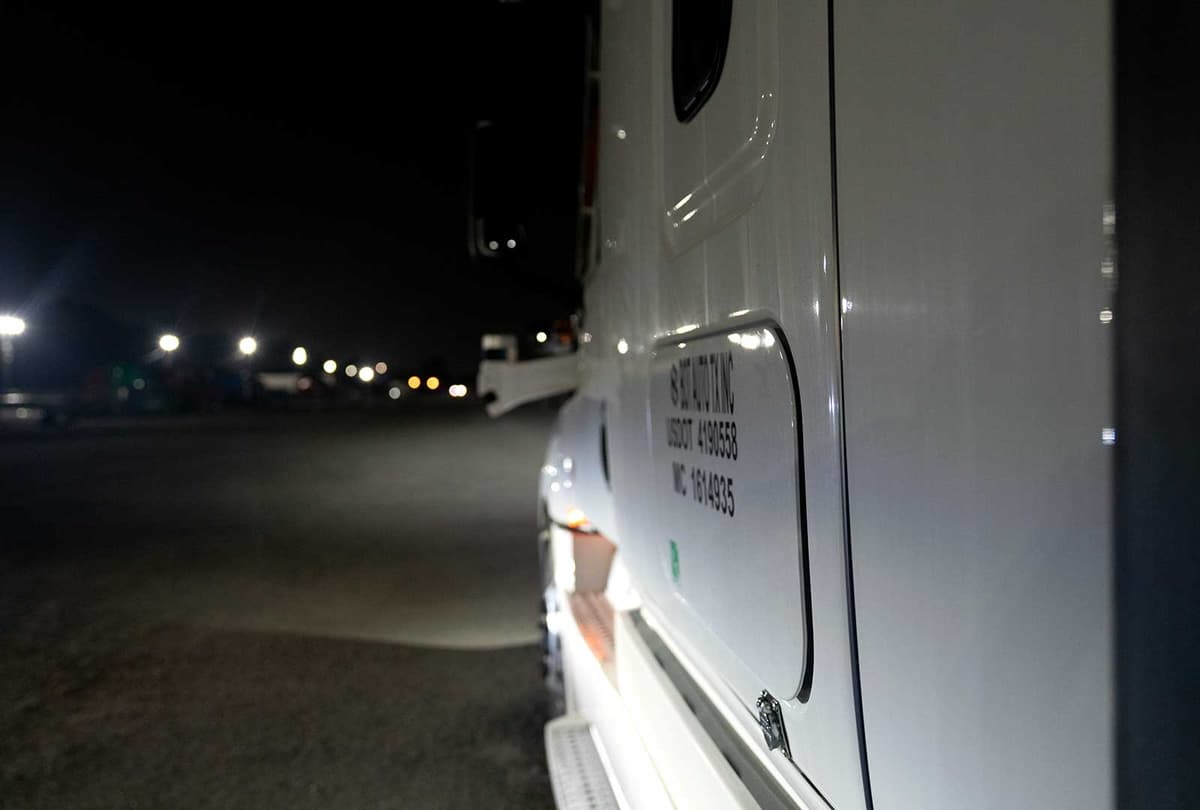
Inside Bot Auto’s Fully Autonomous Commercial Launch Field Report
Key Takeaways
- •Bot Auto completed 231‑mile driverless haul from Houston to Dallas
- •No human in cab, no safety attendant, no remote driver
- •First autonomous carrier to earn revenue on a commercial load
- •Run required enhanced CVSA pre‑trip inspection for automated trucks
- •Truck safely navigated motorcycles and lane closures without intervention
Pulse Analysis
On the night of April 29, 2026, Bot Auto executed a 231‑mile, fully driverless freight run from Riggy’s Truck Parking in northeast Houston to Safe Stop in Hutchins, Texas. The autonomous tractor‑trailer traveled without a driver, safety attendant, or remote operator, marking the first time an autonomous carrier generated revenue on a commercial load without any human in the cab. Competitors such as Waymo and TuSimple have previously demonstrated driverless miles, but they retained on‑board safety personnel. Bot Auto’s human‑less operation therefore sets a new benchmark for over‑the‑road autonomy.
The successful haul was underpinned by a rigorous Commercial Vehicle Safety Alliance (CVSA) enhanced inspection, covering brakes, tires, lights, steering and other critical systems. By meeting the same safety standards enforced on conventional trucks, Bot Auto demonstrates that autonomous vehicles can comply with existing regulatory frameworks while delivering cost‑per‑mile efficiencies. Moreover, the company positions itself as a carrier that owns its assets, distinguishing its business model from service‑provider firms that lease technology to third‑party fleets. This asset ownership could translate into higher margins and greater control over route optimization.
Industry analysts view the launch as a catalyst for broader adoption of fully autonomous freight, especially as shippers seek to reduce labor costs and improve reliability. The ability to operate without a human in the loop opens the door to 24‑hour utilization, lower insurance premiums, and scalable revenue streams. However, challenges remain, including state‑by‑state regulatory acceptance, public perception of driverless trucks, and the need for robust contingency protocols. If Bot Auto can replicate this performance at scale, it may attract significant capital and accelerate the transition toward an autonomy‑driven logistics economy.
Inside Bot Auto’s Fully Autonomous Commercial Launch Field Report
Comments
Want to join the conversation?