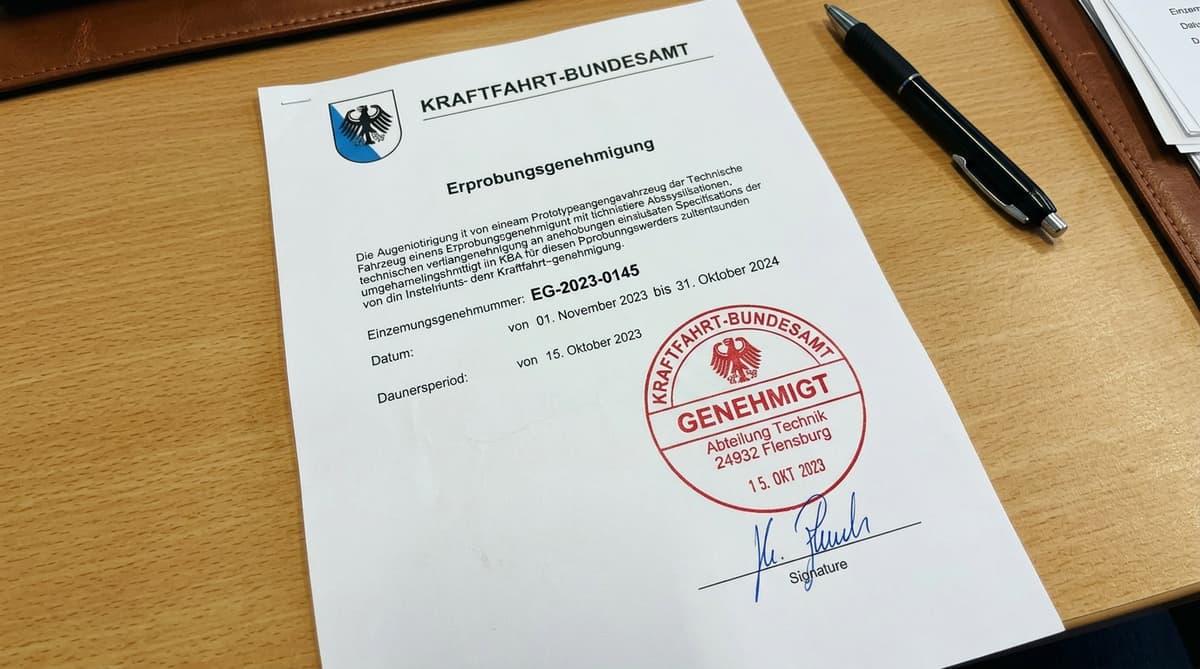
Overview of Test Permits for Autonomous Vehicles in Germany
Key Takeaways
- •Germany issued 236 autonomous vehicle test permits by Feb 2026.
- •Level 3 permits dominate with 153, Level 4 total 83.
- •Volkswagen leads Level 4 with 43 permits, no geographic limits.
- •BMW holds 50 Level 3 permits, most among automakers.
- •Most permits allow nationwide testing (Ja), few are region‑restricted.
Pulse Analysis
Germany’s autonomous‑vehicle testing framework, overseen by the Kraftfahrt‑Bundesamt, has become one of the most transparent in Europe. By early 2026 the authority listed 236 active permits, a figure that dwarfs many other jurisdictions and reflects a deliberate policy to foster innovation while maintaining safety oversight. The split between 153 Level 3 and 83 Level 4 permits illustrates a staged approach: manufacturers first validate advanced driver‑assist functions before moving to full autonomy, mirroring the incremental rollout strategy seen in the United States.
The distribution of permits reveals strategic priorities among German and international players. BMW commands the largest share of Level 3 permits (50), indicating a focus on refining conditional automation across its model range. In the Level 4 arena, Volkswagen dominates with 43 permits, positioning its future robotaxi concepts for extensive road‑testing without geographic caps. Suppliers such as Bosch and ZF appear in both tiers, underscoring the ecosystem’s reliance on component expertise. The prevalence of nationwide testing rights (marked “Ja”) suggests regulators are granting broader operational envelopes, which can accelerate data collection but also raises questions about localized safety management.
When compared with California’s publicly available DMV database, Germany’s permit count is comparable, yet the European market’s regulatory nuances differ. German authorities require explicit geographic limitations for many permits, a practice that can streamline coordination with local municipalities. As automakers gather millions of miles of autonomous data, the competitive pressure will intensify, prompting further harmonization of standards across the Atlantic. Investors and policymakers should watch how these testing activities translate into commercial services, as the next wave of mobility—robotaxis, freight drones, and high‑automation fleets—will likely emerge from the regions that successfully balance rigorous testing with scalable deployment.
Overview of Test Permits for Autonomous Vehicles in Germany
Comments
Want to join the conversation?