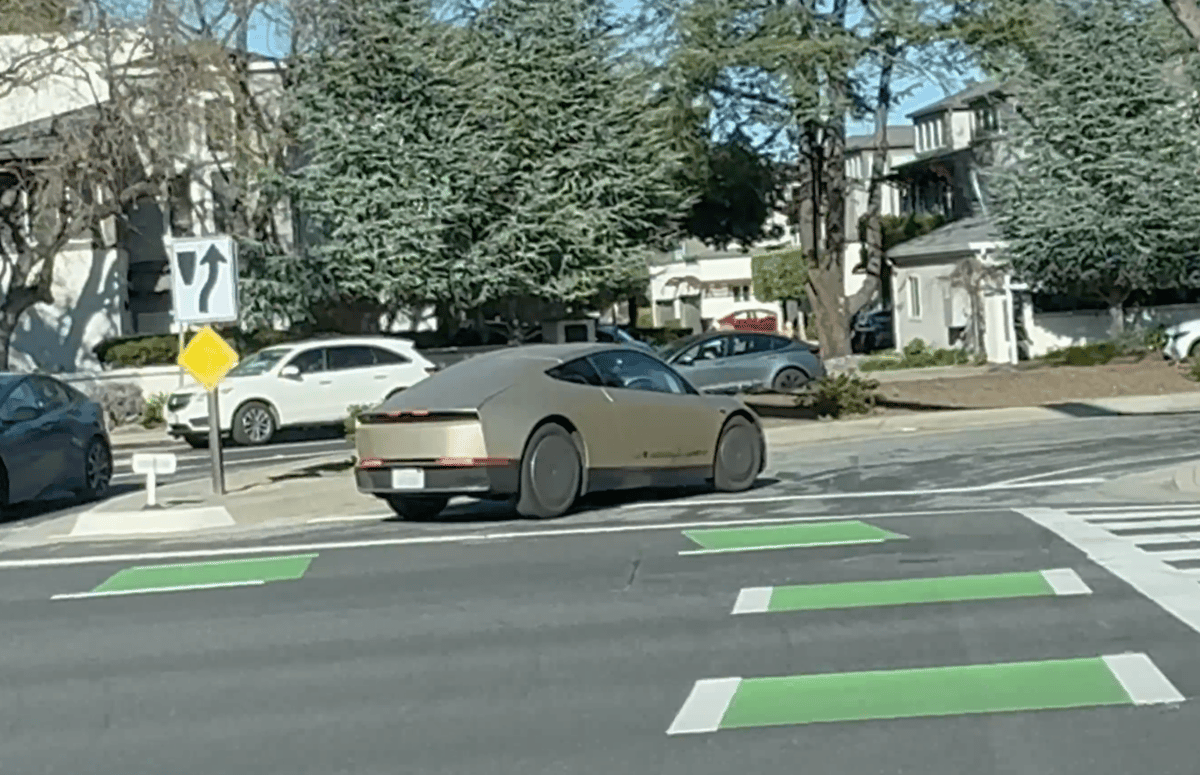
Tesla Cybercab Spotted in Palo Alto
•March 6, 2026
0
Key Takeaways
- •Tesla prototype Cybercab observed on El Camino Real.
- •Test run occurred March 5, 2026, 3:26 pm PST.
- •Indicates Tesla advancing autonomous ride‑hailing trials.
- •Palo Alto chosen for its tech‑friendly regulatory climate.
- •Signals upcoming robotaxi deployment timeline acceleration.
Summary
Tesla’s Cybercab prototype was photographed on El Camino Real in Palo Alto on March 5, 2026 at 3:26 pm PST. The sighting confirms that Tesla is conducting on‑road autonomous ride‑hailing trials in a real‑world, high‑density environment. The vehicle, part of Tesla’s long‑term robotaxi vision, appears to be moving beyond closed‑track testing toward public road validation. Industry observers see the appearance as a milestone toward a future fleet of self‑driving taxis.
Pulse Analysis
Tesla’s Cybercab, a sleek two‑seater electric pod, represents the company’s most ambitious autonomous‑driving effort to date. Built on the Full Self‑Driving (FSD) hardware stack, the prototype integrates advanced sensor fusion, lidar‑free perception, and a purpose‑built interior for on‑demand ride‑hailing. While earlier versions were confined to private test tracks, the March 5 sighting marks a transition to open‑road validation, suggesting that Tesla believes its neural‑network software can now handle the complexities of mixed traffic, pedestrian interactions, and real‑time routing without human oversight.
Palo Alto’s streets have become a de‑facto proving ground for autonomous technologies, thanks to a collaborative relationship between the city, local universities, and a regulatory framework that permits limited pilot programs. By deploying the Cybercab in this environment, Tesla can gather high‑resolution data on vehicle performance under diverse conditions—rush‑hour congestion, varying weather, and dense pedestrian activity—while staying within a jurisdiction that tolerates experimental mobility services. This strategic choice also positions Tesla against rivals such as Waymo, Cruise, and Baidu, all of which are conducting parallel trials in California’s Bay Area, intensifying the race to secure early market share.
If the Palo Alto trial proves successful, Tesla could accelerate its roadmap for a commercial robotaxi fleet, potentially launching a subscription‑based service within the next few years. Such a rollout would leverage Tesla’s existing Supercharger network, reducing infrastructure costs and offering a seamless user experience. Investors are watching closely, as a scalable autonomous ride‑hailing business could unlock recurring revenue streams far beyond vehicle sales, reshaping the company’s valuation metrics and influencing broader industry dynamics. The Cybercab sighting therefore signals not just a technical milestone, but a pivotal step toward a new era of mobility services.
Comments
Want to join the conversation?