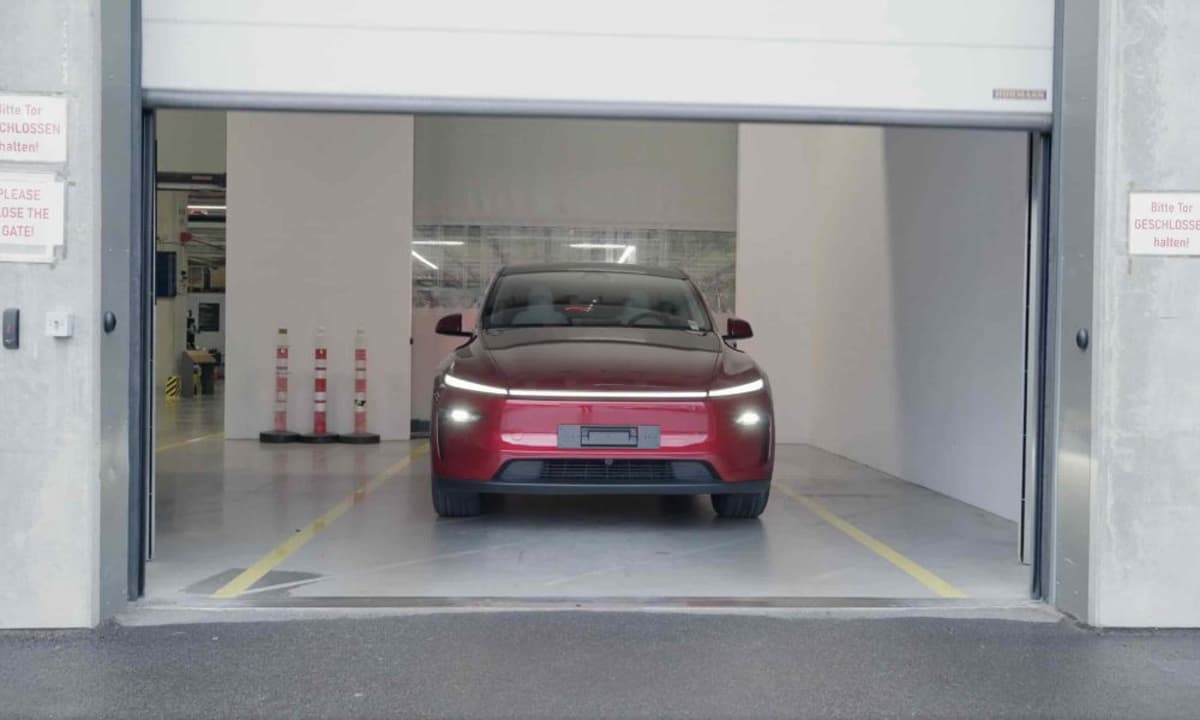
Tesla Gathers 93,000 FSD Miles in a Country Where FSD Isn’t Approved – Here’s How
Key Takeaways
- •Tesla logged 93,000 autonomous miles inside Giga Berlin.
- •Model Y vehicles self‑navigate from assembly line to outbound lot.
- •Internal FSD use bypasses German regulatory restrictions on public roads.
- •Automation cuts labor costs and speeds up vehicle throughput.
- •Real‑world data from factory drives further FSD refinement.
Pulse Analysis
Tesla’s decision to run Full Self‑Driving software on its German production floor reflects a pragmatic workaround to Europe’s cautious regulatory climate. While the European Union still bars unsupervised autonomous driving on public highways, the company has turned its own factory into a controlled proving ground. By confining FSD to private corridors, Tesla avoids legal hurdles while still exposing the system to real‑world physics—acceleration, steering precision, and obstacle avoidance—under repeatable conditions that are hard to replicate on test tracks.
The operational upside is immediate. Each Model Y that exits the line now hops onto its own autopilot, cruising to the staging area without a human operator. This eliminates the manual shuttling of dozens of vehicles per hour, freeing labor for higher‑value tasks and shaving seconds off the cycle time per car. Over a high‑volume plant like Giga Berlin, those seconds translate into thousands of additional vehicles processed daily, reducing bottlenecks in outbound logistics and cutting labor expenses. Moreover, the accumulated 93,000 miles generate a trove of telemetry that feeds directly into Tesla’s neural‑network training pipeline, sharpening perception algorithms faster than isolated road tests could.
Strategically, the internal FSD rollout sends a clear signal to investors and regulators alike: Tesla is already field‑testing its autonomous stack at scale, independent of public approvals. The data‑rich environment accelerates software maturity, positioning the company to roll out consumer‑grade FSD across markets once legal barriers lift. Competitors watching the Berlin factory will note the cost‑efficiency gains and may seek similar closed‑loop deployments. In the broader industry, Tesla’s approach could reshape how automakers validate autonomous technology, emphasizing private‑site pilots as a bridge between lab development and full‑road deployment.
Tesla gathers 93,000 FSD miles in a country where FSD isn’t approved – here’s how
Comments
Want to join the conversation?