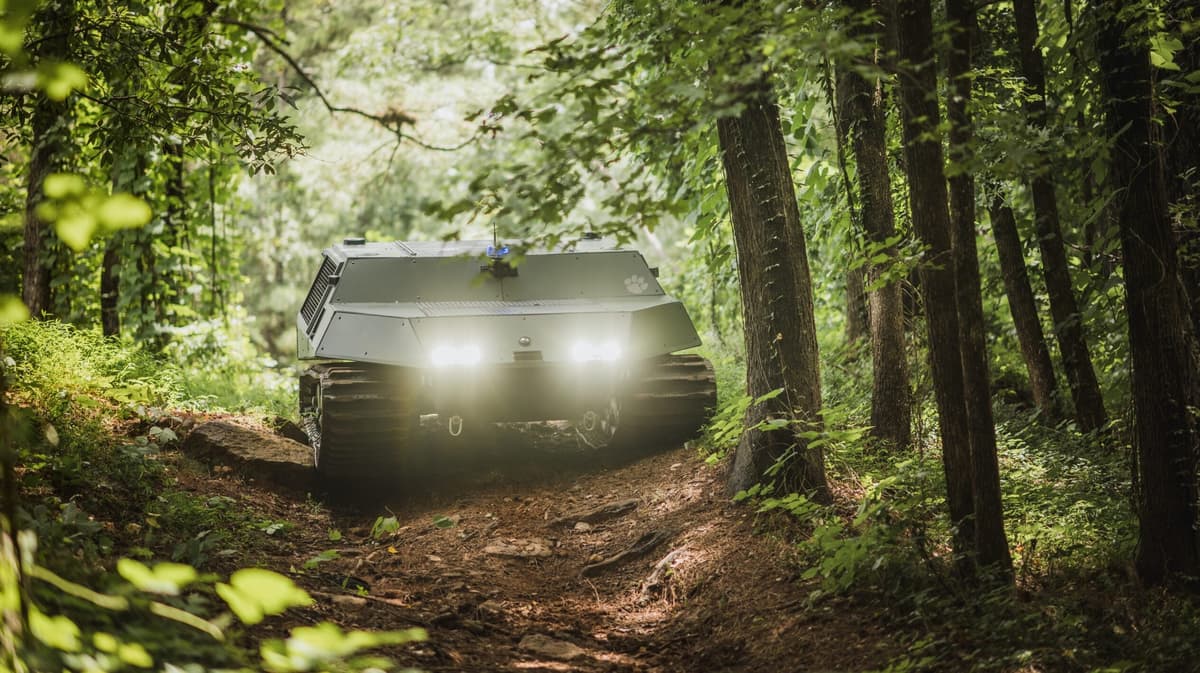
2nd Cavalry Tests Ground Robots for xTech Contest, Struggles with ‘Navigating’ UGV Costs
•March 9, 2026
0
Why It Matters
Affordability and scalability of UGVs will dictate how quickly the Army can field autonomous logistics and combat solutions, influencing future force structure and procurement.
Key Takeaways
- •UGV prices span $500 to $1.3 million.
- •Brigade budgets struggle with high‑cost platforms.
- •Low‑cost breaching robots offer immediate combat benefit.
- •Competition winners may join G‑TEAD marketplace.
- •Army seeks scalable, mission‑tailored, cheap UGVs.
Pulse Analysis
The Army’s push to integrate unmanned ground vehicles reflects a broader shift toward autonomous warfare, but the xTech Edge Strike Ground contest has highlighted a stark pricing dilemma. While some vendors offer disposable platforms for a few hundred dollars, others present sophisticated, sensor‑laden systems that can cost over a million dollars. This disparity places advanced UGVs out of reach for brigade combat teams, forcing commanders to balance capability against budget constraints and prompting a renewed focus on cost‑effective, modular designs.
Operational testing by the 2nd Cavalry has uncovered a range of practical applications, from logistics resupply and medical evacuation to acting as decoys or delivering explosives. Lessons learned alongside Ukrainian partners underscore that many missions tolerate a high attrition rate, making cheap, expendable robots more attractive than expensive, purpose‑built models. The most promising scenario identified is breaching, where a low‑cost, remote‑controlled vehicle can carry a charge to a target, dramatically reducing soldier exposure to hostile fire.
The upcoming selection of up to five winners will not only award $275,000 grants but also grant access to the Global Tactical Edge Acquisition Directorate (G‑TEAD) marketplace, a potential pipeline for rapid fielding and follow‑on contracts. Success in this arena could reshape Army procurement by establishing a scalable, mission‑tailored UGV ecosystem that aligns with budget realities while accelerating the adoption of autonomous capabilities across the force.
2nd Cavalry tests ground robots for xTech contest, struggles with ‘navigating’ UGV costs
0
Comments
Want to join the conversation?
Loading comments...