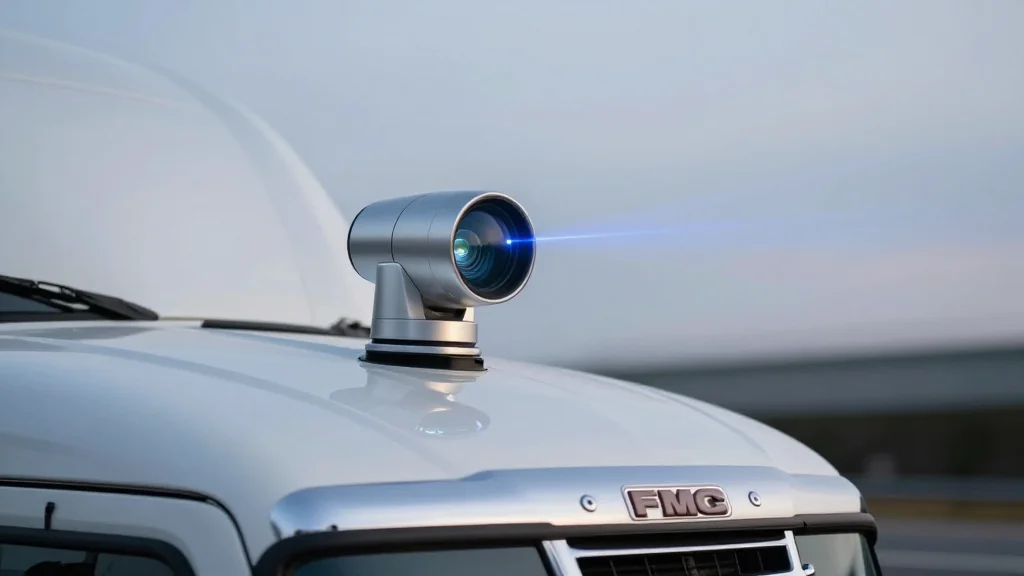
Aeva Delivers Atlas 4D LiDAR C‑samples to Daimler Truck for Autonomous Freightliner Cascadia

Companies Mentioned
Why It Matters
The Atlas C‑sample delivery signals that high‑resolution, long‑range perception is becoming a practical component of production‑grade autonomous trucks. By integrating FMCW LiDAR that measures both distance and velocity, Daimler can simplify its sensor stack, potentially lowering costs and improving reliability—critical factors for fleet operators evaluating total cost of ownership. Moreover, the partnership showcases a pathway for sensor startups to scale through OEM collaborations, accelerating the diffusion of advanced perception technology across the heavy‑duty sector. If the Cascadia equipped with Atlas meets performance and safety benchmarks, it could set a new industry standard for autonomous freight, prompting competitors to adopt similar FMCW solutions or accelerate their own sensor development programs. The move also aligns with regulatory trends that favour integrated, redundant sensing architectures, positioning Daimler and Aeva favorably in upcoming safety assessments.
Key Takeaways
- •Aeva shipped Atlas 4D LiDAR C‑samples to Daimler Truck North America for the autonomous Freightliner Cascadia.
- •Atlas uses FMCW technology to measure distance and instant velocity, with detection up to 500 metres.
- •Daimler plans integration, validation, and optimisation ahead of series production, targeting early 2027 rollout.
- •Quotes from Rakesh Aneja (Daimler) and Soroush Salehian (Aeva) highlight partnership maturity and sensor advantages.
- •The collaboration could influence sensor architecture choices across the autonomous heavy‑truck market.
Pulse Analysis
Aeva’s Atlas delivery to Daimler is more than a component hand‑off; it represents a strategic inflection point for perception technology in autonomous freight. Historically, heavy‑duty autonomy has relied on a heterogeneous sensor suite—LiDAR, radar, cameras—each covering a niche of the perception problem. FMCW LiDAR’s dual‑measurement capability threatens to consolidate that stack, offering a single sensor that can replace both conventional LiDAR and radar. This consolidation could lower bill‑of‑materials costs by an estimated 15‑20%, a margin that matters when scaling to fleets of thousands.
From a market dynamics perspective, Daimler’s early adoption signals confidence in FMCW’s robustness under real‑world conditions, a confidence that may sway other OEMs hesitant to commit to unproven technologies. If the Cascadia’s validation phase confirms the promised range and velocity accuracy, we could see a cascade effect where Tier‑1 suppliers prioritize FMCW development, potentially marginalising legacy solid‑state LiDAR players. The partnership also illustrates a successful model for sensor startups: secure a flagship OEM anchor, prove technology in a high‑visibility program, and leverage that credibility to expand into adjacent vehicle segments.
Looking forward, the key risk remains the timeline for regulatory approval and the ability to demonstrate safety parity with existing multi‑sensor configurations. Should Daimler encounter hurdles in meeting NHTSA or Euro NCAP standards, the perceived advantage of FMCW could be tempered. Nonetheless, the Atlas C‑sample delivery is a concrete step toward de‑risking that path, and the industry will be watching the upcoming validation results closely as a bellwether for the next wave of autonomous truck deployments.
Aeva delivers Atlas 4D LiDAR C‑samples to Daimler Truck for autonomous Freightliner Cascadia
Comments
Want to join the conversation?
Loading comments...