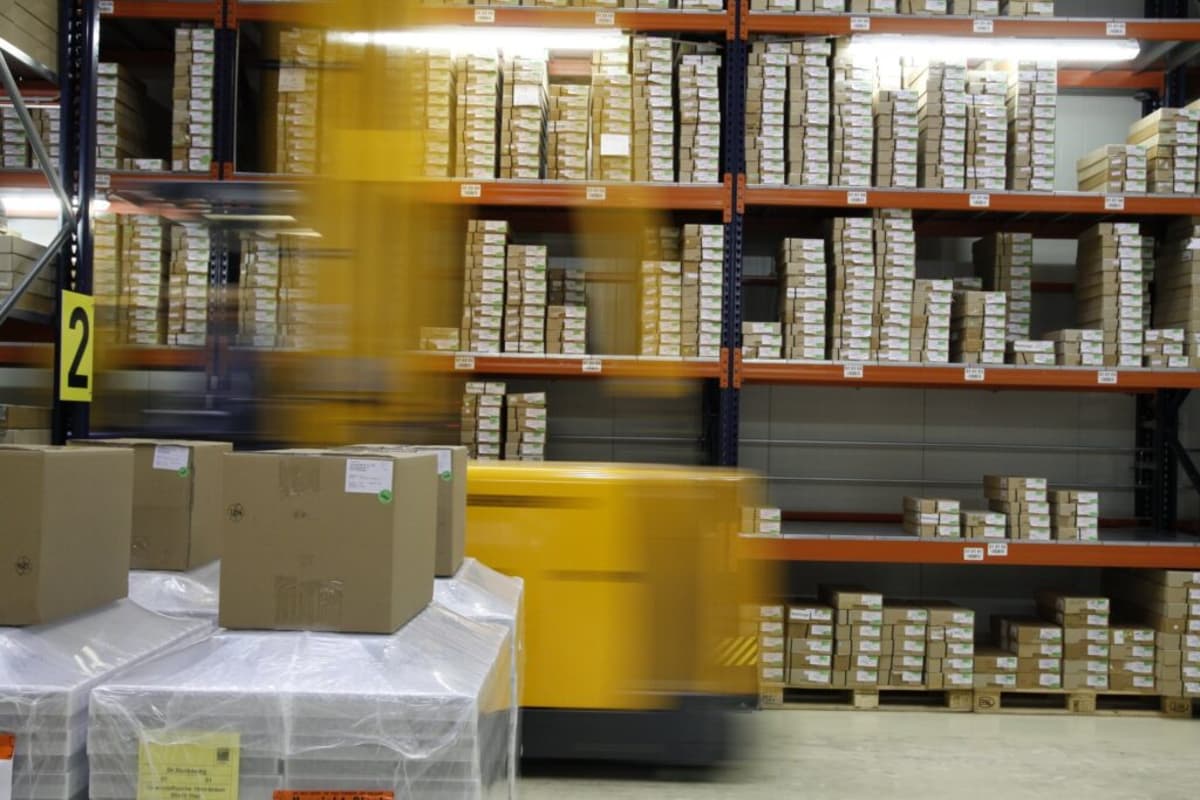
AI System Learns to Keep Warehouse Robot Traffic Running Smoothly
Why It Matters
Even modest efficiency gains in high‑volume fulfillment centers translate into millions of dollars saved, and AI‑guided robot coordination could dramatically reduce costly shutdowns caused by traffic jams or collisions.
Key Takeaways
- •MIT‑Symbotic hybrid AI boosts robot throughput by ~25% in tests.
- •System learns to prioritize robots before congestion forms.
- •Deep reinforcement learning combined with classic planning ensures rapid responses.
- •Approach adapts to varied layouts and robot densities without retraining.
- •Even 2‑3% real‑world throughput rise saves millions for e‑commerce.
Pulse Analysis
The rise of e‑commerce has turned warehouse automation from a novelty into a necessity. Companies now deploy hundreds, sometimes thousands, of mobile robots to retrieve, sort, and ship items around the clock. Managing that traffic is akin to air‑traffic control: a single jam can cascade into hours of downtime, eroding margins in an industry where speed is a competitive moat. Traditional rule‑based systems, crafted by human experts, struggle to keep pace with the dynamic influx of orders and the ever‑changing layout of storage aisles.
MIT’s Laboratory for Information and Decision Systems teamed with Symbotic to fuse deep reinforcement learning—a trial‑and‑error AI technique—with a proven deterministic planner. The neural network watches the warehouse in real time, learns which robots are likely to become bottlenecks, and signals the planner to reroute them preemptively. In simulations modeled on real‑world fulfillment centers, this hybrid approach delivered a 25% increase in packages moved per robot, outperforming both classic heuristics and random search methods. Crucially, the model generalized to unseen layouts and robot densities, indicating that extensive retraining may not be required for each new facility.
If the technology matures to production, the financial upside could be substantial. A 2‑3% uplift in throughput—often cited as the industry’s break‑even point—can shave millions off operating costs for large distributors like Amazon or Walmart. Moreover, the ability to avoid full‑warehouse shutdowns during congestion events adds a layer of operational resilience. Future work will integrate task assignment into the decision loop and test scalability in environments with thousands of robots, paving the way for AI‑first logistics networks that blend learning‑based insight with the reliability of classical optimization.
AI system learns to keep warehouse robot traffic running smoothly
Comments
Want to join the conversation?
Loading comments...