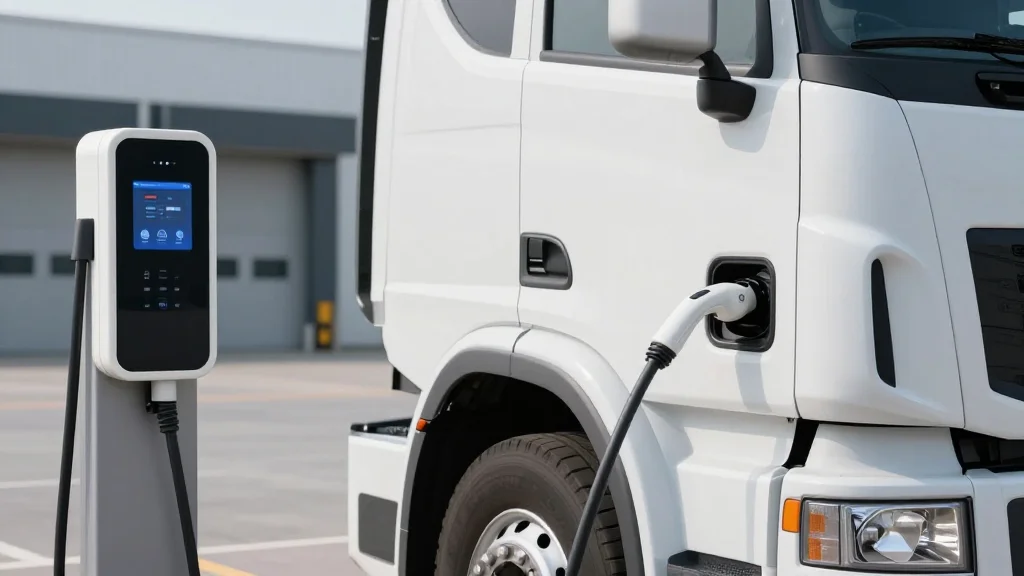
Amazon Deploys 75 Electric Trucks From Einride to Boost Zero‑Emission Freight

Companies Mentioned
Why It Matters
The Amazon‑Einride deal illustrates how leading retailers are using AI‑enhanced electric trucks to address two of the freight industry’s biggest challenges: emissions reduction and operational efficiency. By integrating intelligent routing and charging management into its existing Relay marketplace, Amazon not only cuts its carbon footprint but also creates a data‑rich environment that can accelerate the development of fully autonomous heavy‑duty trucks. For Einride, the partnership provides a high‑visibility validation of its platform ahead of a public listing, potentially unlocking further capital and customer interest. If the pilot delivers on its projected three million electric miles and demonstrates cost savings, it could set a benchmark for other logistics firms, prompting a cascade of similar AI‑electric collaborations. This would hasten the transition from diesel to zero‑emission freight, reshaping supply‑chain economics and regulatory landscapes worldwide.
Key Takeaways
- •Amazon adds 75 electric heavy‑duty trucks from Einride to its Relay network.
- •Trucks are expected to log up to 3 M electric miles annually with zero‑tailpipe emissions.
- •Einride’s Saga AI will manage routing, load assignment and charging for the fleet.
- •Charging infrastructure will be installed at five Amazon locations.
- •The deal expands Amazon’s electrified fleet, which already includes Rivian vans, Mercedes big rigs and Volvo trucks.
Pulse Analysis
Amazon’s freight arm has evolved from a pure logistics provider to a technology platform that can test and scale emerging solutions. The Einride partnership is less about the trucks themselves and more about the data pipeline that AI creates. By feeding real‑world operational data into Saga AI, Amazon can refine predictive models for energy consumption, route optimization and maintenance—capabilities that are essential for any future driverless fleet. This data advantage could become a moat, making Amazon’s logistics network harder for competitors to replicate.
From a market perspective, the collaboration signals that investors are warming to AI‑enabled electric freight as a viable growth sector. Einride’s upcoming public offering will likely be priced on the back of this high‑profile deployment, and the success of the Amazon rollout could set a valuation precedent for other autonomous‑truck startups. Traditional OEMs such as Volvo and Mercedes are already in Amazon’s supply chain, but the AI layer that Einride provides differentiates its offering and may force OEMs to partner with software firms or develop in‑house capabilities.
Looking ahead, the key question is whether the manual‑operation model will transition to full autonomy. If Amazon can demonstrate that AI‑driven electric trucks meet service‑level expectations and cost targets, the logical next step will be to replace drivers with autonomous pods, especially on long‑haul routes where labor costs are highest. The industry is poised at a tipping point: the convergence of zero‑emission mandates, AI optimization, and scale from megacustomers like Amazon could accelerate the shift to driverless freight within the next five years.
Amazon Deploys 75 Electric Trucks from Einride to Boost Zero‑Emission Freight
Comments
Want to join the conversation?
Loading comments...