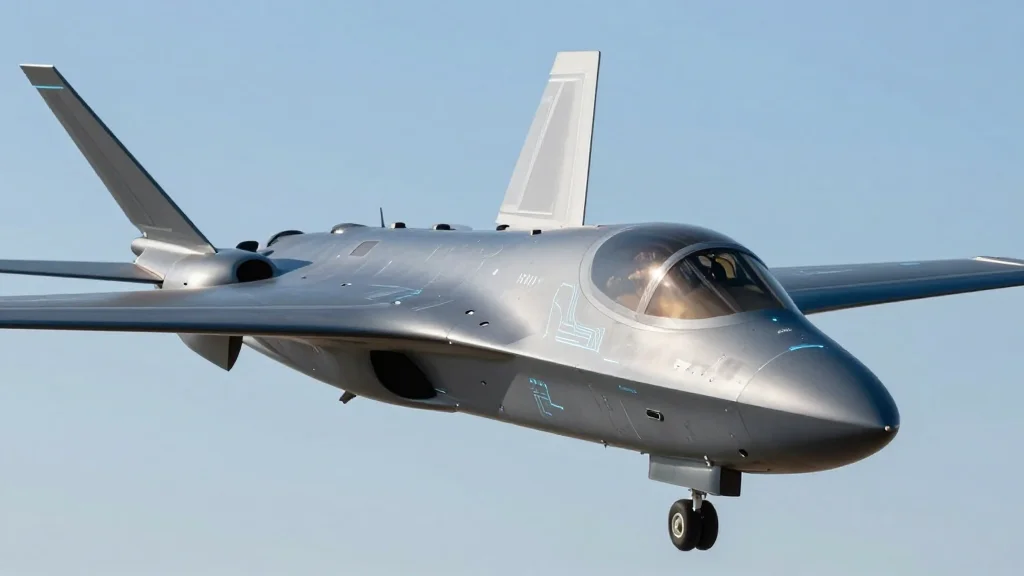
As Europe Rearms, ‘Wingman’ Aircraft Take Center Stage
Companies Mentioned

Why It Matters
Wingman drones could reshape European air power by providing force‑multiplying AI capabilities while reducing dependence on U.S. platforms, accelerating the continent’s push for an autonomous defense industry.
Key Takeaways
- •Airbus, Boeing, Helsing, General Atomics showcase wingman prototypes at Berlin
- •Germany aims to field Boeing MQ-28 by 2029, Airbus model by 2030s
- •Wingman drones provide AI‑driven sensor, jamming, and decision‑aid capabilities
- •Sovereign AI control emphasized as Europe reduces US reliance
- •Lockheed Martin, Anduril to reveal similar systems at Farnborough
Pulse Analysis
The Berlin International Aerospace exhibition has become a proving ground for Europe’s answer to the rapid rise of autonomous combat systems. After the Ukraine war exposed the vulnerability of traditional air platforms to electronic disruption, defense firms are racing to embed AI‑driven drones that can operate in coordinated “loyal wingman” formations. By pairing these unmanned aircraft with legacy fighters, militaries gain extended situational awareness, jam hostile radars, and deliver precision strikes without exposing pilots to the most contested airspace.
European programs are now anchored in a blend of domestic ambition and transatlantic partnership. Germany’s pursuit of Boeing’s MQ‑28 Ghost Bat, slated for operational use by 2029, signals a pragmatic approach—leveraging proven U.S. technology while insisting on sovereign AI control. Airbus’ U760b Ravenstorm, expected in the early 2030s, and Helsing’s electronic‑attack drone illustrate a broader strategy to retain critical software and data ownership. This dual‑track development helps Europe hedge against supply‑chain shocks and aligns with the EU’s goal of a self‑sufficient defense industrial base, especially after the abandonment of the joint FCAS fighter.
Looking ahead, the market for collaborative combat aircraft is set to expand beyond Europe’s borders. Upcoming showcases, such as Britain’s Farnborough airshow, will feature Lockheed Martin and Anduril’s AI‑drone concepts, intensifying competition for contracts with NATO allies. If the promised timelines hold, wingman platforms could become a staple of future air fleets, driving new procurement cycles, export opportunities, and a shift toward network‑centric warfare where unmanned assets act as force multipliers for manned jets. The success of these programs will hinge on seamless AI integration, secure data links, and the political will to fund next‑generation autonomous capabilities.
As Europe rearms, ‘wingman’ aircraft take center stage
Comments
Want to join the conversation?
Loading comments...