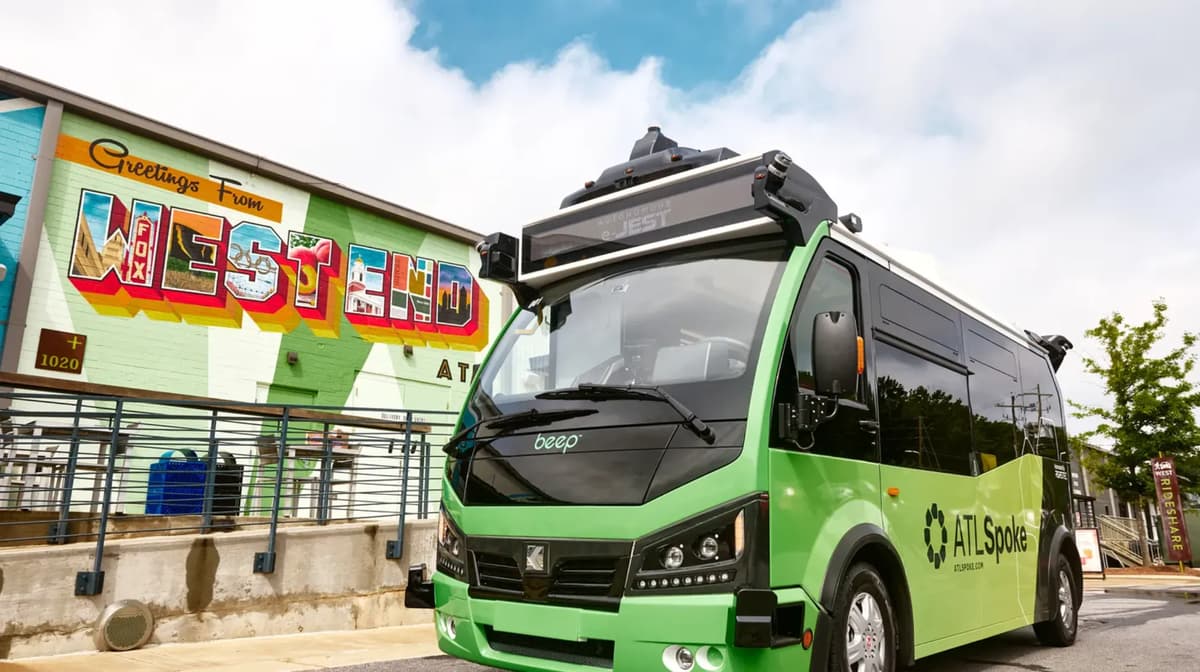
Atlanta Starts First Autonomous Public Transit Pilot
Why It Matters
If successful, the pilot could accelerate nationwide adoption of autonomous buses, offering cities a scalable, low‑cost solution for improving transit accessibility while reducing operational expenses.
Key Takeaways
- •ATL Spoke launches with four autonomous Karsan e‑JEST buses
- •12‑month pilot funded by Georgia Transportation Efficiency Authority
- •Beep’s AutonomOS platform coordinates fleet via single‑pane interface
- •Level 4 Flowride.AI enables driverless operation in mixed traffic
- •Pilot aims to improve first‑mile/last‑mile connectivity with MARTA
Pulse Analysis
Cities across the United States are experimenting with driverless shuttles to fill gaps left by traditional mass transit, and Atlanta’s ATL Spoke pilot marks a notable milestone. Launched by mobility platform Beep in collaboration with the Atlanta Beltline, MARTA, Karsan, and ADASTec, the service runs four electric e‑JEST buses on a dedicated route along the Beltline corridor. Backed by a 12‑month trial funded by the Georgia Transportation Efficiency Authority, the initiative also aligns with Atlanta’s broader climate goals by replacing diesel routes with zero‑emission vehicles.
AI Level 4 autonomous driving stack, allowing the fleet to operate without an onboard driver while remaining under centralized human oversight. Karsan’s e‑JEST chassis meets federal safety and accessibility standards, and its electric powertrain aligns with municipal emissions goals. AutonomOS provides a “single pane of glass” for fleet orchestration, real‑time monitoring, and seamless integration with MARTA’s schedule, demonstrating how legacy transit agencies can adopt driverless technology without overhauling existing infrastructure. Real‑time data feeds also enable dynamic routing adjustments based on traffic conditions.
From a business perspective, the pilot offers a proof point for cost‑effective, on‑demand neighborhood mobility that could reduce per‑passenger expenses compared with conventional bus service. Successful scalability would open revenue streams for technology providers and create a template for other municipalities seeking to modernize their transit networks. Moreover, the data gathered on safety performance, passenger experience, and operational metrics will inform regulators and policymakers as they craft standards for autonomous public transportation, potentially accelerating broader market rollout.
Atlanta starts first autonomous public transit pilot
Comments
Want to join the conversation?
Loading comments...