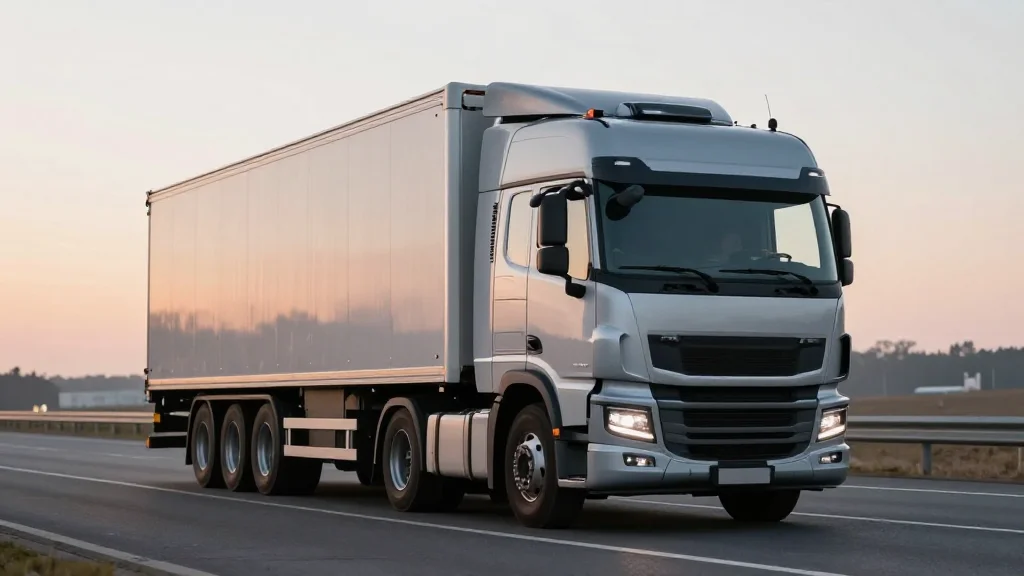
Aurora, Berkshire Hathaway's McLane Achieve 100% On‑Time Delivery in Autonomous Truck Pilot

Companies Mentioned
Why It Matters
A flawless on‑time record directly addresses the logistics industry’s chief concern: reliability. Shippers have historically been reluctant to replace human drivers with autonomous systems because any delay can cascade through supply chains, inflating costs and eroding customer trust. Demonstrating that driverless trucks can meet, and even exceed, traditional service‑level expectations could unlock a wave of contracts from retailers, manufacturers, and third‑party logistics providers seeking to cut labor costs and improve asset utilization. Beyond operational confidence, the pilot’s success may influence policy. Regulators have been cautious, often requiring extensive safety data before granting broader operating permissions. A publicly reported 100% on‑time metric, coupled with an implied safety record, offers a data point that could ease the path to more permissive legislation, especially if the companies release detailed incident reports in future updates.
Key Takeaways
- •Aurora Innovation and Berkshire Hathaway’s McLane report 100% on‑time performance for their autonomous trucking pilot.
- •The pilot involved real‑world freight moves; specific numbers on trucks, miles, or routes were not disclosed.
- •Result sets a new benchmark compared with rivals whose pilots have reported on‑time rates in the high‑80s percentile.
- •Berkshire Hathaway’s participation adds financial credibility and may encourage further investment in driverless freight.
- •Companies plan to expand the pilot to additional routes and publish more detailed performance data in the coming months.
Pulse Analysis
The Aurora‑McLane announcement arrives at a pivotal moment for autonomous freight. After years of high‑profile pilots that stumbled on reliability or regulatory setbacks, the industry has been searching for a clear proof point that driverless trucks can meet the exacting service‑level agreements that shippers demand. A 100% on‑time metric, even without granular data, serves as a powerful narrative device that can shift perception from "experimental" to "commercially viable."
Historically, autonomous trucking has been hampered by a triad of challenges: sensor reliability in adverse weather, the need for human fallback drivers, and a patchwork of state‑by‑state regulations. Aurora’s software stack, which emphasizes redundancy and predictive planning, combined with McLane’s deep logistics expertise, appears to have mitigated many of these friction points. If the upcoming data releases confirm that the pilot’s success scales, we could see a cascade of new contracts, especially from sectors like grocery and consumer goods where just‑in‑time delivery is paramount.
From an investment standpoint, the pilot’s success could re‑price the risk premium attached to autonomous trucking startups. Venture capital and corporate investors have poured roughly $10 billion into the space, but many funds remain cautious, awaiting clear unit‑economics. A demonstrable reliability metric reduces the perceived operational risk, potentially unlocking a new round of financing and accelerating consolidation as larger logistics firms look to acquire proven technology platforms. In short, Aurora and McLane have not just hit a performance target; they have set a new yardstick that could accelerate the transition from pilot to profit for the autonomous freight industry.
Aurora, Berkshire Hathaway's McLane Achieve 100% On‑Time Delivery in Autonomous Truck Pilot
Comments
Want to join the conversation?
Loading comments...