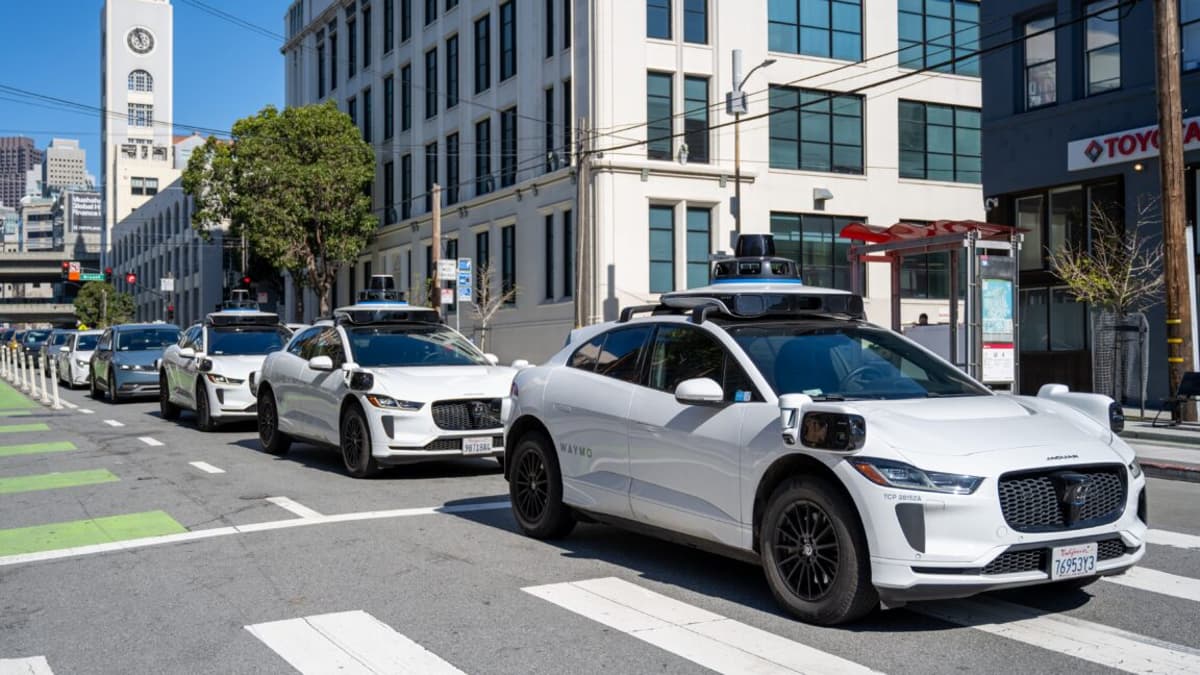
Autonomous Vehicles Were Supposed to Cut Traffic—What if They Don't?
Companies Mentioned
Why It Matters
High deadhead rates erode the traffic‑relief narrative for autonomous fleets, shaping regulator and investor expectations about the sector’s true urban impact.
Key Takeaways
- •Waymo’s empty‑vehicle miles account for about 44% of total travel
- •Passenger‑occupied miles grew to 56% before plateauing
- •Ride‑hailing services show similar 40% deadhead mileage
- •Deadheading limits robotaxis’ ability to cut congestion
- •Public‑transit investment dwarfs autonomous‑vehicle funding
Pulse Analysis
The hype surrounding autonomous vehicles has long hinged on two promises: safer streets and smoother traffic flow. Waymo’s rollout, backed by roughly $16 billion in fresh capital and part of a broader $100 billion industry infusion, initially seemed poised to fulfill both. Early safety data indeed show fewer crashes per mile than human drivers, bolstering the case for robotaxis as a public‑good. Yet the traffic‑reduction claim rests on the assumption that driverless cars will operate at higher occupancy and lower idle time than conventional ride‑hailing.
Recent MIT analyses reveal a sobering reality: nearly half of Waymo’s miles are deadhead trips—vehicles cruising without passengers either awaiting assignments or repositioning for pickups. This mirrors the 40% deadhead rate documented for Uber and Lyft, suggesting that autonomous fleets inherit the same inefficiencies that have plagued on‑demand services. The net effect is a modest, if any, reduction in vehicle‑miles‑travelled, undermining the congestion‑relief narrative and raising questions about the environmental payoff of large‑scale robotaxi deployments.
Policymakers and investors must therefore look beyond the allure of driverless cars and consider complementary solutions. Robust public‑transport expansion, which can move many more riders per vehicle, offers a proven path to decongesting urban corridors, albeit at a steep price—$268 billion over five years for U.S. systems and an estimated $4.6 trillion for a world‑class network. As autonomous technology matures, its role may be better framed as a feeder to mass transit rather than a standalone traffic‑buster, aligning capital flows with realistic mobility outcomes.
Autonomous vehicles were supposed to cut traffic—what if they don't?
Comments
Want to join the conversation?
Loading comments...