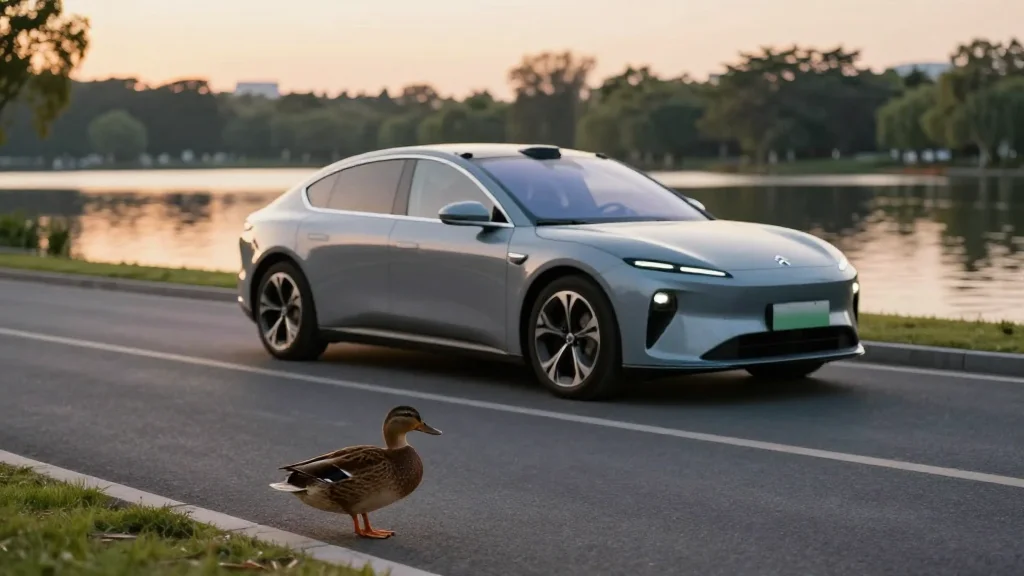
Avride Self-Driving Car Kills Mother Duck in Austin, Sparking Safety Outcry

Why It Matters
The Avride duck incident spotlights the practical limits of current perception systems in autonomous vehicles, especially in environments where small, non‑vehicular obstacles are common. As AVs move from controlled test tracks to public streets, the ability to detect and react to wildlife becomes a litmus test for safety and public acceptance. Moreover, the episode raises liability questions: if an autonomous car fails to stop for a stop sign and causes harm, who is legally responsible—the manufacturer, the software provider, or the city that approved the test? These uncertainties could shape future regulations, insurance models, and the pace at which AV fleets expand. Public sentiment is another critical factor. Repeated animal‑related crashes erode trust, making it harder for companies to secure community support for testing zones. In a market where consumer confidence directly impacts deployment strategies, incidents like this can delay rollouts, increase compliance costs, and force firms to prioritize safety upgrades over rapid scaling.
Key Takeaways
- •Avride autonomous vehicle struck and killed a mother duck in Austin’s Mueller Lake Park.
- •Resident Lewis Pierce reported the car did not stop and ran a stop sign before the collision.
- •Avride’s head of communications Yulia Shveyko said the vehicle stopped at all stop signs, but the company will review data and suspend testing near the park.
- •The incident adds to a series of AV‑related animal fatalities, including a Waymo robotaxi cat death in San Francisco.
- •Regulators may tighten testing permits and liability frameworks as public concern over AV safety grows.
Pulse Analysis
The duck‑killing episode is a microcosm of the broader safety challenges facing autonomous vehicle firms. While most AV debates focus on passenger safety and high‑speed collisions, low‑speed interactions with wildlife expose gaps in sensor resolution and classification algorithms. Companies have historically optimized perception for larger, predictable objects—cars, pedestrians, cyclists—leaving smaller, erratic targets like ducks under‑detected. Upgrading to higher‑density lidar or integrating thermal imaging could mitigate such risks, but the cost and integration timeline may strain startups like Avride, which already operate on limited capital.
From a market perspective, the incident could accelerate a shift toward more conservative testing strategies. Cities like Austin, which have become AV hotbeds, may impose stricter geographic restrictions, forcing firms to concentrate on well‑mapped corridors and avoid parks or wildlife zones. This could benefit larger players with extensive mapping resources, such as Waymo, while smaller competitors might struggle to meet heightened safety standards without additional funding.
Legally, the case underscores the need for clearer liability statutes. If an autonomous system fails to obey a stop sign, the fault may lie in software design, sensor failure, or inadequate data labeling. Legislators will likely look to this incident when drafting regulations that assign responsibility, potentially mandating real‑time data logging and third‑party audits. For investors, the takeaway is that safety incidents—no matter how seemingly minor—can trigger regulatory scrutiny, brand damage, and costly redesigns, all of which affect valuation and funding prospects.
In the short term, Avride’s decision to pause testing near Mueller Lake Park is a prudent damage‑control move, but the company must translate the investigation’s findings into tangible safety improvements. Transparent communication, community engagement, and demonstrable upgrades to perception stacks will be essential to rebuild trust and secure future testing permits. The broader AV industry should view this as a warning: wildlife safety is not a peripheral concern but a core component of public acceptance and regulatory compliance.
Avride Self-Driving Car Kills Mother Duck in Austin, Sparking Safety Outcry
Comments
Want to join the conversation?
Loading comments...