Beijing Auto Show 2026 Unveils Dozens of Autonomous Vehicle Concepts and Pilots

Companies Mentioned
Why It Matters
The flood of autonomous prototypes at Beijing’s premier auto exhibition demonstrates that China has moved from experimental pilots to commercial‑ready, AI‑first vehicle architectures. This shift threatens to reshape global supply chains, as Chinese firms now offer end‑to‑end solutions—chips, sensors, software and vehicle platforms—that can be bundled for foreign OEMs seeking rapid entry into autonomous markets. Moreover, the emergence of map‑free logistics robots lowers barriers for widespread deployment, potentially accelerating the replacement of human drivers in urban freight and reshaping labor dynamics worldwide. For investors and policymakers, the show underscores two critical risks and opportunities. First, the rapid commercialization of Level‑4 systems could compress the timeline for regulatory approval, prompting governments to update safety standards at an unprecedented speed. Second, the competitive advantage of Chinese firms in integrating AI, lidar and electric powertrains may force legacy automakers to either partner with Chinese tech providers or risk falling behind in the autonomous race. The outcomes will influence everything from component pricing to cross‑border trade policies in the coming decade.
Key Takeaways
- •Beijing Auto Show displayed 1,451 vehicles, including 181 world premieres, many featuring Level‑4 autonomy.
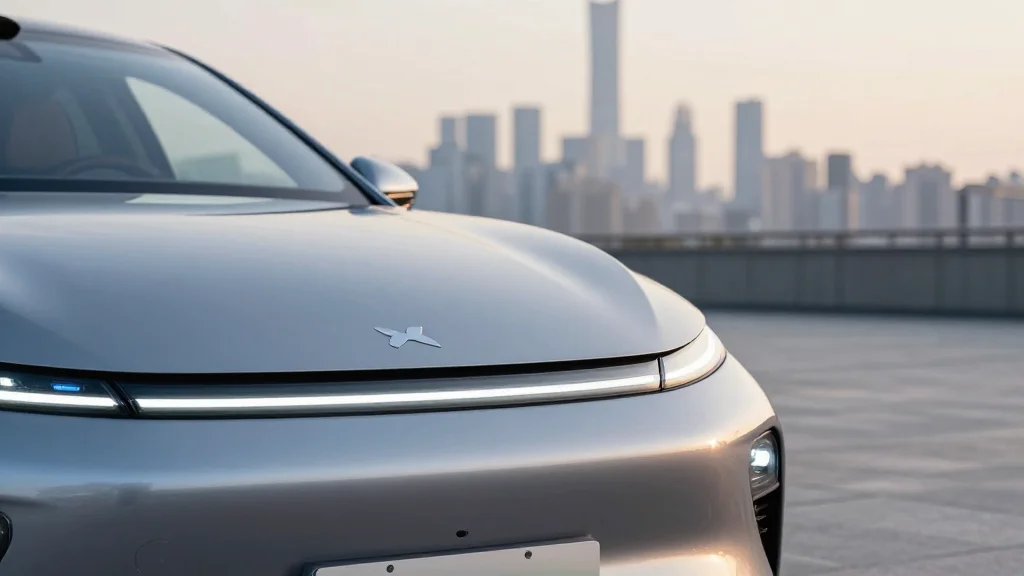
- •XPeng GX SUV delivers ~3,000 TOPS computing power, 12× a single Nvidia Orin, and is priced at 399,800 yuan (≈$58,000).
- •Geely’s EVA Cab robotaxi, a driver‑less minivan, targets mass production in 2027 for CaoCao Mobility ride‑hailing.
- •MINIEYE’s Bamboo Robovan T5 Pro offers map‑less L4 logistics capability, already operating in 18 Chinese cities.
- •Foreign OEMs such as Volkswagen and Toyota are integrating Chinese AI chips and powertrains, blurring domestic‑foreign tech lines.
Pulse Analysis
China’s autonomous vehicle surge is less a flash‑in‑the‑pan exhibition and more a structural realignment of the global auto industry. By embedding AI at the design stage—as XPeng did with its GX SUV—Chinese manufacturers are sidestepping the retrofit model that has hampered many Western efforts. This approach yields tighter integration between sensor suites, compute hardware and software stacks, delivering the performance margins needed for true Level‑4 operation. The result is a new class of "AI‑native" vehicles that can be marketed not just as cars but as platforms, a trend already evident in Volkswagen’s decision to license XPeng’s chip technology.
The logistics segment illustrates another strategic advantage: China’s dense network of component suppliers and government‑backed R&D funds enables rapid iteration cycles. Companies like MINIEYE and QCRAFT can move from prototype to city‑wide pilot within months, a speed that Western firms, constrained by fragmented supply chains and stricter safety regulations, struggle to match. The map‑free paradigm further democratizes deployment, allowing autonomous fleets to expand into regions lacking high‑definition map coverage—a critical factor for scaling last‑mile delivery.
Looking forward, the competitive pressure will force legacy automakers to either acquire Chinese AI capabilities or form deep joint ventures, accelerating the convergence of global automotive ecosystems. Regulators worldwide will be compelled to harmonize safety standards, potentially adopting China’s more flexible testing frameworks to keep pace. Investors should monitor the upcoming 2027 production launches and the regulatory responses they provoke, as these will set the tempo for autonomous adoption across both passenger and freight markets for the next decade.
Beijing Auto Show 2026 Unveils Dozens of Autonomous Vehicle Concepts and Pilots
Comments
Want to join the conversation?
Loading comments...