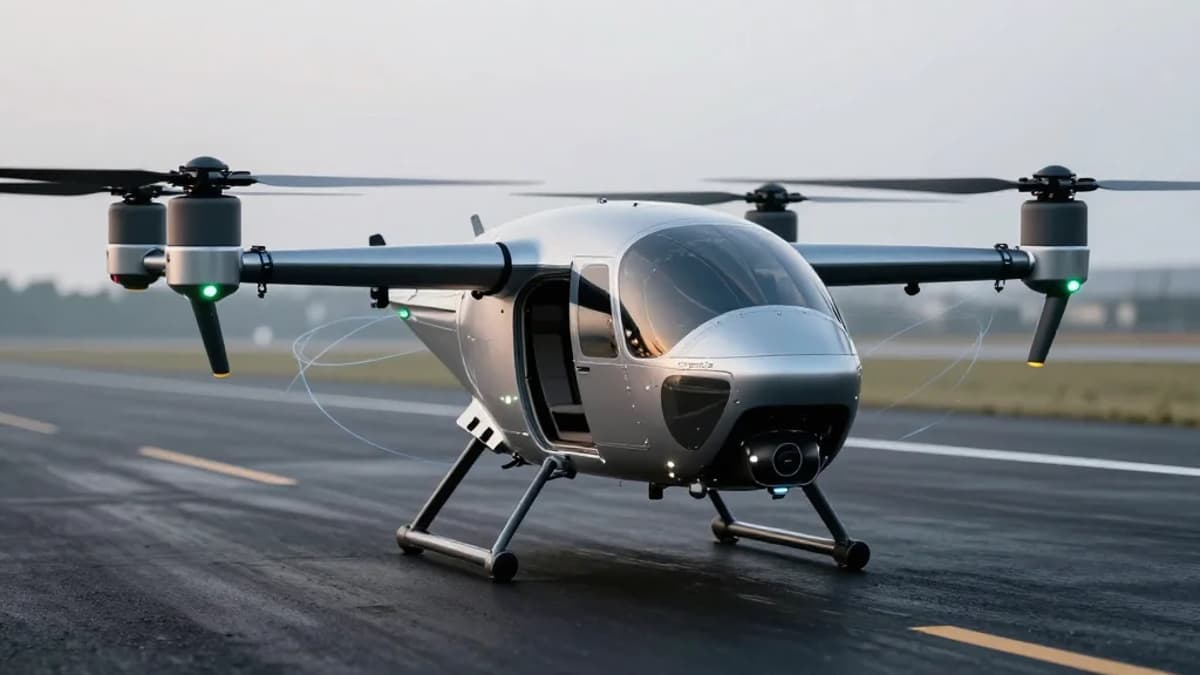
Brazil’s Moya Targets 2027 for First Heavylift Cargo Drone Services
•March 6, 2026
0
Why It Matters
Moya’s timeline accelerates the shift toward electric aerial freight, offering a scalable path to reduce logistics‑related emissions and capture a slice of a multi‑trillion‑dollar market.
Key Takeaways
- •Moya aims to launch heavy‑lift cargo drones by 2027.
- •Global logistics market projected $5.95 trillion by 2030.
- •Electric drones could cut truck‑related CO₂ emissions substantially.
- •Trucks emitted 1.89 Gt CO₂ in 2023, 65% freight emissions.
- •Industry targets 28% emissions reduction by 2030, 94% by 2050.
Pulse Analysis
The eVTOL cargo sector is moving from prototype to commercial reality, and Moya’s 2027 service launch marks a concrete milestone for Brazil’s aerospace ecosystem. While traditional air freight relies on fuel‑intensive aircraft, electric vertical take‑off and landing platforms promise higher payload efficiency over short to medium distances. Analysts project that the broader logistics industry will swell to nearly $6 trillion by the end of the decade, creating a fertile market for operators that can deliver faster, more flexible shipments without the carbon penalty of conventional trucks.
Environmental considerations are driving much of the momentum behind electric cargo drones. Heavy‑duty trucks remain the dominant source of road freight emissions, accounting for roughly two‑thirds of the sector’s CO₂ output. By substituting diesel‑powered trucks with battery‑electric drones, companies can directly lower their carbon footprints and align with global climate targets. Moya’s claim that its series can replace traditional trucks underscores a strategic push to meet the industry’s ambition of a 28% emissions intensity reduction by 2030 and an ambitious 94% cut by 2050.
However, scaling drone logistics faces regulatory, infrastructure, and cost challenges. Airspace integration, certification standards, and the need for widespread charging hubs are critical hurdles that Moya and peers must navigate. Competitive pressure is also intensifying, with firms in Europe, North America, and Asia racing to secure early market share. Success will hinge on demonstrating reliable payload capacity, operational safety, and cost parity with ground transport. If Moya can meet these criteria, its 2027 rollout could catalyze broader adoption of electric aerial freight, reshaping supply chains and accelerating the decarbonization of global logistics.
Brazil’s Moya targets 2027 for first heavylift cargo drone services
0
Comments
Want to join the conversation?
Loading comments...