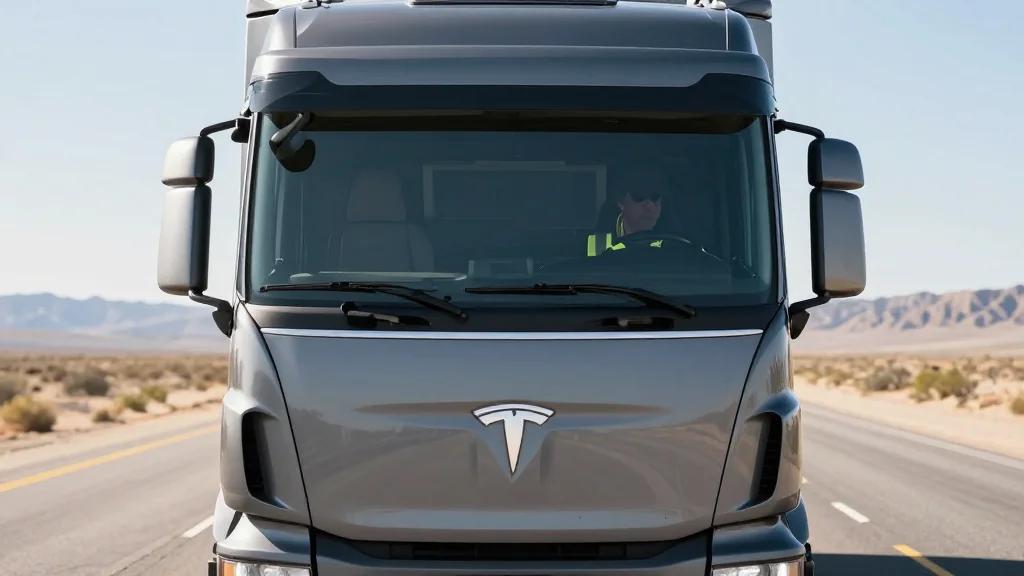
California Clears Path for Autonomous Tesla Semi Testing as Production Ramps Up

Why It Matters
California controls one of the nation’s most critical freight corridors, linking the Pacific ports to inland distribution centers. By granting a clear pathway for autonomous truck testing, the state could set a de‑facto standard that other jurisdictions emulate, accelerating the rollout of driverless freight across the United States. The 500,000‑mile safety‑driver requirement also establishes a measurable safety benchmark, potentially easing public concerns about fully autonomous trucks. The regulatory shift also intensifies the competitive race among autonomous‑driving firms. Tesla’s brand recognition and its vertically integrated battery and powertrain technology give it a distinct advantage, but the requirement to log extensive supervised miles levels the playing field, allowing companies like Bot Auto and Aurora to demonstrate safety records before Tesla’s driverless Semis hit the road. The outcome will shape investment flows, labor negotiations, and the overall speed at which autonomous freight becomes a mainstream logistics solution.
Key Takeaways
- •California DMV adopts new rules allowing permits for autonomous trucks over 10,001 lb.
- •Manufacturers must complete 500,000 miles with a safety driver before driverless testing.
- •Tesla began high‑volume Semi production at Giga Nevada, aligning with the regulatory change.
- •Teamsters California warned of legal action, citing job‑security concerns.
- •Other firms like Bot Auto and Aurora are already conducting driverless freight runs in Texas.
Pulse Analysis
California’s decision marks the most consequential state‑level policy shift for autonomous freight in the past year. By codifying a mileage‑based safety threshold, the DMV provides a clear, quantifiable path to driverless operations, which could reduce the regulatory uncertainty that has slowed investment in autonomous trucking. Historically, the industry has been hampered by a patchwork of state rules; a unified standard in a market as large as California may prompt neighboring states to adopt similar frameworks, creating a regional corridor that could become a proving ground for nationwide deployment.
From a competitive standpoint, Tesla’s advantage lies in its integrated vehicle platform and the brand cachet of the Semi. However, the mileage requirement is a double‑edged sword: while it forces Tesla to demonstrate safety at scale, it also gives rivals a chance to build comparable safety records without the pressure of a high‑profile launch. Companies that can quickly amass the required supervised miles—through partnerships with logistics firms or dedicated test fleets—may secure early driverless permits and capture market share before Tesla’s fully autonomous Semis roll out.
Labor dynamics will also shape the rollout timeline. The Teamsters’ vocal opposition signals that any large‑scale deployment will likely be accompanied by legal challenges and possibly new legislation aimed at protecting driver jobs. Companies will need to balance the efficiency gains of autonomy with negotiated agreements that address workforce concerns. The next six to twelve months will reveal whether California’s regulatory experiment can reconcile safety, labor, and commercial viability, setting a template for the rest of the country.
California Clears Path for Autonomous Tesla Semi Testing as Production Ramps Up
Comments
Want to join the conversation?
Loading comments...