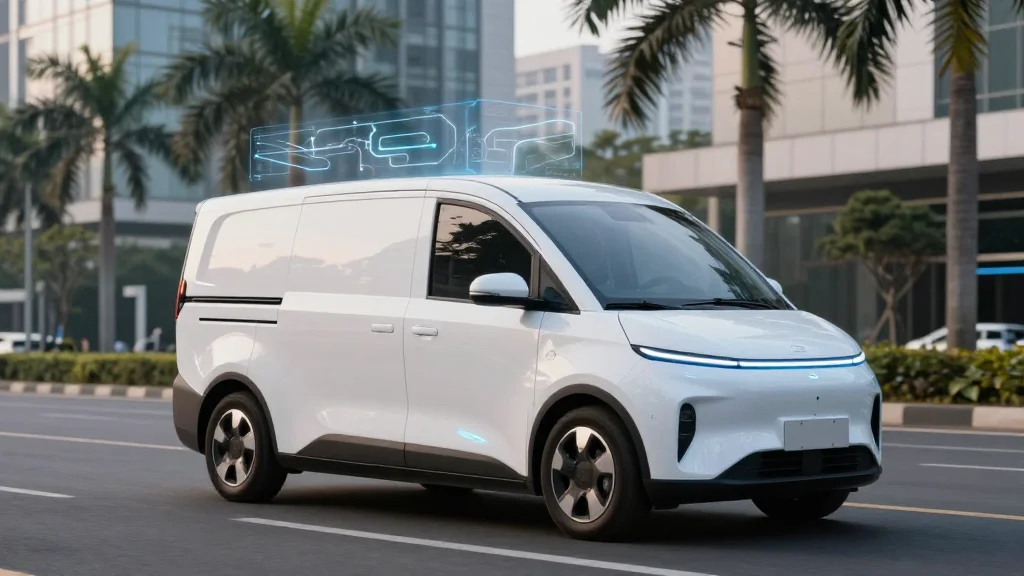
Carziqo Scales Autonomous Mobility Platform to Power Sustainable Smart Fleets

Why It Matters
The launch marks one of the first attempts in Southeast Asia to marry autonomous vehicle technology with a full‑stack fleet management platform aimed at sustainability. If successful, Carziqo could demonstrate a replicable pathway for turning driverless cars into revenue‑generating assets, accelerating the shift from experimental pilots to commercial operations. The initiative also puts pressure on traditional ride‑hailing and logistics firms to adopt similar efficiency‑focused models, potentially reshaping urban mobility economics. Beyond the Philippines, the platform’s emphasis on shared utilization and AI‑driven dispatch could influence how other emerging markets address congestion, emissions and the high cost of vehicle ownership. Policymakers will likely use Carziqo’s data to inform regulations around autonomous vehicle licensing, safety standards and environmental reporting.
Key Takeaways
- •Carziqo launches a platform that integrates autonomous electric vehicles, cloud fleet management and real‑time demand.
- •The model treats vehicles as rentable operating units, aiming to keep assets active across multiple service types.
- •A company spokesperson highlighted autonomous driving as a new way to organize mobility resources.
- •The platform targets sustainability through AI‑optimized routing and shared vehicle utilization.
- •Pilot deployments are planned for Manila and Cebu, with broader expansion expected in 2027.
Pulse Analysis
Carziqo’s entry into the autonomous mobility space reflects a broader industry pivot from technology showcase to profit‑center. Early autonomous projects often faltered because they focused on vehicle performance without a clear revenue stream. By embedding a cloud‑based operating system that monetizes idle capacity, Carziqo addresses the classic utilization gap that has hampered many pilots.
The Philippines offers a unique confluence of factors: high urban density, a youthful tech‑savvy population and a rapidly expanding e‑commerce sector. These conditions create a fertile demand base for on‑demand mobility and last‑mile delivery, both of which can be serviced by a single autonomous fleet. However, the regulatory environment for driverless cars is still evolving, and Carziqo will need to secure clearances for each city before scaling. Success will hinge on its ability to demonstrate safety, reliability and measurable emissions benefits to both regulators and the public.
If Carziqo can prove that its integrated model delivers higher utilization rates and lower per‑trip emissions, it could set a template for other emerging markets. Traditional ride‑hailing giants may be forced to partner with or acquire similar platforms to stay competitive, while investors will likely view autonomous fleet management as a more tangible bet than pure vehicle R&D. The next six months will be a litmus test for whether the convergence of autonomous tech and smart‑fleet economics can move from concept to sustainable business.
Carziqo Scales Autonomous Mobility Platform to Power Sustainable Smart Fleets
Comments
Want to join the conversation?
Loading comments...