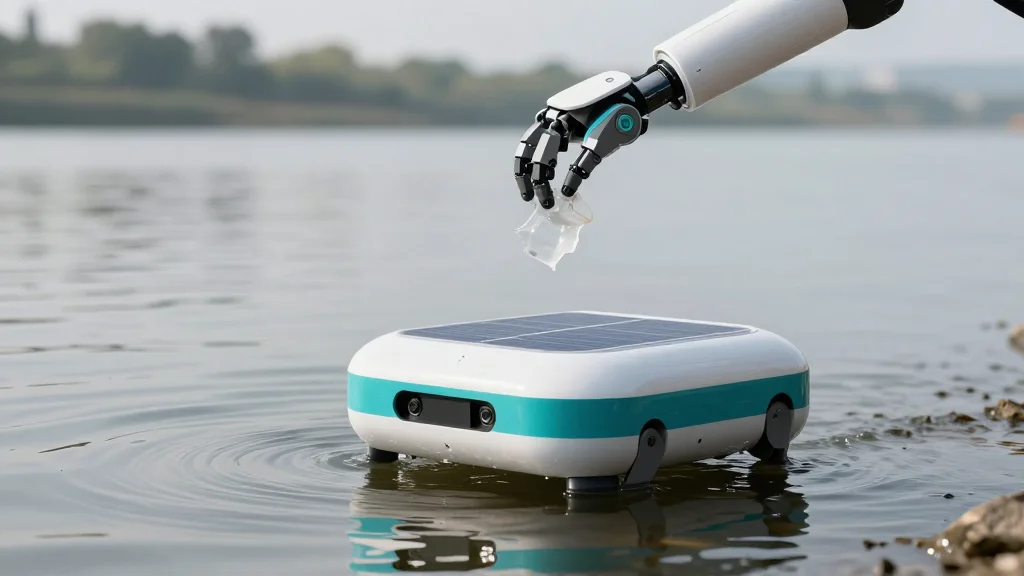
China Deploys Autonomous AI Robots to Clean Polluted Rivers and Lakes

Why It Matters
Deploying autonomous robots for water cleanup demonstrates that AI can move beyond commercial and consumer applications into core public‑service functions. By automating labor‑intensive environmental tasks, governments can address pollution more quickly and at lower cost, potentially accelerating progress toward Sustainable Development Goal 6 (clean water and sanitation). The project also showcases how strategic AI investment can create new market segments for robotics firms, encouraging further R&D in perception, energy efficiency and autonomous navigation. If successful, the technology could reshape how municipalities worldwide approach river and lake remediation, shifting from episodic, crew‑based interventions to continuous, sensor‑driven operations. This could spur a wave of public‑sector procurement for autonomous systems, prompting international standards for safety, data privacy and environmental impact.
Key Takeaways
- •China launched autonomous AI robots that clean rivers and lakes without human operators.
- •Robots use computer‑vision and sonar to identify and collect plastic, organic waste and chemical pollutants.
- •Pilot deployments target heavily polluted river basins in central and southern China, with expansion planned by year‑end.
- •State policy frames environmental technology as a strategic industry, linking the rollout to broader AI investment.
- •Potential cost reduction of up to 30 % per ton of waste removed compared with traditional cleanup methods.
Pulse Analysis
The Chinese rollout marks a pivotal moment for autonomy in the public sector. Historically, autonomous vehicles have been confined to logistics, manufacturing and, more recently, passenger transport. By turning the technology toward environmental remediation, China is testing a new value proposition: using AI to solve collective‑action problems that are too costly or dangerous for manual labor. This approach could unlock a sizable market for robotics firms that have traditionally served industrial clients, prompting a shift in venture capital focus toward sustainability‑oriented autonomy.
From a competitive standpoint, the initiative also serves as a soft power signal. While Western firms dominate commercial autonomous platforms, China’s state‑backed deployment showcases its ability to integrate AI into national priorities quickly. The move may pressure other governments to accelerate their own autonomous infrastructure programs, especially in regions where water quality is a pressing concern. However, the success of the robots will hinge on technical reliability and public acceptance, particularly regarding safety and environmental impact.
Looking ahead, the key question is scalability. If the pilot demonstrates measurable reductions in pollution and cost, we can expect a cascade of procurement contracts, both domestically and abroad. International standards bodies may soon be tasked with certifying autonomous environmental robots, creating a regulatory framework that could either accelerate adoption or impose barriers. In any case, the deployment underscores that autonomy is no longer a niche capability—it is becoming a foundational tool for addressing global challenges.
China Deploys Autonomous AI Robots to Clean Polluted Rivers and Lakes
Comments
Want to join the conversation?
Loading comments...