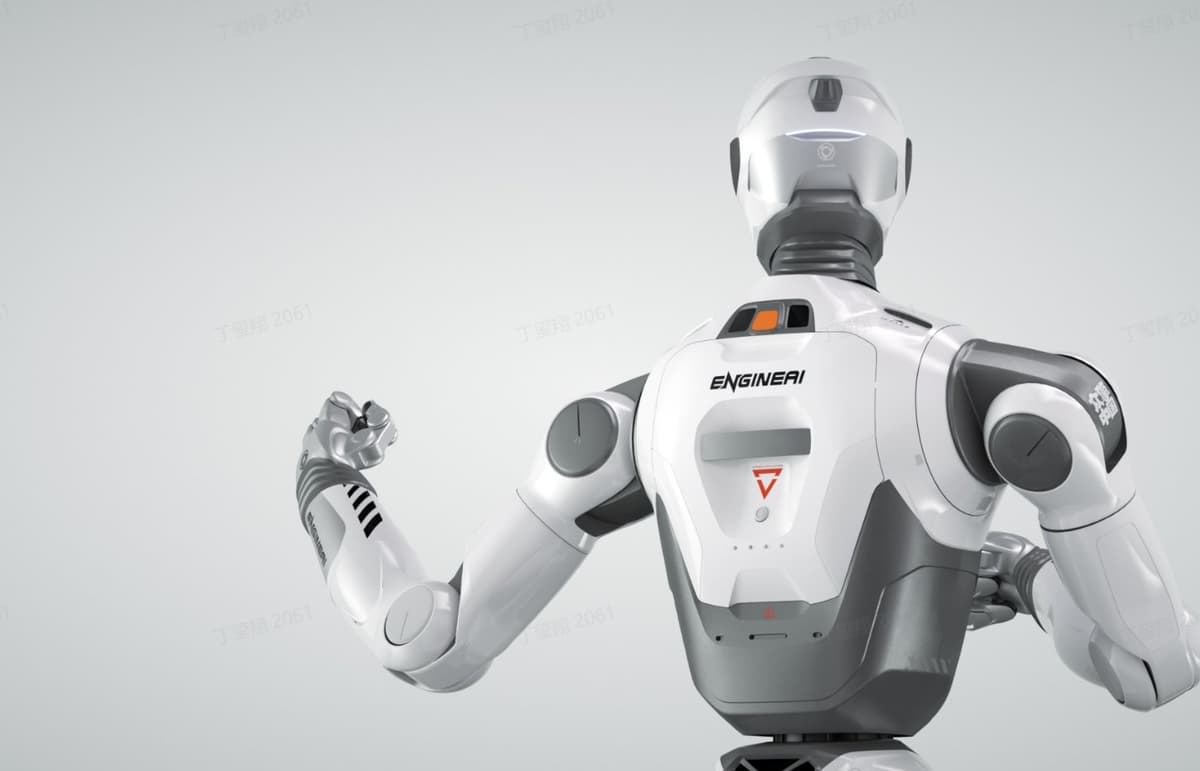
China’s ENGINEAI Opens Humanoid Robot Factory, Aims to Build One Every 15 Minutes

Companies Mentioned
Why It Matters
Mass‑producing affordable humanoid robots could accelerate automation in factories and inspection tasks, reshaping labor dynamics in China and beyond. ENGINEAI's scale‑up signals that the sector is moving from prototype showcases to commercial‑grade supply chains.
Key Takeaways
- •ENGINEAI can assemble a humanoid robot every 15 minutes
- •New 129,000‑sq‑ft Shenzhen plant integrates production, testing, logistics
- •Series B funding of $200 million targets 10,000‑unit output
- •T800 pre‑orders start at $25,000, sparking price competition
- •Expansion includes a 10,000‑unit line in Zhengzhou
Pulse Analysis
China’s push to commercialise humanoid robots has entered a new phase with ENGINEAI’s Shenzhen factory, a 129,000‑square‑foot hub that blends manufacturing, quality control and logistics under one roof. By completing a robot every quarter‑hour and subjecting each unit to dozens of inspections and simulations, the firm demonstrates that high‑volume, high‑reliability production is feasible. This capability narrows the gap between lab‑scale prototypes and the consistent output needed for industrial adoption, putting Chinese manufacturers in a stronger position against Western rivals.
The $200 million Series B injection, which values ENGINEAI at roughly $1.4 billion, underwrites an aggressive rollout plan targeting 10,000 units from Shenzhen and another 10,000 from a planned Zhengzhou line. The company’s portfolio—spanning the heavy‑duty T800, the balance‑focused PM01, companion SA02 and quadruped JS01—signals a shift toward practical applications such as repetitive assembly, equipment inspection and hazardous‑environment tasks. With a $25,000 entry price for the T800, ENGINEAI is deliberately undercutting competitors, intensifying a pricing battle that could make humanoid automation more accessible to mid‑size manufacturers.
The broader market feels the ripple effects. Domestic players like Unitree, UBTECH and AGIBOT are racing to scale, while U.S. firms such as Figure and 1X are upping their own throughput to stay relevant. As Chinese factories adopt these robots for real‑world workloads, supply‑chain efficiencies improve and labor shortages can be mitigated. Observers expect the next wave of industrial robotics to blend cost‑effective mass production with AI‑driven adaptability, a combination that could redefine productivity standards across global manufacturing hubs.
China’s ENGINEAI Opens Humanoid Robot Factory, Aims to Build One Every 15 Minutes
Comments
Want to join the conversation?
Loading comments...