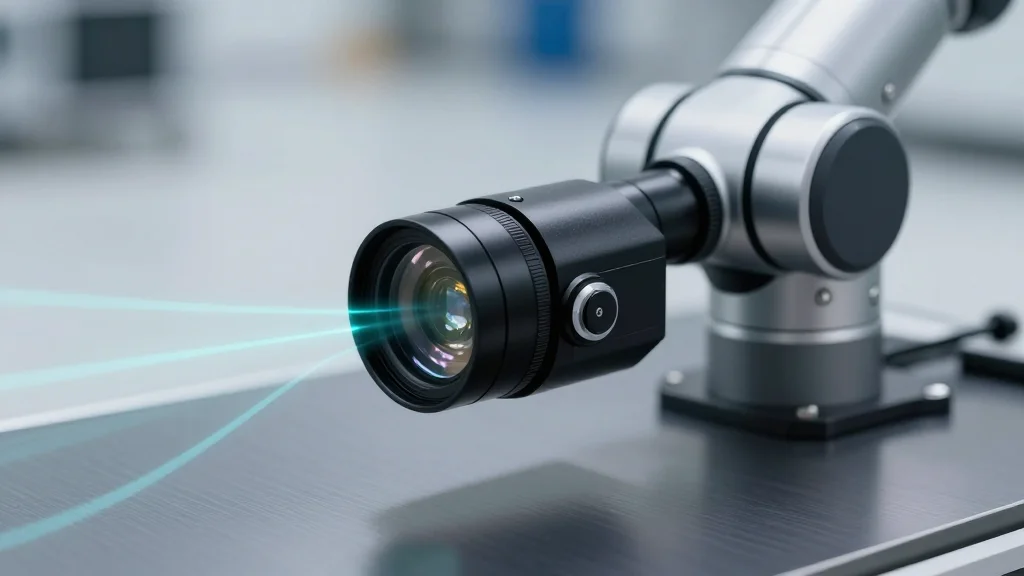
Cognex Unveils In‑Sight 3900 AI Vision System for Robotics, Boosting Speed and Accuracy

Companies Mentioned
Why It Matters
The In‑Sight 3900 signals a shift toward tightly coupled perception and control in industrial robotics, where vision is no longer an afterthought but a core enabler of speed and flexibility. By eliminating the trade‑off between inspection depth and line speed, manufacturers can pursue higher quality standards without slowing down output, a critical advantage in sectors facing margin pressure. Beyond the factory floor, the integrated hardware‑software stack could lower barriers for smaller players in the robotics ecosystem, enabling faster deployment of AI‑enhanced pick‑and‑place or sorting solutions in warehouses and distribution centers. If the system delivers on its deterministic performance claims, it may set a new benchmark for edge AI vision, prompting competitors to accelerate their own integrated offerings.
Key Takeaways
- •Cognex launched the In‑Sight 3900, a fully integrated AI vision system for robotics.
- •The platform runs on Qualcomm Dragonwing, combining edge AI, advanced AI, and rule‑based tools.
- •Matt Moschner called the product a "major leap forward" for embedded AI vision.
- •Fuji Seal’s Andrea Sabbadini reported full‑speed deployment of Edge AI Read without throughput loss.
- •OneVision software will create a cloud‑to‑edge ecosystem for centralized model training and local execution.
Pulse Analysis
Cognex’s In‑Sight 3900 arrives at a moment when the robotics market is consolidating around perception as a differentiator. Historically, robot manufacturers have focused on mechanical precision and control algorithms, leaving vision to third‑party suppliers. By delivering a turnkey vision system that promises deterministic, real‑time performance, Cognex is positioning itself as a one‑stop shop for manufacturers who need both speed and intelligence on the line. This could force a strategic realignment among competitors, prompting them to either develop comparable integrated solutions or double down on niche, best‑of‑breed vision components.
The partnership with Qualcomm is also noteworthy. Qualcomm’s Dragonwing platform is designed for high‑throughput, low‑latency AI inference, and its involvement lends credibility to Cognex’s performance claims. If the In‑Sight 3900 can consistently deliver sub‑millisecond decision times at line speeds exceeding 1,000 parts per minute, it will set a new performance bar that could render legacy vision systems obsolete. This pressure may accelerate the migration of legacy OEMs to AI‑centric architectures, reshaping the supply chain for machine vision hardware.
Looking ahead, the success of the In‑Sight 3900 will hinge on adoption rates among system integrators and OEMs. Early field trials will reveal whether the promised simplicity and throughput translate into tangible cost savings and quality improvements. Should the platform prove its value, we can expect a cascade of software updates, expanded AI model libraries, and possibly a new generation of robot end‑effectors that rely on the system’s high‑resolution, low‑latency perception. In that scenario, Cognex could capture a larger share of the growing $30 billion industrial robotics market, while also influencing standards for edge AI vision across the broader automation ecosystem.
Cognex Unveils In‑Sight 3900 AI Vision System for Robotics, Boosting Speed and Accuracy
Comments
Want to join the conversation?
Loading comments...