Dutch Plant for Combat-Zone Robots Offers Fresh Supply Pipeline for Ukraine
Why It Matters
The new facility accelerates delivery of versatile UGVs to Ukraine, strengthening its defensive capabilities and demonstrating Europe’s ability to rapidly upscale defense production.
Key Takeaways
- •Milrem's Dutch line produced first THeMIS for Netherlands' Ukraine pledge.
- •Netherlands pledged over 100 UGVs to support Ukrainian forces.
- •Flexible assembly line can rapidly increase robot output as demand rises.
- •THeMIS variants cover combat, surveillance, and casualty evacuation roles.
- •Partnership showcases European defense industry's ability to scale production quickly.
Pulse Analysis
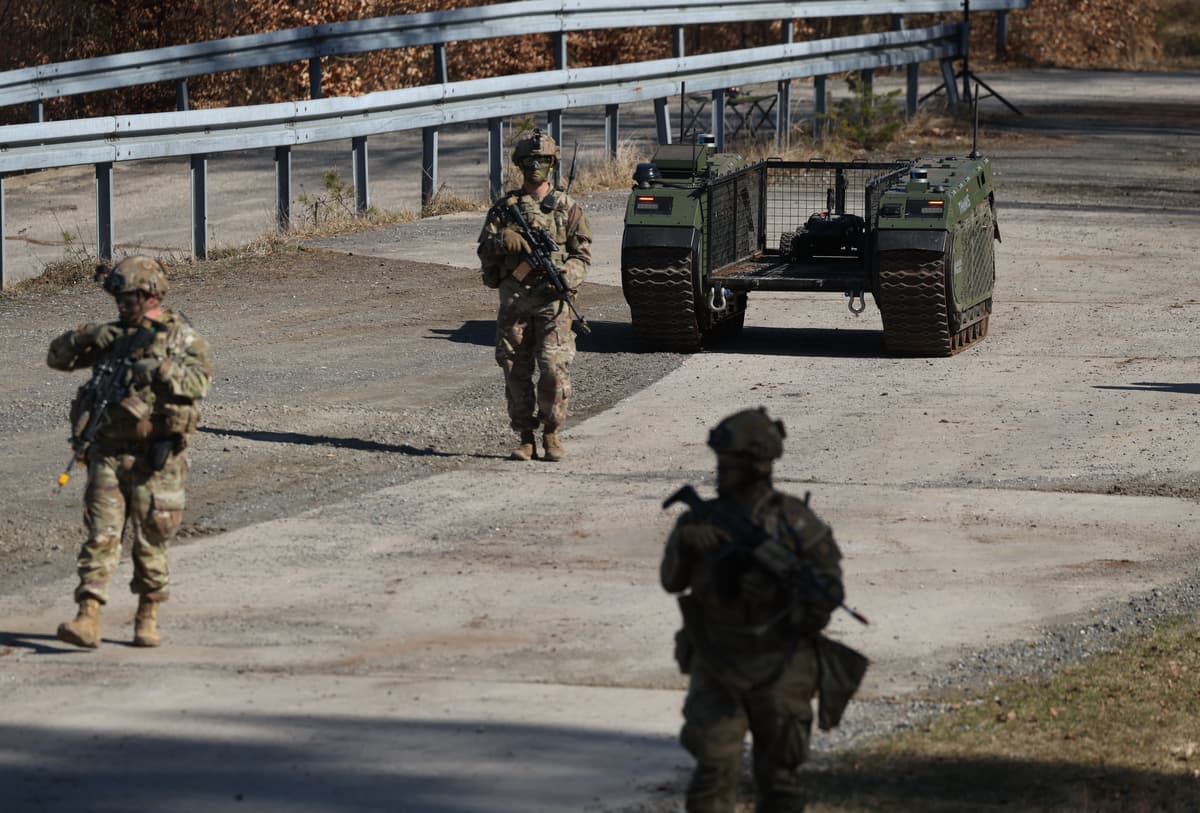
Estonia’s Milrem Robotics, the designer of the modular THeMIS unmanned ground vehicle, has inaugurated a new assembly line in Born, Netherlands, in partnership with VDL Defentec, a specialist in armored‑vehicle construction and electric propulsion. The facility rolled out its first THeMIS unit for the Dutch Ministry of Defence, marking the start of a pledged batch of more than 100 robots destined for Ukrainian forces. Built for rapid reconfiguration, the line combines traditional automotive techniques with flexible robotics manufacturing, allowing Milrem to accelerate output without sacrificing the vehicle’s multi‑mission capabilities.
The deployment of THeMIS UGVs has become a cornerstone of Ukraine’s effort to keep supply routes open and reduce soldier exposure on the front lines. Configurable for weapon mounts, sensor suites, or cargo transport, the robots can deliver ammunition, conduct reconnaissance, or evacuate wounded personnel under fire. Since their first combat use in 2022, Ukrainian units report high reliability, prompting NATO allies to expand deliveries. The Dutch contribution, now produced on European soil, shortens logistics chains and ensures a steadier flow of combat‑ready robots as the conflict intensifies.
Beyond the immediate battlefield, the Dutch plant signals a shift in Europe’s defense industrial base toward localized, scalable production of autonomous systems. By leveraging VDL Defentec’s existing vehicle assembly expertise, Milrem can quickly scale capacity, a model other nations may replicate to meet growing demand for unmanned platforms. The move also reduces reliance on distant supply routes, enhancing resilience against potential disruptions. As NATO members explore larger robot fleets—some estimates suggest tens of thousands—the ability to mass‑produce adaptable UGVs will be a decisive factor in future European security strategies.
Dutch plant for combat-zone robots offers fresh supply pipeline for Ukraine
Comments
Want to join the conversation?
Loading comments...