Efficient Robot Navigation Inspired by Honeybee Learning Flights
Why It Matters
Bee‑Nav demonstrates that resource‑constrained drones can navigate kilometres without bulky mapping hardware, opening new possibilities for swarm deployments and cost‑effective autonomous operations.
Key Takeaways
- •Bee‑Nav combines path integration with neural view‑memory for efficient navigation
- •42.3 kB attention network enables visual homing within a 10 m radius
- •Simulations show learned homing area under 1 % of total flight area
- •Real‑world drone tests achieved 100 % homing up to 110 m outbound
- •Memory usage drops from hundreds of MB to under 50 kB, cutting weight
Pulse Analysis
Robotic navigation has long been constrained by the need for detailed metric maps, which demand substantial memory and processing power. Small aerial platforms, in particular, cannot accommodate the GPUs or high‑end CPUs required for traditional SLAM pipelines. Researchers have therefore turned to biology for inspiration, noting that honeybees navigate kilometers using only path integration and a sparse visual memory of landmarks. The new Bee‑Nav system translates this dual‑strategy into a lightweight algorithm: a self‑supervised neural network learns to map omnidirectional images directly to a home vector, while a low‑drift path‑integrator provides an initial return trajectory.
Extensive simulation work quantified how much area the robot must learn to correct path‑integration drift. Even with aggressive noise models, the learned homing area (LHA) occupied less than 1 % of the total flight zone while capturing 99 % of return points. This compact region allowed the visual‑homing network to be as small as 42.3 kB, three orders of magnitude smaller than conventional 3‑D maps that can exceed several hundred megabytes. The network’s attention architecture further improved landmark selection, delivering angular errors below 40° and distance errors under two metres within the LHA.
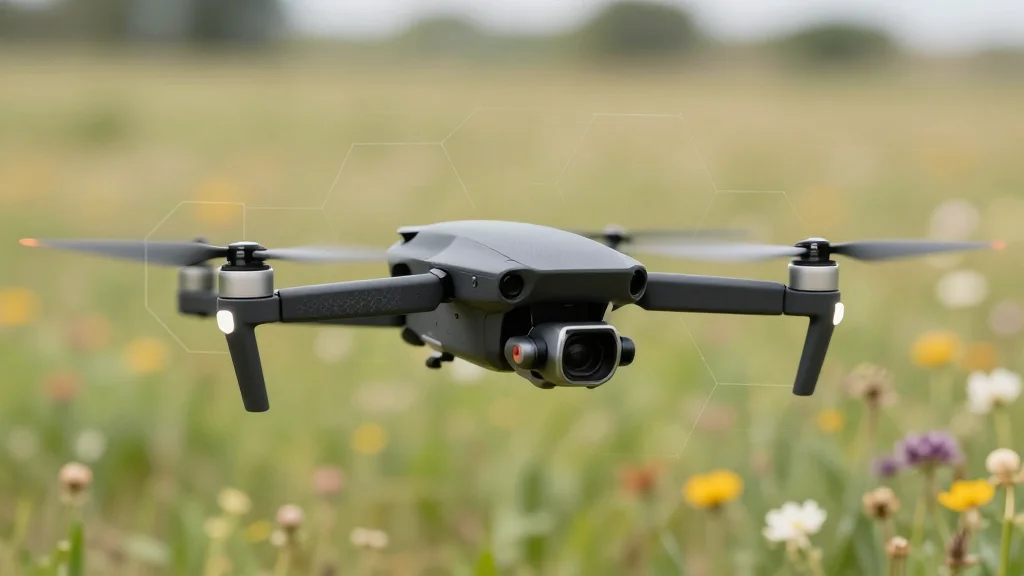
Field trials confirmed Bee‑Nav’s practicality on a Raspberry Pi‑powered quadcopter. In a 10 × 10 m indoor arena the drone returned within 0.5 m of its launch point in every one of 48 flights, and in larger 30 × 40 m halls it successfully cancelled odometry drift after outbound legs of up to 110 m. Outdoor tests up to 600 m demonstrated 100 % homing success for moderate winds, dropping to 50 % only under gusts exceeding 10 m s⁻¹. By replacing heavyweight mapping stacks with a few kilobytes of neural parameters, Bee‑Nav opens the door to swarms of low‑cost drones for inventory, agriculture and search‑and‑rescue tasks where endurance and payload are at a premium.
Efficient robot navigation inspired by honeybee learning flights
Comments
Want to join the conversation?
Loading comments...