Former Tesla FSD Labelers Call Full Self‑Driving Program a Disaster

Companies Mentioned
Why It Matters
The testimony of former Tesla labelers strikes at the core of the autonomous‑vehicle narrative that has driven massive investor enthusiasm and public expectations. If the FSD system cannot reliably handle basic safety scenarios, the promise of a rapid, camera‑only path to full autonomy is called into question, potentially reshaping the competitive landscape for self‑driving technology. Moreover, the revelations could trigger stricter regulatory oversight, forcing the industry to adopt more transparent safety validation methods and possibly slowing the rollout of consumer‑facing autonomous features. For the broader autonomy ecosystem, the episode underscores the hidden human labor required to train AI models for real‑world driving. Companies that have invested heavily in lidar, high‑definition mapping, or extensive simulation may find their approaches vindicated, while vision‑only strategies could face heightened skepticism from investors, regulators, and the public.
Key Takeaways
- •Nine former Tesla data labelers and a former self‑driving engineer described FSD as a disaster.
- •Tesla claims FSD is ten times safer than human drivers, a metric critics say is misleading.
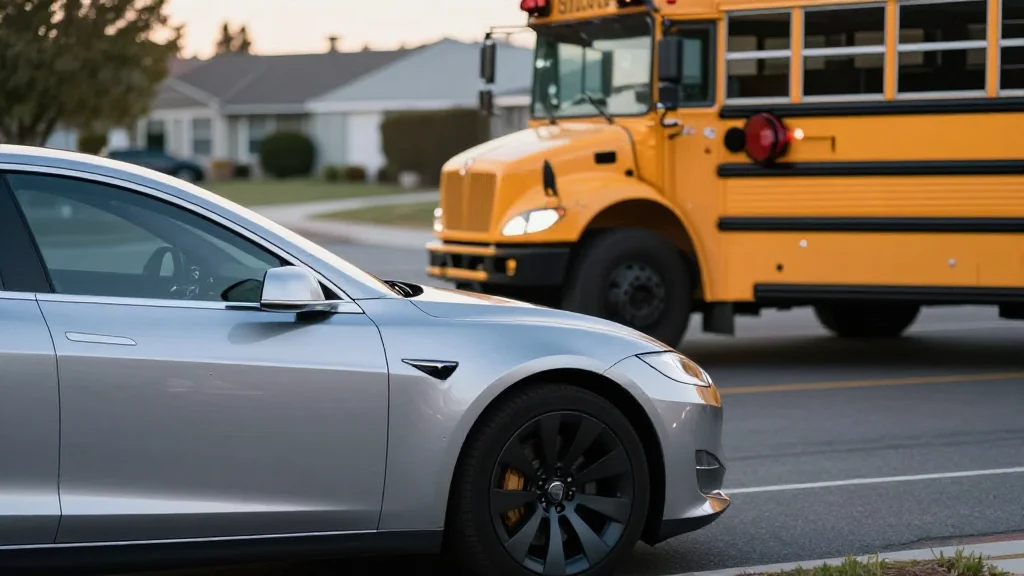
- •Former workers reported failures to stop for school buses, emergency vehicles, and frequent animal collisions.
- •Tesla’s market cap stands at roughly $1.6 trillion despite the safety concerns.
- •NHTSA is preparing a new review of advanced driver‑assistance systems amid growing scrutiny.
Pulse Analysis
Tesla’s FSD narrative has been a cornerstone of its valuation, feeding a $1.6 trillion market cap and a steady stream of capital for its autonomous ambitions. The insider accounts erode the credibility of that narrative, suggesting that the company’s reliance on a camera‑only stack may be a technical dead‑end rather than a shortcut. Competitors that have doubled down on lidar and high‑definition maps—Waymo, Cruise, and emerging Chinese players—could now leverage this credibility gap to attract partnerships and regulatory goodwill.
Regulators are likely to tighten disclosure requirements, demanding more granular safety data and independent audits. If the NHTSA or Congress imposes stricter testing standards, Tesla may be forced to retrofit its fleet with additional sensors, a move that would increase costs and dilute the cost‑advantage argument that has underpinned its FSD pitch. Investors, already jittery about the broader AI hype, may reassess risk premiums for companies that promise full autonomy without demonstrable safety records.
In the longer term, the episode may accelerate a shift toward hybrid autonomy models that combine vision with radar or lidar, acknowledging that no single sensor modality can guarantee safety across all scenarios. Tesla’s response—whether a recalibration of its safety claims, an accelerated rollout of new hardware, or a strategic pivot—will be a bellwether for how the industry balances bold marketing with the hard realities of safety engineering.
Former Tesla FSD Labelers Call Full Self‑Driving Program a Disaster
Comments
Want to join the conversation?
Loading comments...