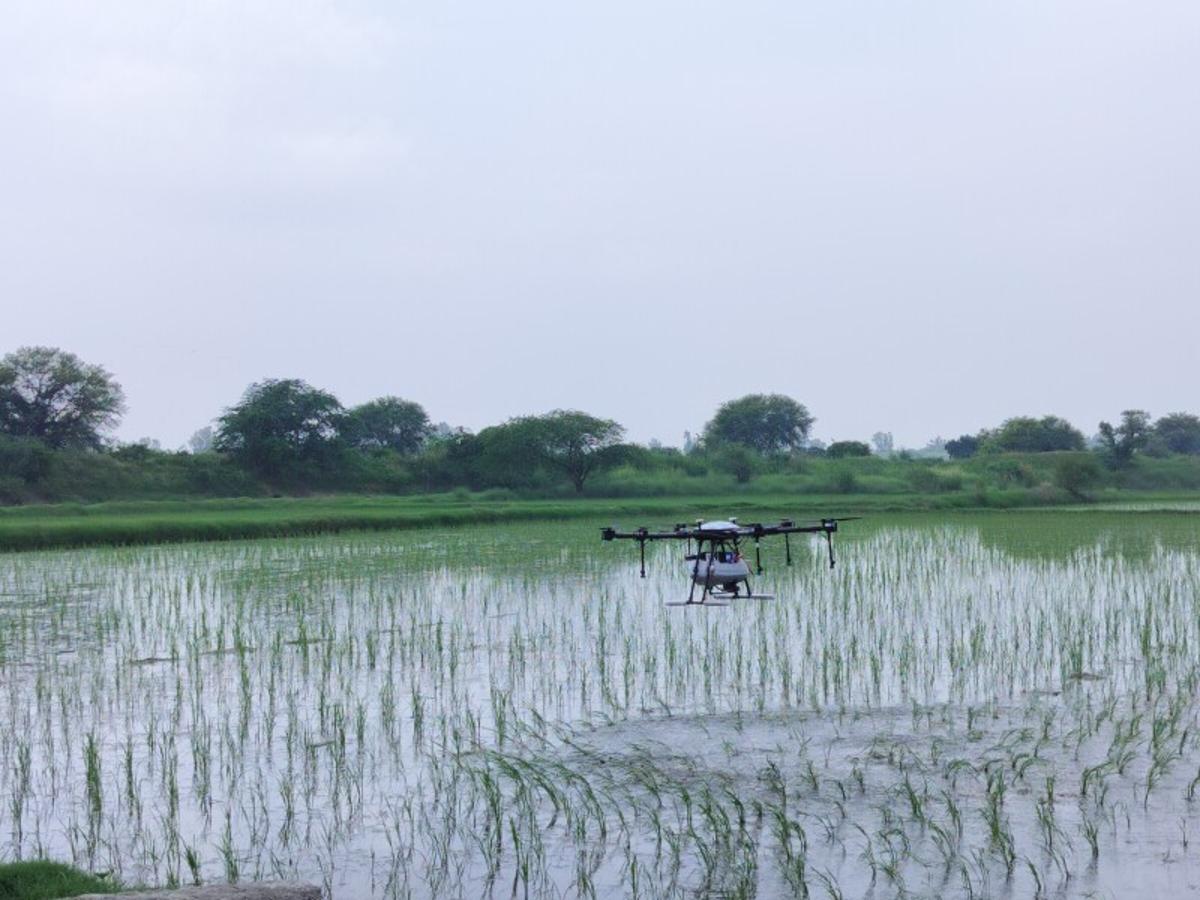
From UAV Spraying to Climate Intelligence: What Research Reveals About Sustainable Agri-UAS Deployment
•February 18, 2026
0
Why It Matters
The findings prove that UAVs can be a net‑positive climate tool, but only with system‑level optimization, making the technology’s scalability and regulatory frameworks pivotal for sustainable agriculture.
Key Takeaways
- •Optimized UAV spraying cuts water, chemicals, exposure
- •Poor nozzle or overlap raises energy per hectare
- •Life‑cycle assessment reveals hidden manufacturing and charging impacts
- •Machine‑learning predicts optimal spray settings per climate zone
- •Training and policy alignment critical for equitable benefits
Pulse Analysis
The rapid rise of unmanned aerial vehicles in agriculture has sparked optimism about precision farming, yet the environmental narrative remains incomplete without a life‑cycle perspective. Recent Indian field studies combine LCA with real‑world performance metrics, exposing hidden emissions from battery charging, component manufacturing, and chemical drift. By quantifying water savings, reduced pesticide use, and operator health benefits, the research demonstrates that drones can lower the overall ecological footprint—provided they operate under carefully calibrated nozzle settings, flight speeds, and canopy‑matched altitudes.
Beyond hardware, the true sustainability lever lies in data intelligence. Machine‑learning models trained on UAV telemetry, weather patterns, and crop phenology can forecast the most efficient spray parameters for each agro‑climatic zone. This predictive capability transforms drones from mere delivery platforms into climate‑intelligence nodes, enabling growers to balance energy consumption, water conservation, and chemical reduction in line with SDG targets. Such analytics also help identify diminishing returns, ensuring that scaling fleets does not inadvertently increase carbon intensity.
However, technology alone cannot guarantee equitable outcomes. Smallholder farmers, women operators, and rural service providers often lack standardized training and institutional support, leading to inconsistent adoption and uneven sustainability gains. Policymakers must embed evidence‑based operational standards, capacity‑building programs, and alignment with regional water and pesticide regulations. When these human and regulatory dimensions converge with optimized UAV design and intelligent analytics, the sector can transition from novelty to a cornerstone of climate‑resilient agriculture.
From UAV Spraying to Climate Intelligence: What Research Reveals About Sustainable Agri-UAS Deployment
0
Comments
Want to join the conversation?
Loading comments...