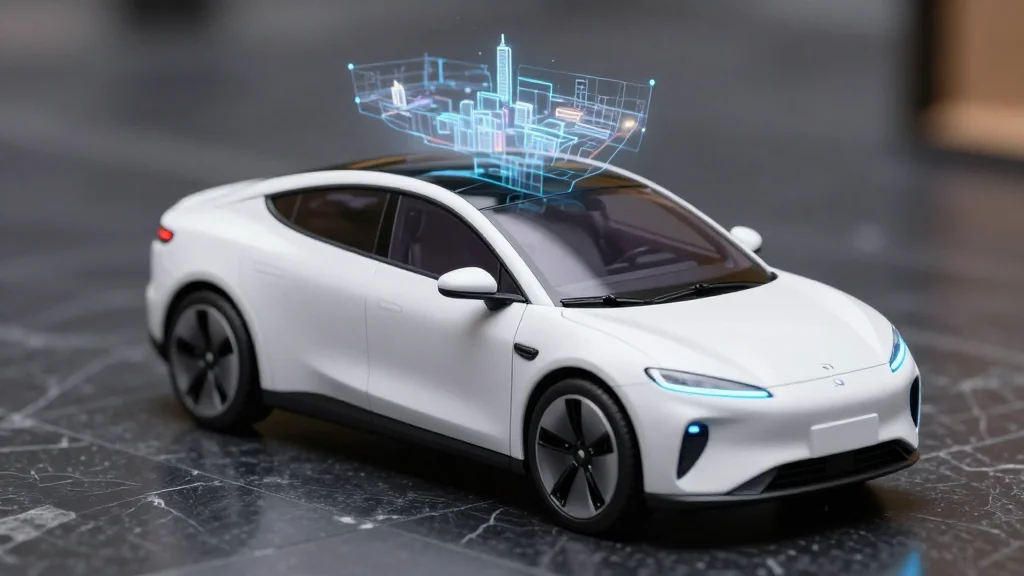
Geely Debuts China’s First Purpose‑Built Robotaxi, EVA Cab, at Auto China 2026

Companies Mentioned
Why It Matters
The EVA Cab represents a strategic shift from retrofitted autonomous vehicles to purpose‑built robotaxis, a move that could redefine cost structures, passenger capacity and safety standards in China’s burgeoning mobility‑as‑a‑service market. By integrating quantum‑grade security and a mass‑production‑ready L4 stack, Geely aims to set new industry benchmarks that may influence global standards for autonomous vehicle safety and data protection. If the EVA Cab’s technology proves viable in real‑world deployments, it could accelerate the rollout of robotaxi services across Chinese megacities, reducing reliance on human drivers and reshaping urban transportation planning. The initiative also positions Geely as a direct competitor to both domestic AI firms and international autonomous‑driving giants, potentially shifting the balance of power in the global autonomy race.
Key Takeaways
- •Geely, AFARI Technology and CaoCao Mobility unveiled the EVA Cab robotaxi at Auto China 2026.
- •EVA Cab features a quantum‑grade AI architecture (EEA 4.0) and the world’s first 2,160‑line digital LiDAR.
- •In‑vehicle computing combines NVIDIA SuperChip, NVIDIA Thor U and Qualcomm Snapdragon 8397 for >3,000 TOPS.
- •First automaker to receive ISO 8800 AI Safety certification, highlighting advanced safety protocols.
- •Limited trials slated for later 2026 with a target of full commercial rollout by 2028.
Pulse Analysis
Geely’s EVA Cab is more than a press‑showpiece; it is a calculated response to the market’s demand for purpose‑built autonomous platforms. Historically, Chinese robotaxi pilots have leaned on modified sedans, which compromise interior layout and sensor integration. By designing a chassis around a 2160‑line LiDAR and a 900 V architecture, Geely can optimize energy density and sensor placement, potentially lowering per‑kilometre operating costs—a critical factor for fleet economics.
The quantum‑grade AI architecture and ISO 8800 certification also address a growing regulatory focus on cybersecurity and algorithmic transparency. As Chinese municipalities tighten data‑privacy rules, Geely’s end‑to‑end encryption could become a prerequisite for fleet operators seeking government approval. This security edge may force competitors to accelerate their own encryption roadmaps, raising the overall safety bar for autonomous mobility in the region.
However, the EVA Cab’s success hinges on more than hardware. Integration with MaaS platforms, pricing strategies, and the ability to scale the 12C ultra‑fast charging network will determine market adoption. If Geely can align these elements, it could capture a sizable share of the projected $150 billion Chinese robotaxi market by 2030, reshaping the competitive landscape and compelling global players to reconsider their China‑first strategies.
Geely Debuts China’s First Purpose‑Built Robotaxi, EVA Cab, at Auto China 2026
Comments
Want to join the conversation?
Loading comments...