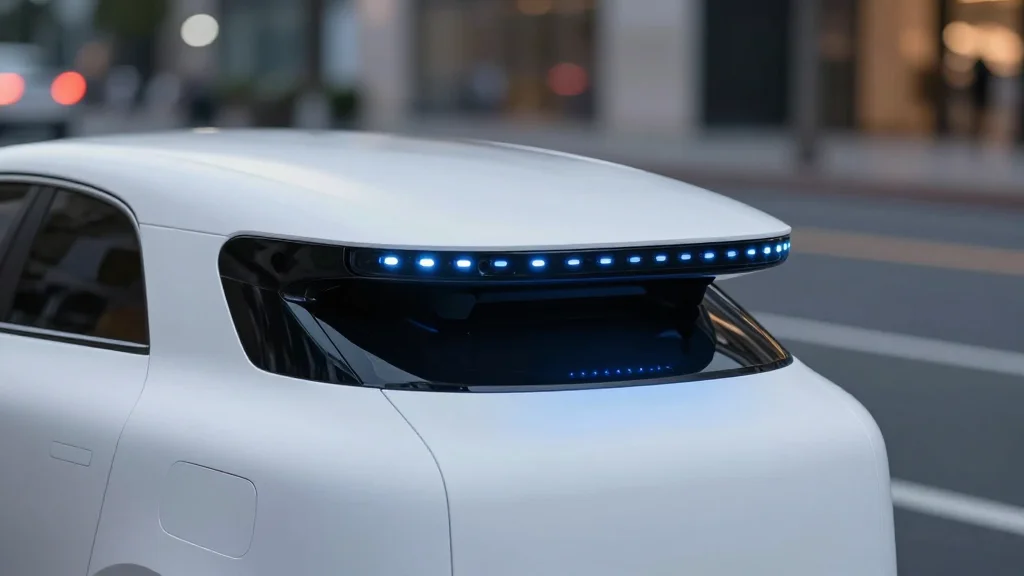
Geely Unveils China’s First Purpose‑Built Robotaxi, EVA Cab, at Auto China 2026

Companies Mentioned
Why It Matters
The EVA Cab prototype signals a strategic pivot from retrofitted autonomous vehicles to purpose‑built robotaxis, a shift that could lower integration complexity and accelerate regulatory pathways. By embedding quantum‑grade security and achieving ISO 8800 AI safety certification, Geely addresses two of the most pressing concerns—data privacy and safety—hindering broader public acceptance of driverless services. If the pilot fleet proves viable, it may force competitors to accelerate their own purpose‑built programs, intensifying the technology race in China’s massive urban markets. Furthermore, the integration of a 3,000 TOPS computing platform and a 2,160‑line LiDAR places the EVA Cab at the forefront of sensor‑fusion capabilities, potentially enabling more reliable L4 operation in dense traffic and adverse weather. This technical edge could translate into higher utilization rates and lower per‑trip costs, reshaping the economics of robotaxi services and influencing city planners’ decisions on autonomous mobility infrastructure.
Key Takeaways
- •Geely, AFARI Technology and CaoCao Mobility unveiled the EVA Cab robotaxi at Auto China 2026 in Beijing.
- •EVA Cab features a quantum‑grade AI Electrical/Electronic Architecture (EEA 4.0) with end‑to‑end encryption.
- •The vehicle integrates three flagship chips delivering over 3,000 TOPS of computing power.
- •World’s first 2,160‑line digital LiDAR system provides ultra‑high imaging capability.
- •Geely obtained ISO 8800 AI Safety certification, the first for a global automaker.
Pulse Analysis
Geely’s EVA Cab marks a decisive move toward vertically integrated autonomous mobility, a strategy that could redefine competitive dynamics in China’s robotaxi sector. Historically, Chinese OEMs have leaned on software partners to retrofit existing platforms, a path that often leads to compromises in sensor placement, vehicle architecture and safety validation. By designing a vehicle from the ground up, Geely can optimize sensor suites, powertrain integration and cabin ergonomics for autonomous operation, potentially shortening the time to market for a commercially viable fleet.
The quantum‑grade AI architecture is particularly noteworthy. As autonomous vehicles generate terabytes of data daily, securing that data against cyber‑threats becomes a critical differentiator. Geely’s use of quantum encryption not only future‑proofs its fleet against emerging threats but also aligns with Chinese government priorities on data sovereignty. This could give Geely a regulatory advantage, especially as Chinese authorities tighten standards for AI safety and data protection.
From a market perspective, the EVA Cab’s high‑performance computing stack and ultra‑high‑resolution LiDAR set a new technical bar that may force rivals to accelerate their own hardware upgrades. Companies like Baidu and Pony.ai have announced plans for next‑gen LiDAR, but Geely’s 2,160‑line system is already in a demonstrator, suggesting a lead time advantage. If Geely can translate this prototype into a cost‑effective production model, it could capture a sizable share of the projected $150 billion global robotaxi market by 2030, especially in densely populated Chinese megacities where demand for on‑demand, zero‑emission transport is surging.
Overall, the EVA Cab underscores a broader industry trend: the convergence of AI, quantum security and high‑density sensor fusion into purpose‑built platforms. As cities grapple with congestion and emissions, such integrated solutions may become the default model for autonomous public transport, reshaping urban mobility ecosystems worldwide.
Geely Unveils China’s First Purpose‑Built Robotaxi, EVA Cab, at Auto China 2026
Comments
Want to join the conversation?
Loading comments...