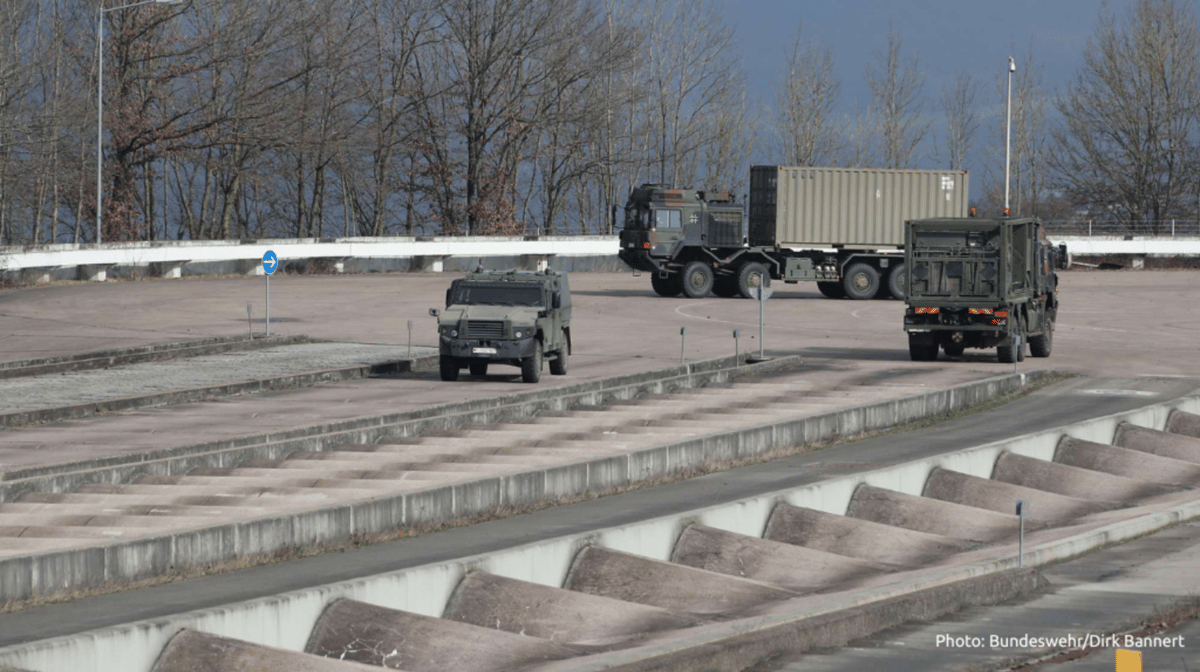
German Military Adopts Driverless Testing Systems for Safety Evaluation
Why It Matters
Eliminating driver exposure cuts health risks and accelerates vehicle certification, giving the Bundeswehr a strategic edge in rapid fielding of resilient platforms. The adoption also signals a wider shift toward autonomous testing across defense sectors.
Key Takeaways
- •Bundeswehr's WTD 41 implements driverless test rigs for vehicle durability
- •Remote operation eliminates driver exposure to extreme vibration and spinal strain
- •Automated testing cuts cycle time, boosting evaluation throughput
- •System integrates sensor data for real‑time safety analytics
- •Adoption signals broader military shift toward autonomous testing technologies
Pulse Analysis
Durability testing has long been a cornerstone of military vehicle development, ensuring that tanks, armored personnel carriers, and support trucks can survive the rigors of combat and harsh terrain. Traditionally, these tests required human drivers to repeatedly navigate pothole‑laden tracks, mud pits, and rocky gradients, exposing them to intense vibrations that can lead to chronic spinal injuries. The physical toll on personnel not only raises safety concerns but also limits the frequency and duration of test runs, slowing the feedback loop for engineers.
The Bundeswehr’s new driverless testing system replaces the human operator with a remotely controlled, sensor‑rich platform capable of replicating the same extreme conditions without fatigue. Integrated accelerometers, strain gauges, and high‑resolution cameras feed real‑time data to analysts, enabling instant assessment of chassis stress, suspension performance, and component wear. Automation shortens each test cycle by an estimated 30‑40%, allowing more vehicle variants to be evaluated within the same timeframe while preserving the health of test crews. Moreover, the collected telemetry supports predictive maintenance models, further extending the operational lifespan of the fleet.
Beyond immediate efficiency gains, the German military’s embrace of autonomous testing reflects a broader industry trend toward digitized, data‑driven validation processes. Defense contractors worldwide are investing in similar technologies to meet tighter procurement schedules and stricter safety standards. As autonomous systems mature, they are likely to expand beyond durability trials into live‑fire and electronic warfare simulations, reshaping how armed forces certify new hardware. The Bundeswehr’s initiative thus serves as a bellwether for future defense testing paradigms, highlighting the strategic value of marrying robotics with rigorous engineering validation.
German military adopts driverless testing systems for safety evaluation
Comments
Want to join the conversation?
Loading comments...