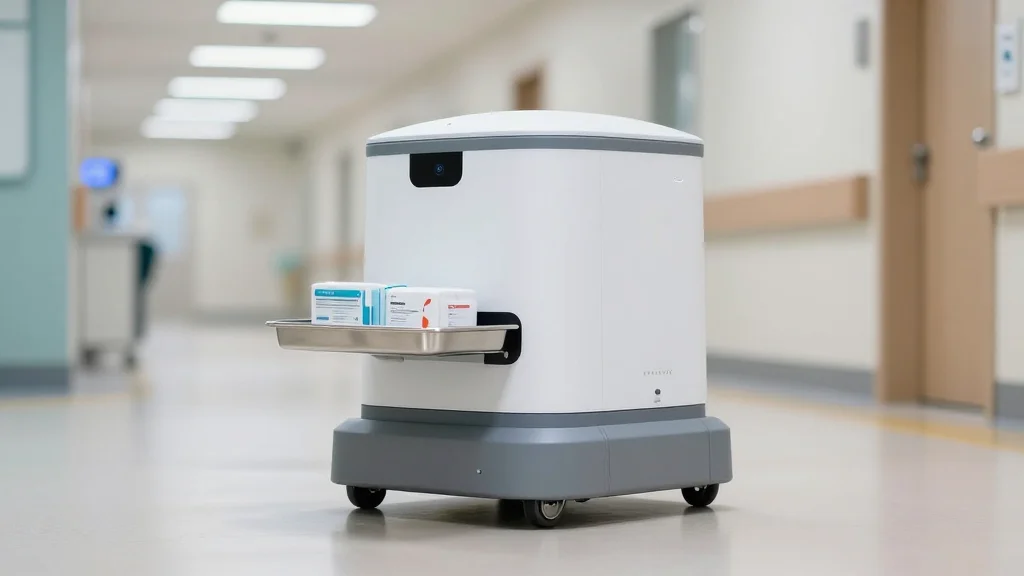
GMEX Robotics Unveils Ergonomic Autonomous Hospital Logistics Robot

Why It Matters
The introduction of a more ergonomic and secure autonomous logistics robot addresses two pressing challenges in modern hospitals: operational bottlenecks and staff safety. By reducing the need for staff to bend or manually maneuver heavy loads, the robot can lower musculoskeletal injury rates, a leading cause of workforce attrition in healthcare. Moreover, its advanced verification systems help safeguard high‑value or regulated supplies, supporting compliance and reducing loss. If the technology proves effective at scale, it could accelerate the adoption of autonomous solutions across other hospital functions, from pharmacy dispensing to sterile instrument transport, driving a broader shift toward AI‑enabled operational efficiency in the sector.
Key Takeaways
- •GMEX’s robot raises delivery height to improve staff ergonomics
- •Integrated AI navigation with real‑time obstacle avoidance
- •Multi‑layered security includes facial and palm‑vein recognition
- •Designed for durability in high‑traffic hospital environments
- •Pilot deployments planned for late 2026 with commercial launch in early 2027
Pulse Analysis
GMEX Robotics is positioning itself at the intersection of healthcare logistics and autonomous systems, a niche that has seen modest but steady growth. The company’s focus on ergonomics differentiates it from earlier models that prioritized speed over user comfort, reflecting a maturing market where hospitals demand solutions that protect their workforce as much as they improve throughput.
Competitors such as Aethon and TUG have long offered autonomous delivery carts, yet many have struggled with integration hurdles and limited adaptability to complex floor plans. GMEX’s emphasis on high‑precision navigation and layered authentication could give it an edge, especially as hospitals tighten security around controlled substances and biologics. However, the absence of disclosed pricing or early adoption metrics leaves uncertainty about the robot’s cost‑effectiveness compared to existing options.
The broader trend points toward a hybrid model where robots handle repetitive, low‑risk transport while human staff focus on clinical decision‑making. If GMEX’s pilots demonstrate measurable reductions in delivery times and injury incidents, the robot could become a benchmark for future deployments, prompting larger health systems to allocate capital toward similar autonomous platforms. The next critical test will be scalability—whether the technology can maintain performance across varied hospital layouts and integrate with legacy IT systems without disruption.
GMEX Robotics Unveils Ergonomic Autonomous Hospital Logistics Robot
Comments
Want to join the conversation?
Loading comments...