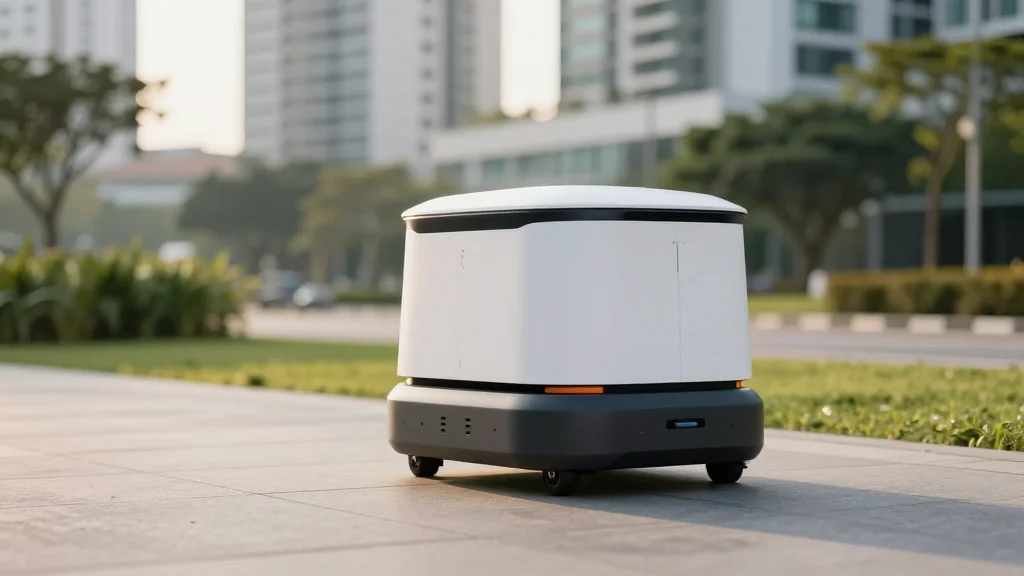
Grab to Pilot Delivery Robots in Singapore’s Punggol District by Late 2026

Companies Mentioned

Why It Matters
The Grab pilot illustrates how ride‑hailing giants are leveraging embodied AI to diversify revenue and address labor constraints in dense Asian cities. By automating the most tedious segment of the delivery chain, Grab not only improves driver efficiency but also creates a new data source that can sharpen its predictive logistics engine. If the robot proves reliable, it could catalyze a wave of autonomous‑last‑mile solutions across the region, reshaping the economics of e‑commerce and food delivery. Beyond operational gains, the rollout tests Singapore’s regulatory framework for street‑level robots, offering a template for other governments grappling with safety, liability and public‑space usage. The partnership also underscores the convergence of software‑centric AI firms (OpenAI, Nvidia) with hardware‑focused robotics, hinting at a future where data, algorithms and physical agents are tightly coupled in a single service ecosystem.
Key Takeaways
- •Grab will pilot its Carri delivery robot in Singapore’s Punggol district in late 2026.
- •The robot targets the 10% of driver time spent on the final hand‑off from curb to doorstep.
- •Over 70% of Grab’s deliveries exceed two kilometres, according to CTO Suthen Paradatheth.
- •Seven other firms, including DHL and Quikbot, will test autonomous solutions in the same district.
- •Singapore’s government has pledged S$300 million (≈$234 million) to AI research, supporting the pilot’s ecosystem.
Pulse Analysis
Grab’s decision to field a dedicated delivery robot reflects a strategic pivot from pure software platforms to a hybrid model that blends digital marketplaces with physical automation. Historically, Southeast Asian logistics have relied on a fragmented fleet of motorbikes and vans, a model that scales poorly as urban density rises and labor costs increase. By inserting a low‑speed, sidewalk‑grade robot into the delivery chain, Grab can off‑load the most labor‑intensive micro‑tasks while preserving the high‑value, longer‑haul segments for human couriers. This division of labor mirrors the broader industry trend where autonomous systems handle repetitive, predictable motions, freeing humans for complex decision‑making and exception handling.
The Punggol pilot also serves as a data‑generation engine. Grab already boasts a “bird’s‑eye view” of city‑wide demand patterns; adding robot telemetry creates a richer, multimodal dataset that can refine route optimization, demand forecasting and dynamic pricing. In a market where margins are razor‑thin, such marginal efficiency gains translate into significant competitive advantage. Moreover, the partnership with OpenAI and Nvidia signals that Grab is positioning itself within a global AI supply chain, accessing cutting‑edge models and hardware that can accelerate robot perception and navigation capabilities.
Regulatory risk remains the biggest unknown. Singapore’s proactive stance on AI research provides a supportive backdrop, yet street‑level robots raise novel safety and liability questions. If Grab can demonstrate a clean safety record and measurable driver‑hour savings, it will likely unlock faster approvals across the region, prompting rivals like Gojek and Foodpanda to accelerate their own embodied‑AI roadmaps. The outcome of this pilot could therefore set the tempo for autonomous last‑mile logistics in Southeast Asia for the next decade.
Grab to Pilot Delivery Robots in Singapore’s Punggol District by Late 2026
Comments
Want to join the conversation?
Loading comments...