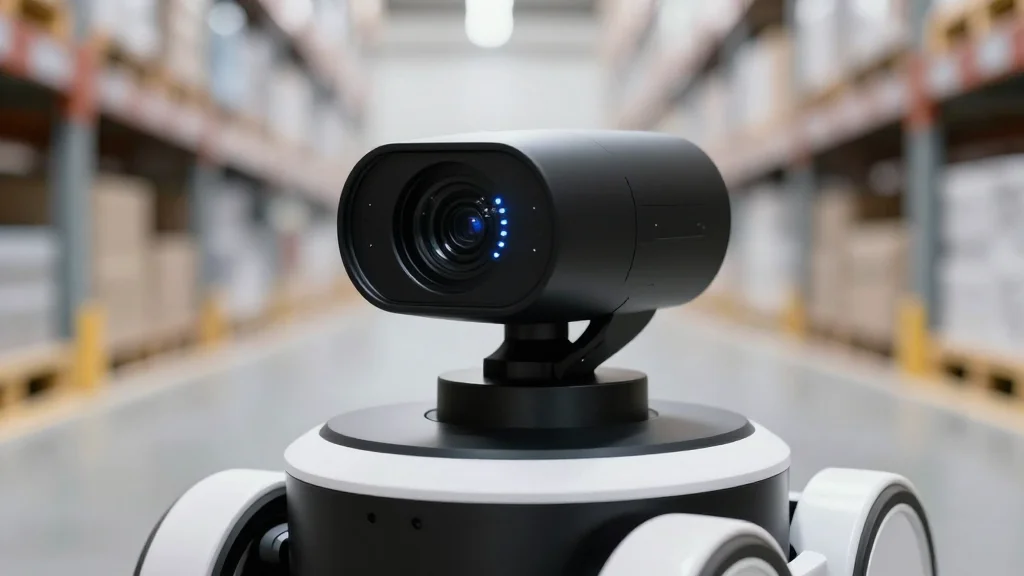
Hesai Unveils Safety‑Certified JT128 LiDAR for Autonomous Logistics at MODEX 2026

Companies Mentioned
Why It Matters
The JT128’s safety certification addresses a critical bottleneck for autonomous robots operating in regulated environments such as warehouses and factories. By providing a sensor that meets stringent safety standards out of the box, Hesai reduces the time and cost for OEMs to certify their machines, accelerating market entry. This could catalyze a wave of autonomous logistics solutions, reshaping labor dynamics and driving efficiency across supply chains. Furthermore, the collaboration illustrates a shift toward modular, software‑first robotics platforms. Thoro.ai’s CoreFlex, paired with a standardized sensor, enables OEMs to reuse perception stacks across diverse robot form factors, fostering economies of scale and faster innovation cycles. The move may pressure competitors to adopt similar safety‑first, modular approaches, intensifying competition in the autonomous logistics market.
Key Takeaways
- •Hesai unveiled the JT128 LiDAR at MODEX 2026, highlighting its 30 mm window height and 70 % smaller volume.
- •JT128 offers a 360° × 187° ultra‑hemispherical field of view, eliminating blind spots for warehouse robots.
- •Thoro.ai will integrate the JT128 into four autonomous mobile robots slated for 2027 release.
- •The partnership leverages Thoro.ai’s CoreFlex platform to deliver a safety‑certified autonomy solution across multiple robot types.
- •Safety certification and modular design aim to cut OEM development time and cost, accelerating autonomous logistics adoption.
Pulse Analysis
Hesai’s JT128 launch marks a strategic inflection point where sensor manufacturers are no longer just hardware suppliers but enablers of regulatory compliance. Historically, LiDAR vendors focused on range and resolution; now, safety certification is becoming a differentiator, especially for indoor logistics where standards such as ISO 10218 and IEC 61508 apply. By embedding compliance into the sensor, Hesai shifts part of the certification burden away from OEMs, a move that could reshape the value chain.
The collaboration with Thoro.ai also underscores the growing importance of software‑first robotics firms that provide turnkey autonomy stacks. CoreFlex’s promise of a unified perception and control suite aligns with a broader industry trend toward platformization, similar to what automotive OEMs have pursued with AUTOSAR. This convergence could lower fragmentation, allowing smaller OEMs to compete with incumbents like Amazon Robotics or Boston Dynamics.
Looking forward, the market will watch how quickly OEMs adopt the JT128 and CoreFlex combination. If early adopters achieve measurable productivity gains—e.g., 15‑20 % faster order fulfillment or 10 % reduction in labor costs—larger players may be forced to standardize on similar safety‑certified sensor suites. The next wave of industry events, such as ProMat 2026 and the International Robotics Expo, will likely serve as proving grounds for these technologies, setting the pace for autonomous logistics over the next five years.
Hesai Unveils Safety‑Certified JT128 LiDAR for Autonomous Logistics at MODEX 2026
Comments
Want to join the conversation?
Loading comments...