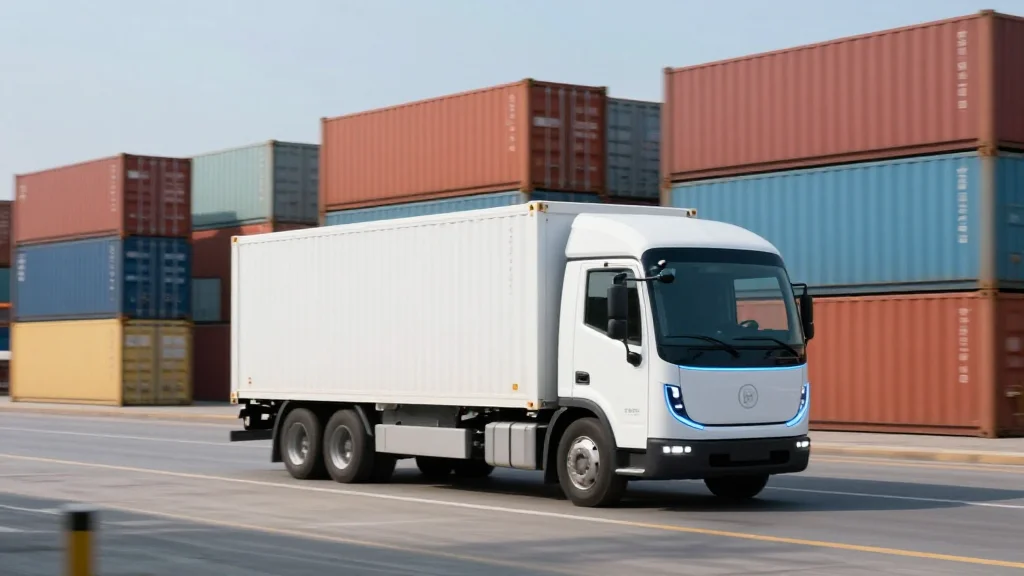
Hong Kong Deploys World's First Six Autonomous Zero‑Emission Trucks at Terminal 4

Why It Matters
The Hong Kong autonomous truck fleet proves that driverless, electric heavy‑duty vehicles can be integrated into complex, high‑density port environments without compromising safety. By cutting emissions and labor costs, the technology addresses two of the most pressing challenges facing global logistics: sustainability and efficiency. If the model proves scalable, it could accelerate the transition to fully automated, carbon‑neutral ports, reshaping supply‑chain economics and reducing reliance on a shrinking pool of skilled truck drivers. Moreover, the rollout sets a benchmark for regulatory frameworks. Successful operation will provide data on incident rates, sensor reliability and human‑machine interaction, informing standards that could be adopted by maritime authorities worldwide. This could lower entry barriers for smaller ports, democratizing access to advanced automation and leveling the competitive playing field.
Key Takeaways
- •Six autonomous, zero‑emission trucks deployed at Hong Kong's Terminal 4
- •First dedicated driverless heavy‑duty fleet operating in a live container terminal
- •Trucks can run up to 12 hours on a single charge, handling ~150 TEU per shift
- •HPH Trust aims to expand to 24 trucks by end‑2027 and license software regionally
- •Potential to cut terminal handling costs by 15‑20% and emissions by up to 30%
Pulse Analysis
The Hong Kong launch is less a flash‑in‑the‑pan pilot and more a strategic inflection point for port automation. Historically, autonomy in maritime logistics has been fragmented—isolated pilots of automated cranes, guided vehicles, or AI scheduling tools. By fielding a full fleet of driverless trucks that operate alongside conventional equipment, HPH Trust demonstrates the feasibility of end‑to‑end automation in a real‑world, high‑throughput setting. This integrated approach reduces hand‑off friction, a common source of inefficiency in mixed‑mode yards.
From a market perspective, the deployment could catalyse a wave of capital allocation toward electric autonomy solutions. Equipment manufacturers such as BYD, Tesla and Navistar have been courting the heavy‑duty segment, but adoption has been hampered by concerns over range, payload, and regulatory approval. The Hong Kong case provides a data‑rich proof point that electric powertrains can meet the endurance demands of container handling while delivering measurable emissions reductions. Investors are likely to interpret this as validation, prompting a surge in funding for next‑generation autonomous truck platforms.
Looking forward, the real test will be scaling the technology across diverse port layouts and regulatory regimes. Hong Kong benefits from a relatively unified terminal operator and a supportive government agenda on green logistics. Replicating the model in ports with multiple stakeholders, varying infrastructure standards, and less clear liability frameworks will require robust industry standards and perhaps a new class of insurance products. If those hurdles are cleared, the autonomous truck could become the linchpin of a truly smart, carbon‑neutral supply chain, reshaping the economics of global trade for the next decade.
Hong Kong Deploys World's First Six Autonomous Zero‑Emission Trucks at Terminal 4
Comments
Want to join the conversation?
Loading comments...