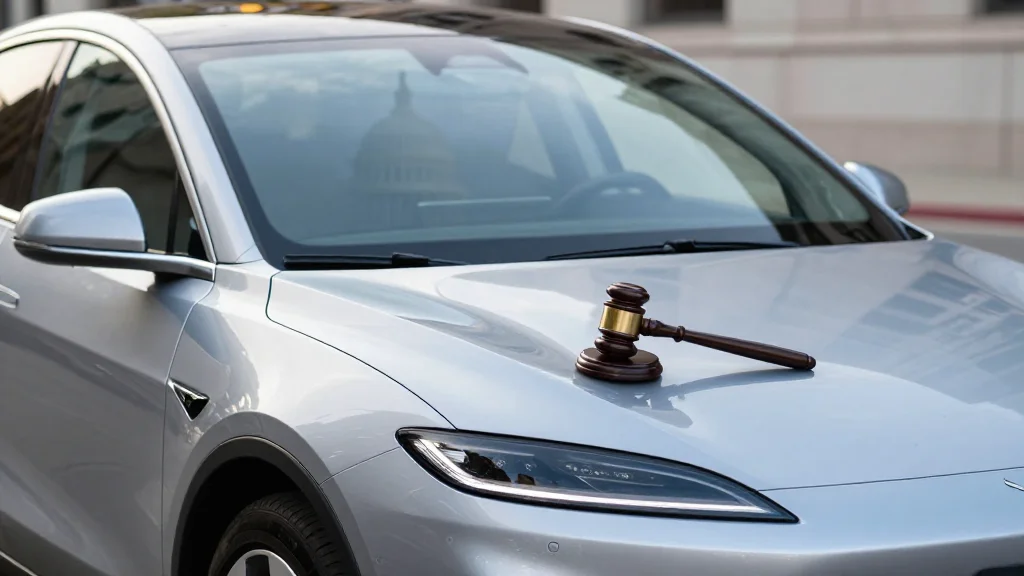
House Subcommittee Passes SELF DRIVE Act, Raising AV Cap to 90,000 Amid Senate Counterbill

Why It Matters
The legislation will determine whether the United States adopts a unified, high‑volume approach to autonomous‑vehicle testing or remains mired in a patchwork of state rules. A higher deployment cap could accelerate safety improvements, lower costs, and keep U.S. firms competitive against Chinese rivals. Conversely, stricter operational limits may protect public safety in the short term but risk slowing innovation and ceding market share abroad. Beyond industry economics, the debate reflects a broader tension between political actors who view AVs as a job‑creation engine and those who see them as a threat to existing labor. The outcome will shape the regulatory environment that governs how quickly self‑driving cars appear on American streets and how many lives they may ultimately save.
Key Takeaways
- •House Transportation Subcommittee passed the SELF DRIVE Act 12‑11, raising the AV cap from 2,500 to 90,000 vehicles.
- •Senate's Stay in Your Lane Act would require manufacturers to define an operational design domain (ODD).
- •Both bills claim safety focus but are backed by distinct coalitions of industry groups and labor/consumer advocates.
- •U.S. traffic deaths average 36,742 annually—roughly the capacity of a major league baseball stadium.
- •The U.S. Chamber of Commerce warns that Chinese firms already lead in driverless‑mile deployments.
Pulse Analysis
The AV legislative duel is less about technical safety metrics and more about who controls the future of a trillion‑dollar mobility market. The SELF DRIVE Act’s emphasis on a safety‑case framework mirrors the industry’s desire for a predictable, federal‑level approval process that can replace the current 34‑state mosaic. By allowing up to 90,000 vehicles, the bill would create a data‑rich environment essential for machine‑learning models that underpin autonomous perception. In practice, that could compress the timeline for Level 4 and Level 5 deployments, giving U.S. firms a competitive edge.
However, the Stay in Your Lane Act taps into genuine concerns about premature exposure of untested technology to complex real‑world conditions. By mandating a narrowly defined ODD, the Senate proposal could force manufacturers to limit testing to ideal weather and road scenarios, potentially slowing the accumulation of edge‑case data. While this may appease safety watchdogs and labor unions fearing job loss, it also risks creating a regulatory bottleneck that foreign competitors—particularly Chinese firms operating under looser national guidelines—can exploit.
Politically, the narrow subcommittee vote signals that any further progress will require bipartisan negotiation. Industry lobbyists have already signaled willingness to fund research and safety‑case development, but they will likely push back against any provision that curtails the scale of deployment. The next few months will test whether a compromise—perhaps a tiered deployment model that blends a higher cap with stricter ODD reporting—can reconcile the bootlegger and Baptist interests. The stakes are high: the chosen regulatory path will shape not only the pace of AV adoption but also the United States’ position in the global race for autonomous mobility leadership.
House Subcommittee Passes SELF DRIVE Act, Raising AV Cap to 90,000 Amid Senate Counterbill
Comments
Want to join the conversation?
Loading comments...