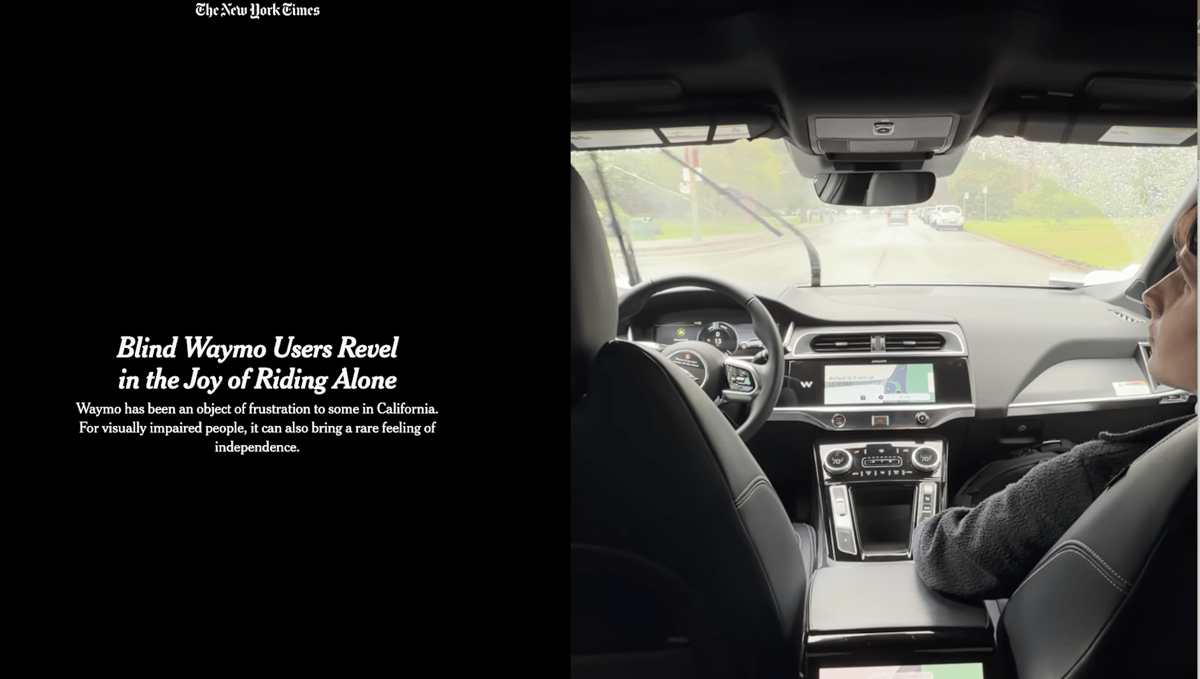
How Waymo Is Helping Visually Impaired People Gain New Independence
Key Takeaways
- •Waymo partnered early with the American Council of the Blind
- •Blind riders report full independence and control in robotaxis
- •Guide dogs are accepted, unlike many rideshare services
- •Premium pricing restricts everyday use for many users
Pulse Analysis
Waymo’s commitment to accessibility goes beyond compliance; it reflects a strategic push to capture underserved markets. By aligning with the American Council of the Blind and designing vehicles that accommodate guide dogs, Waymo differentiates itself from competitors like Uber and Lyft, whose drivers often refuse service to visually impaired passengers. This partnership not only enhances brand perception but also positions Waymo favorably in ongoing discussions with regulators about equitable autonomous mobility.
First‑hand accounts from users such as 28‑year‑old Ruben Brunt and South San Francisco resident Sarah Funes illustrate the tangible benefits of robotaxis. Riders enjoy the freedom to set their own music, travel without a human interlocutor, and avoid the stigma of being denied a ride. For people on the autism spectrum or those with limited mobility, the predictable, low‑sensory environment of a Waymo vehicle reduces anxiety and promotes independence. These experiences underscore a broader trend: autonomous platforms can address niche accessibility needs that traditional ride‑hailing services struggle to meet.
From a business perspective, the accessibility angle could unlock a premium revenue stream, but Waymo’s current fare levels remain a barrier to frequent use. If pricing can be calibrated—perhaps through subsidies, corporate partnerships, or tiered service models—Waymo could see higher adoption rates among disability communities, driving volume and data collection. Moreover, demonstrating real‑world inclusivity strengthens Waymo’s case for expanded licensing in additional cities, potentially accelerating the overall rollout of autonomous mobility across the United States.
How Waymo Is Helping Visually Impaired People Gain New Independence
Comments
Want to join the conversation?