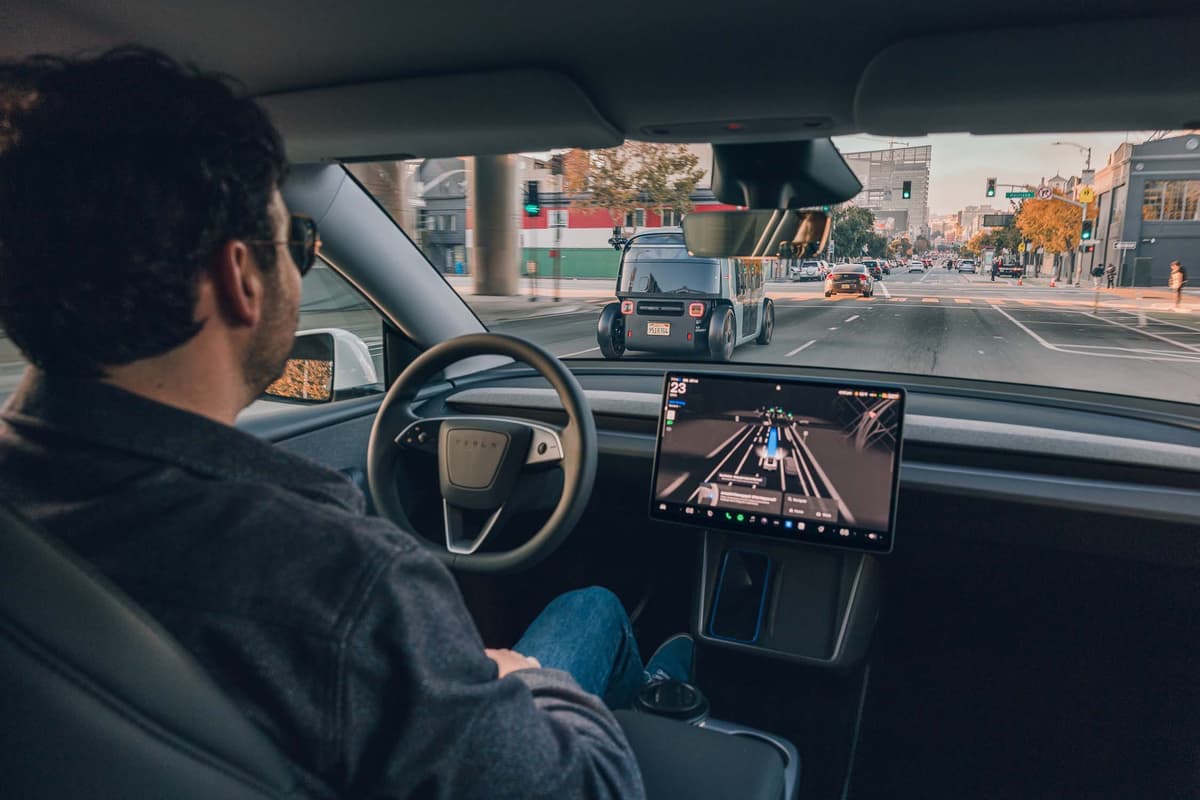
How Well Does the Tesla Model Y's Full Self-Driving Feature Work?
Companies Mentioned
Why It Matters
The review highlights both the rapid progress and the remaining safety gaps in Tesla’s driver‑assist technology, influencing consumer adoption and regulatory scrutiny. The subscription pricing could broaden market reach, but persistent errors may temper enthusiasm.
Key Takeaways
- •FSD navigated busy circles and highways with high competence.
- •Missed hidden speed bump and misidentified driveway due to visual obstruction.
- •Intersection handling errors raised safety concerns in urban settings.
- •$99/month subscription lowers entry barrier versus $8,000 upfront cost.
Pulse Analysis
Tesla’s Full Self‑Driving (FSD) system, now marketed as ‘Full Self‑Driving (Supervised)’, blends advanced neural‑network vision with radar and ultrasonic sensors to deliver hands‑free cruising on highways and city streets. Car and Driver’s on‑road evaluation of two 2026 Model Y Long‑Range AWDs in Ann Arbor and San Francisco showed the software can negotiate complex roundabouts, merge onto congested freeways, and follow navigation prompts with minimal driver input. However, the system still relies on driver attention; it disengaged when the eye‑tracking camera detected the tester looking away, and occasional perception glitches—such as a missed shaded speed bump and a misread driveway—required manual correction. The mixed performance underscores the broader challenge facing the autonomous‑vehicle industry: delivering reliable perception in real‑world edge cases while satisfying regulators and wary consumers.
Missed obstacles and hesitant turns at four‑way intersections are the exact scenarios that safety agencies monitor when assessing Level 2‑plus driver‑assist technologies. Competitors like Waymo and Cruise are pursuing higher automation levels with lidar stacks, but Tesla’s camera‑first approach keeps hardware costs low and scales quickly. As more drivers experience supervised FSD, public confidence will hinge on how quickly software updates can eliminate these residual errors.
Pricing is a decisive factor in adoption. Tesla has shifted from an $8,000 one‑time purchase to a $99‑per‑month subscription, effectively turning a high‑ticket item into a low‑commitment trial. This model lets owners test the feature without a large upfront outlay and provides Tesla with a recurring revenue stream to fund continuous over‑the‑air improvements. If the subscription proves compelling, it could accelerate mainstream acceptance of advanced driver‑assist suites, but persistent safety lapses may still limit its appeal to those who value a truly hands‑free experience.
How Well Does the Tesla Model Y's Full Self-Driving Feature Work?
Comments
Want to join the conversation?
Loading comments...