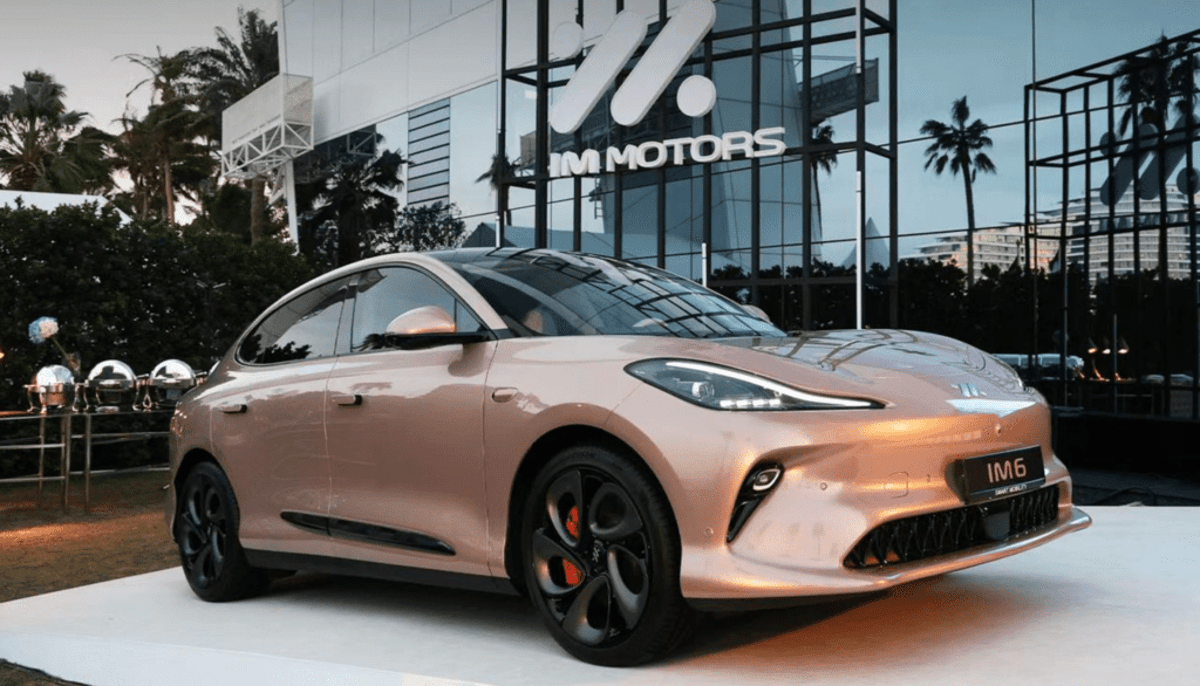
IM Motors Expands to UAE and Tunisia with Momenta ADAS
•February 23, 2026
0
Why It Matters
The launch gives IM Motors a foothold in fast‑growing EV markets while showcasing a scalable, AI‑driven ADAS that can accelerate autonomous‑driving adoption across diverse regulatory environments.
Key Takeaways
- •IM Motors launches IM5, IM6 in UAE, Tunisia.
- •Vehicles feature Momenta co‑developed ADAS system.
- •ADAS adapts via continuous learning to local traffic.
- •Parking assistance handles 30+ scenarios, 300+ space types.
Pulse Analysis
IM Motors' entry into the United Arab Emirates and Tunisia marks its first foray into the Middle East and North Africa (MENA) region, extending the Chinese EV maker's global footprint. The launch of the IM5 and IM6 models aligns with the region's accelerating demand for electric vehicles, driven by government incentives, expanding charging infrastructure, and a growing consumer appetite for premium EVs. The UAE's Vision 2030 targets a 30% EV share, while Tunisia's recent tax rebates aim to double EV registrations by 2027, making early market presence strategically valuable.
The vehicles arrive equipped with an advanced driver assistance system co‑developed with Momenta, leveraging the company’s End‑to‑End Flywheel Big Model. This AI‑driven platform continuously learns from local traffic patterns, enabling the system to adapt to the UAE’s high‑speed highways and Tunisia’s narrow, congested streets. Parking assistance covers more than 30 scenarios, handling diverse marking standards and over 300 parking space types, demonstrating the system’s scalability across varied urban environments. The system also integrates real‑time over‑the‑air updates, ensuring firmware improvements reach vehicles without dealer visits.
With deployments now spanning five continents and more than a dozen markets, the Momenta‑IM partnership signals a shift toward globally interoperable ADAS solutions. Automakers seeking to accelerate autonomous‑driving capabilities can leverage such modular, continuously learning systems rather than building proprietary stacks from scratch. As MENA regulators tighten safety standards, the availability of a proven, adaptable assistance suite could become a decisive factor for consumers and fleet operators, further propelling EV adoption across the region. Industry analysts predict that such cross‑regional ADAS platforms will lower R&D costs by up to 20%, accelerating the path to Level‑3 autonomy.
IM Motors expands to UAE and Tunisia with Momenta ADAS
0
Comments
Want to join the conversation?
Loading comments...