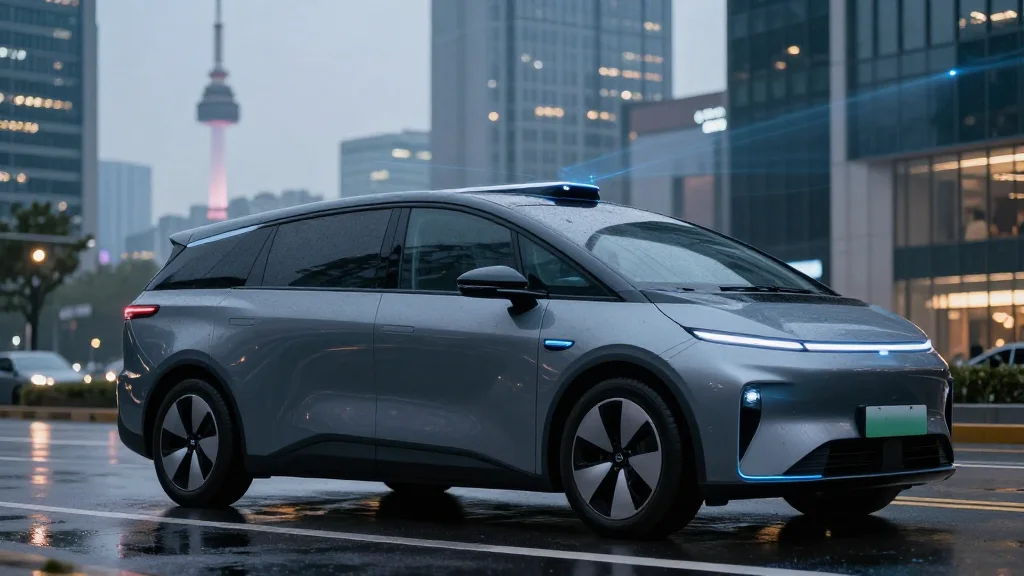
Kakao Mobility Rolls Out South Korea’s First Level‑4 Robotaxi Service in Seoul

Companies Mentioned
Why It Matters
The Seoul launch demonstrates that Level‑4 autonomy can move beyond test tracks into everyday urban transport, challenging the perception that fully driverless vehicles are still years away. By embedding the service in a popular consumer app, Kakao lowers the friction for mass adoption and creates a data loop that can accelerate AI improvements. The deployment also provides regulators with concrete performance metrics, informing future policy on autonomous mobility across the region. For investors and industry watchers, Kakao’s move signals that South Korean tech conglomerates are ready to compete with traditional automakers and Silicon Valley firms in the autonomous‑vehicle arena. The success—or failure—of the pilot will likely influence capital allocation decisions, partnership strategies and the pace of regulatory reforms throughout Asia.
Key Takeaways
- •Kakao Mobility launched South Korea’s first Level‑4 robotaxi service in Seoul on April 28, 2026.
- •The rollout is driven by Kakao’s Physical AI division, led by Kim Jin‑kyu.
- •Service operates within a 15‑km corridor under a limited‑area permit from Seoul authorities.
- •No fleet size or pricing details were disclosed; fares are expected to match conventional taxis.
- •Kakao plans to extend the service to Busan and explore autonomous logistics by end‑2026.
Pulse Analysis
Kakao Mobility’s entry into Level‑4 autonomous ride‑hailing marks a strategic inflection point for the Asian mobility sector. Historically, the region has lagged behind North America and Europe in deploying driverless taxis at scale, largely due to fragmented regulatory environments and limited consumer exposure. Kakao’s approach—leveraging an entrenched super‑app ecosystem—offers a shortcut to market penetration that many rivals lack. By bundling autonomous rides with existing services such as messaging, payments and navigation, Kakao can cross‑sell and generate network effects that reduce customer acquisition costs.
From a competitive standpoint, the launch forces traditional automakers and foreign tech firms to reassess their go‑to‑market strategies. Hyundai’s autonomous unit, for example, has focused on B2B shuttle solutions, but Kakao’s consumer‑facing model could capture a larger share of daily commuting trips. Meanwhile, Waymo’s recent expansion in Japan suggests that global players are eyeing the same regulatory sandbox. Kakao’s early mover advantage in Seoul may translate into a data moat, as each autonomous mile adds to a proprietary dataset that refines perception and decision‑making algorithms.
Looking forward, the key determinants of success will be regulatory agility, public trust and cost efficiency. If Kakao can demonstrate a safety record comparable to human drivers while keeping fares competitive, municipalities may be inclined to broaden operating zones, effectively turning Seoul into a living laboratory for Level‑4 autonomy. Conversely, any high‑profile incident could trigger a backlash that stalls the sector’s momentum across the continent. Investors should monitor Kakao’s quarterly reports for metrics on vehicle uptime, incident rates and user adoption, as these will be early indicators of whether the Seoul pilot can be scaled into a sustainable revenue stream.
Kakao Mobility Rolls Out South Korea’s First Level‑4 Robotaxi Service in Seoul
Comments
Want to join the conversation?
Loading comments...