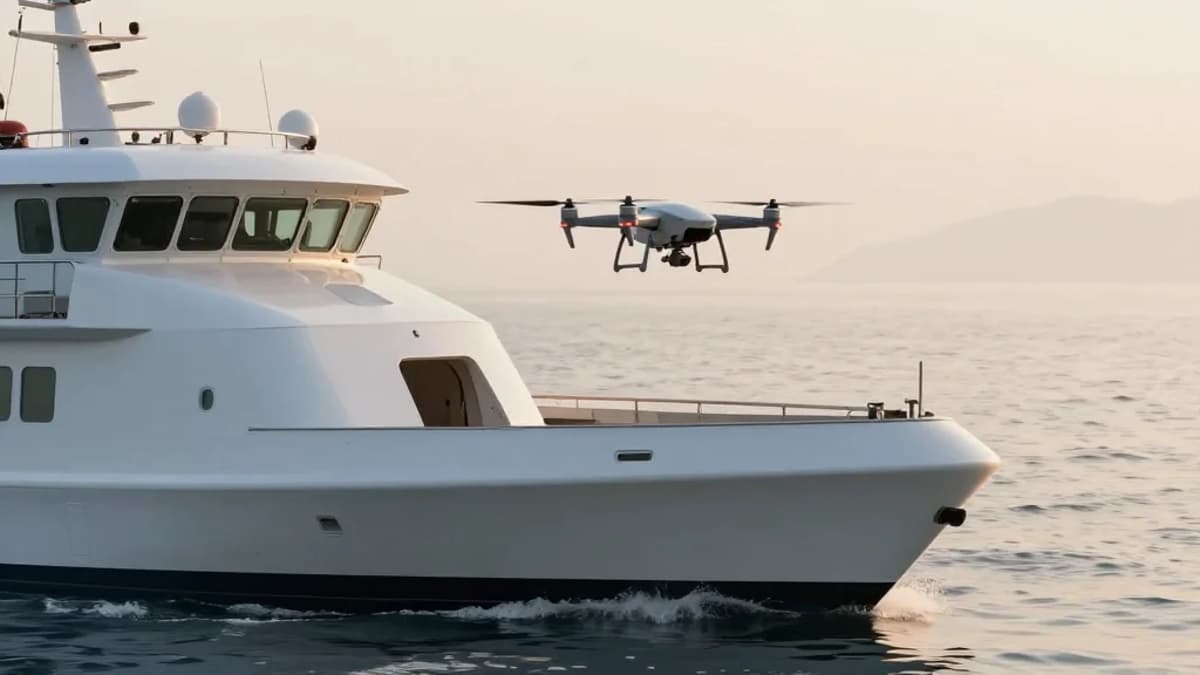
Launch of the VIGILANSEA Project: Toward Autonomous Maritime Persistence Between Surface and Aerial Systems
•March 5, 2026
0
Why It Matters
By enabling continuous, autonomous maritime coverage, VIGILANSEA can dramatically improve security, reduce crew risk, and lower operational costs for both defense and commercial stakeholders.
Key Takeaways
- •France 2030 funds three-year VIGILANSEA project.
- •New maritime UAV designed for long-endurance open sea missions.
- •DIODON REEF enables autonomous UAV launch, recovery, recharging on USVs.
- •SeaOwl USV integrates UAV deployment with aerodynamic optimization.
- •Autonomous persistence boosts surveillance, counter‑trafficking, environmental monitoring.
Pulse Analysis
The maritime domain is expanding faster than traditional surveillance assets can cover. Nations and commercial operators face the dual challenge of monitoring vast oceanic areas while protecting crews from hazardous conditions. DIODON’s VIGILANSEA project, backed by France 2030, directly addresses this gap by marrying surface drones with long‑endurance aerial platforms. By automating the hand‑off between a USV and a UAV, the programme promises continuous situational awareness without the logistical burden of manned vessels or frequent human intervention.
At the heart of VIGILANSEA are two hardware blocks: a next‑generation maritime UAV built to survive salt spray, waves and high winds, and the DIODON REEF station that lives aboard the SeaOwl USV. REEF handles launch, retrieval, battery swapping and real‑time health monitoring, effectively turning the surface craft into a mobile launchpad. Coupled with ISAE‑SUPAERO’s aerodynamic optimisation and advanced flight‑control algorithms, the system can execute repeatable missions, maintain resilient satellite‑linked command‑and‑control, and recharge in situ, dramatically extending on‑station time.
The commercial and defense markets stand to gain a decisive edge. Persistent, unmanned coverage can accelerate detection of illegal trafficking, protect offshore infrastructure, and support environmental compliance inspections. For navies, the technology reduces crew exposure and operational costs while enhancing maritime domain awareness across littoral and open‑sea zones. As autonomous persistence becomes a baseline capability, VIGILANSEA could set industry standards, prompting further investment in integrated surface‑air drone ecosystems and reshaping how maritime security is conducted worldwide.
Launch of the VIGILANSEA Project: Toward Autonomous Maritime Persistence Between Surface and Aerial Systems
0
Comments
Want to join the conversation?
Loading comments...