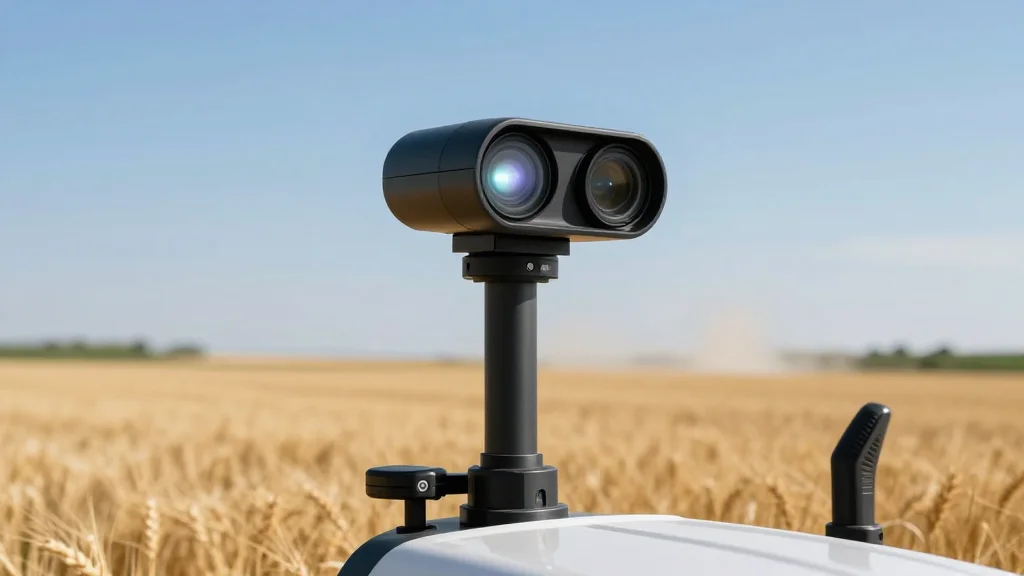
Mahindra Launches Autonomous Tractor Fleet in Punjab and Haryana

Companies Mentioned
Why It Matters
The deployment of autonomous tractors in India could reshape the country's agricultural productivity landscape. By automating labor‑intensive tasks, the technology promises to offset the chronic shortage of farm workers, a problem exacerbated by rapid urbanization. Higher efficiency may translate into increased yields, lower production costs, and greater resilience against climate‑induced disruptions. Moreover, the rollout signals a broader shift toward AI‑driven agritech solutions in emerging markets, where scale and cost constraints have traditionally limited high‑tech adoption. If successful, Mahindra’s autonomous fleet could serve as a template for other developing economies facing similar labor challenges. It also raises questions about the future role of smallholder farmers, who may need to adapt to new operational models that rely on data analytics, remote monitoring and subscription‑based services for equipment usage.
Key Takeaways
- •Mahindra & Mahindra begins autonomous tractor rollout in Punjab and Haryana
- •Tractors equipped with LiDAR, computer‑vision and proprietary navigation stack
- •Pilot targets labor‑shortage mitigation for plowing, sowing and harvesting
- •Pricing premium over conventional tractors; exact figures undisclosed
- •Rollout aligns with India's Sub‑Mission on Agricultural Mechanization
Pulse Analysis
Mahindra’s autonomous tractor rollout is a strategic bet on scaling AI‑driven hardware in a market that has historically lagged behind Western adopters. The company leverages its deep brand equity in Indian agriculture to overcome the trust barrier that often stalls new technology uptake among smallholder farmers. By embedding the system within a familiar tractor platform, Mahindra reduces the perceived risk of switching to a fully autonomous solution.
The competitive landscape is poised for rapid evolution. Global OEMs have been piloting autonomous tractors in the United States and Europe, but those markets benefit from higher farm incomes and more mature data infrastructure. In India, the challenge is twofold: ensuring the technology can handle highly variable field conditions and making the economics viable for farmers who operate on thin margins. Mahindra’s partnership model—collaborating with local robotics firms—could give it a cost advantage and faster iteration cycles compared with foreign entrants.
Looking forward, the rollout’s success will hinge on regulatory clarity and the development of a service ecosystem for maintenance, data analytics and financing. If Mahindra can demonstrate measurable yield improvements and labor cost savings during the pilot, it could unlock a cascade of financing from both government schemes and private investors eager to back agritech in a $500 billion market. The next six months will be critical as the company scales beyond the pilot, navigates safety certifications, and potentially expands the autonomous fleet to other states, setting a new benchmark for autonomy in emerging‑economy agriculture.
Mahindra launches autonomous tractor fleet in Punjab and Haryana
Comments
Want to join the conversation?
Loading comments...