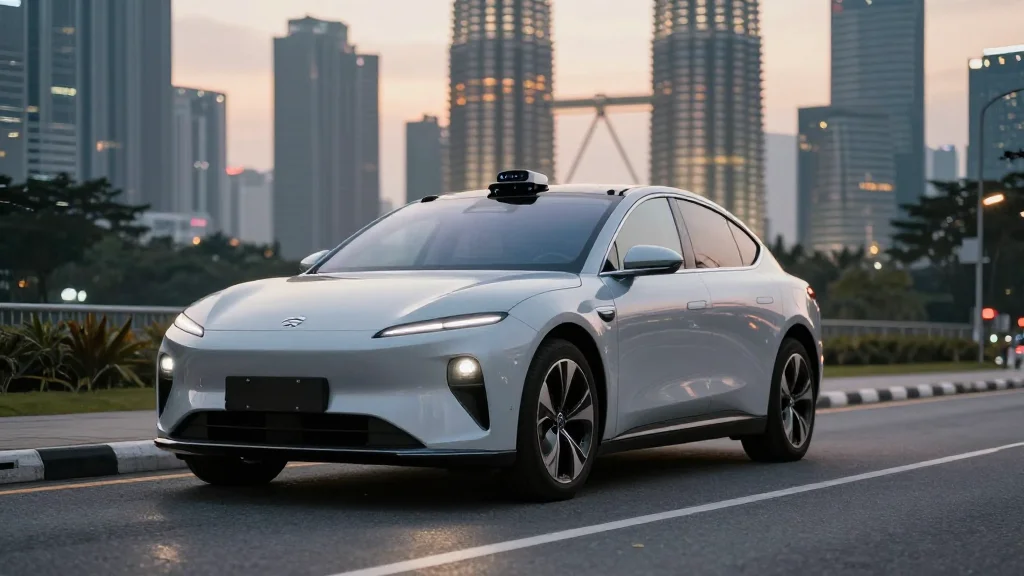
Malaysia Sets 2030 Goal for Level 3 Driverless Cars in New Roadmap

Why It Matters
Achieving Level 3 autonomy by 2030 would place Malaysia among the few emerging economies with a clear, government‑backed timeline for driverless technology. The roadmap could catalyze a new industrial ecosystem, creating demand for semiconductor design, AI software, and advanced sensor manufacturing—sectors that currently represent a modest share of Malaysia's export basket. Successful execution may also draw multinational OEMs seeking a regional testbed, boosting foreign direct investment and accelerating the country's transition from a traditional automotive assembly hub to a technology‑driven mobility leader. Regionally, the move could pressure neighboring countries such as Thailand and Indonesia to accelerate their own autonomous strategies, potentially reshaping Southeast Asia's automotive supply chain. If Malaysia can nurture a domestic supplier base, it may reduce reliance on imports for critical components, enhancing supply‑chain resilience amid global chip shortages.
Key Takeaways
- •Malaysia's roadmap targets Level 3 autonomous vehicles by 2030.
- •The Malaysia Automotive, Robotics and IoT Institute will lead ecosystem development.
- •Local firms are urged to become suppliers of chips, sensors and AI software.
- •Cyberjaya test lane opened in 2020; eMoovit Technology was first tester.
- •US autonomous deployments grew from 4 to 40 cities in one year, per Sim.
Pulse Analysis
Malaysia's Level 3 target is ambitious, especially given the country's current automotive profile centered on conventional manufacturing for global OEMs. The policy's success hinges on three interlocking factors: talent development, capital investment, and regulatory clarity. While the roadmap promises research grants and a sandbox environment, the timeline compresses a decade-long technology maturation into a seven‑year window. This pressure may spur rapid upskilling but also risks under‑delivering if supply‑chain bottlenecks persist.
Historically, Southeast Asian governments have struggled to translate policy into commercial outcomes, often due to fragmented incentives and limited private‑sector alignment. Malaysia's decision to place the Malaysia Automotive, Robotics and IoT Institute at the helm could mitigate coordination gaps, but the institute must secure partnerships with global chip makers and AI firms to avoid a domestic capability ceiling. The reference to the United States' city rollout underscores a competitive benchmark; however, the US advantage stems from massive private investment and a mature regulatory framework, assets Malaysia currently lacks.
Looking ahead, the roadmap could act as a catalyst for a regional autonomous corridor, linking Singapore's testbeds, Thailand's manufacturing base, and Malaysia's emerging tech ecosystem. If the government can deliver on infrastructure upgrades—particularly high‑definition mapping and V2X communication—the region may collectively attract multinational pilots, positioning Southeast Asia as a cost‑effective alternative to Europe or North America for large‑scale autonomous trials.
Malaysia Sets 2030 Goal for Level 3 Driverless Cars in New Roadmap
Comments
Want to join the conversation?
Loading comments...