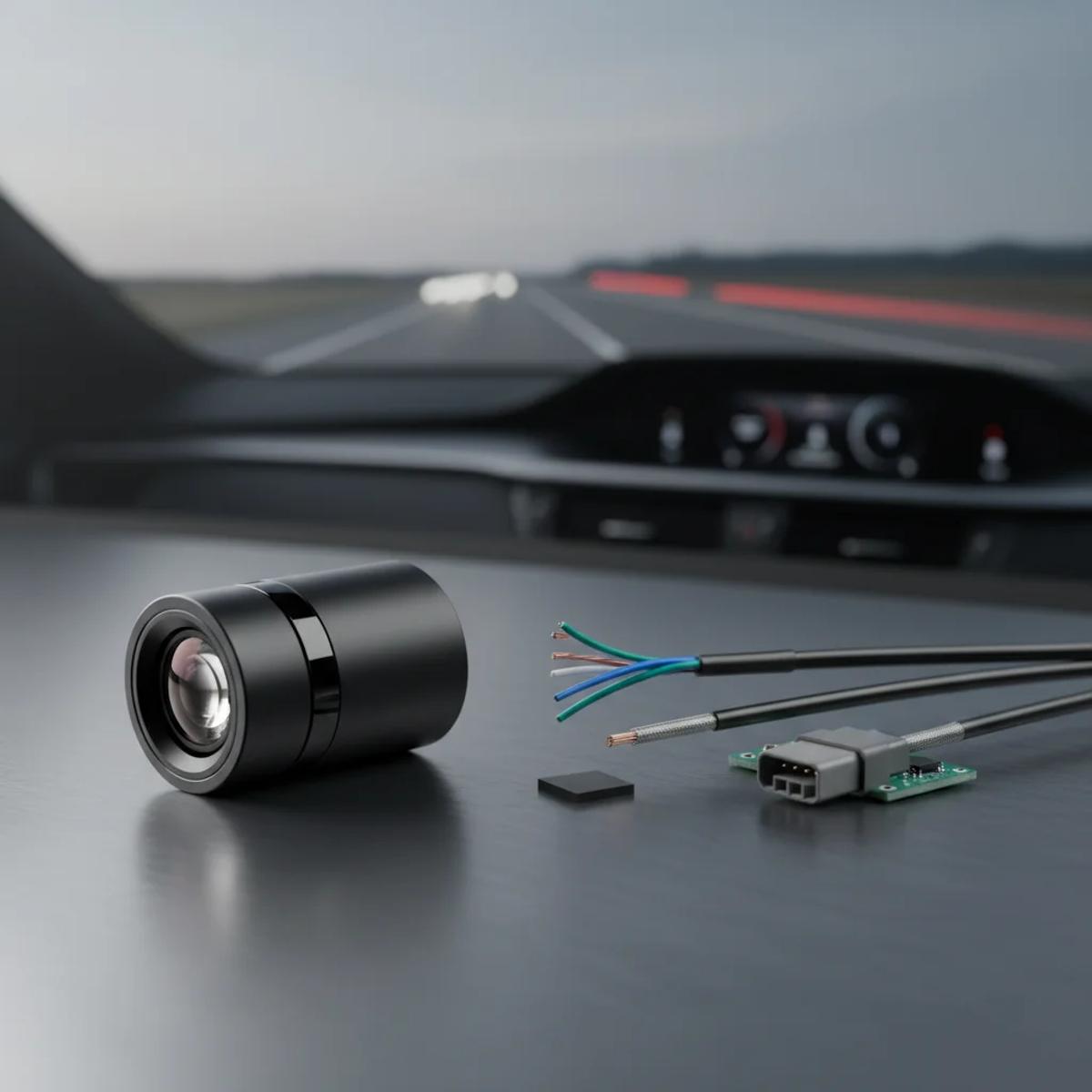
MCNEX and Valens Unveil QHD Automotive Cameras Using VA7000 Chipsets
•February 19, 2026
0
Companies Mentioned

Why It Matters
The solution slashes wiring‑harness cost and complexity while preserving the bandwidth needed for advanced driver‑assistance and autonomous‑driving sensors, accelerating affordable high‑resolution imaging in vehicles.
Key Takeaways
- •QHD cameras run over unshielded twisted pair
- •VA7000 chipset enables multi‑gigabit A‑PHY connectivity
- •Simplified cabling cuts harness cost and complexity
- •Modules support interior ADAS and 4K 60fps rear view
- •Production ready; OEM launch expected early 2027
Pulse Analysis
The automotive industry is racing to embed higher‑resolution sensors for ADAS and autonomous functions, yet the physical layer—cabling and connectors—has lagged behind. Traditional video links rely on bulky, shielded coax or fiber, inflating vehicle weight and manufacturing expense. Valens’ VA7000 A‑PHY chipset changes that equation by delivering multi‑gigabit data rates over unshielded twisted‑pair (UTP) or inexpensive coax, marrying QHD video quality with a leaner wiring architecture.
MCNEX’s integration of the VA7000 into its camera modules translates the chipset’s bandwidth and electromagnetic‑compatibility strengths into practical vehicle solutions. By supporting both exterior and interior camera placements, the modules enable automakers to deploy front‑facing, rear‑facing, and cabin‑monitoring cameras without redesigning harnesses. The added 4K‑60fps rear‑view camera, optimized for shielded cabling, showcases the platform’s flexibility across cost‑sensitive and premium vehicle lines, delivering crisp imaging for parking assistance and high‑speed maneuvers.
With volume production already in motion and the first OEM rollout targeted for early 2027, the MCNEX‑Valens partnership positions these cameras as a cornerstone for next‑generation vehicle sensor networks. The reduced harness complexity not only cuts material costs but also simplifies assembly, shortening production cycles. As OEMs pair these cameras with compute platforms like Mobileye’s EyeQ6, the industry moves closer to scalable, high‑definition perception stacks essential for widespread Level‑3 and beyond autonomous driving deployments.
MCNEX and Valens unveil QHD automotive cameras using VA7000 chipsets
0
Comments
Want to join the conversation?
Loading comments...