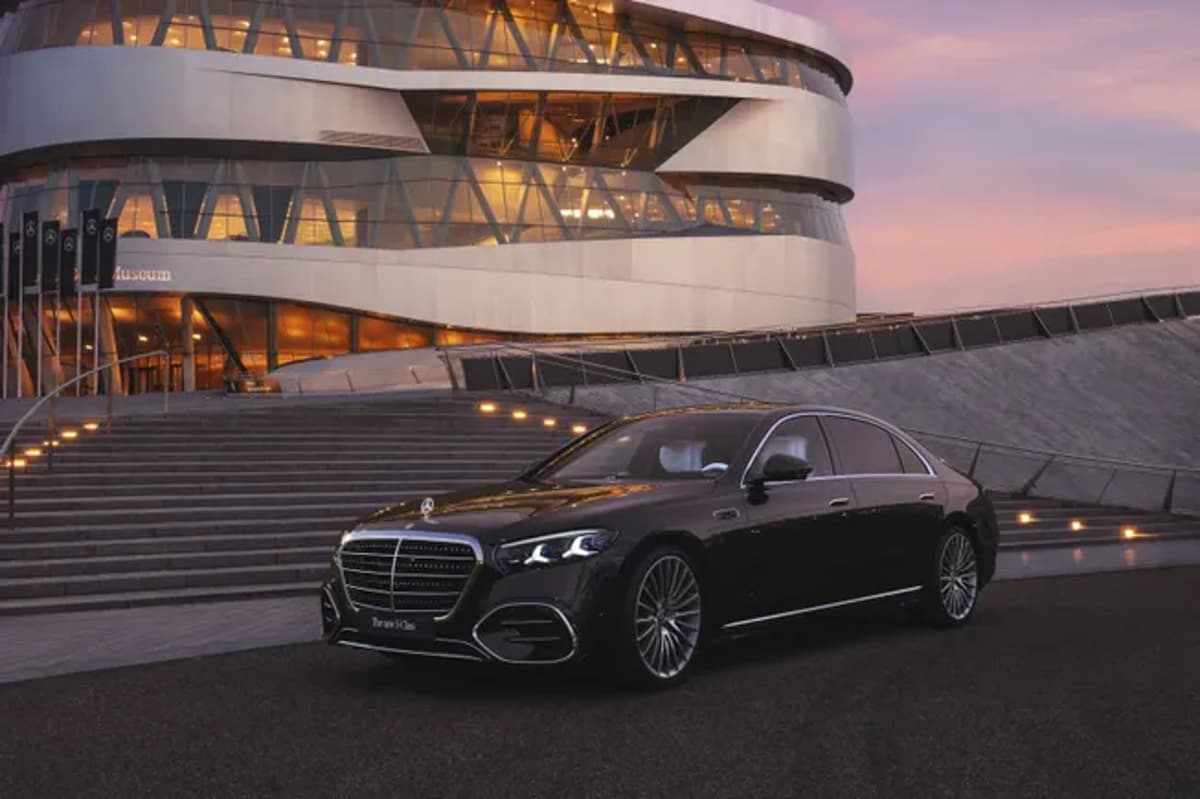
Mercedes-Benz Shifts Autonomous Driving Tech in 2026 S-Class
•February 11, 2026
0
Why It Matters
The shift preserves Mercedes’ flagship margin while navigating U.S. regulatory uncertainty, and it positions the brand to build a scalable foundation for higher‑level autonomy later.
Key Takeaways
- •MB Drive Assist Pro replaces Drive Pilot in US
- •Level 2++ system offers automated lane changes, traffic navigation
- •Mercedes shifts resources to future Level 3 and Level 4
- •Regulatory hurdles make US Level 3 rollout complex
- •Partnerships with NVIDIA and Uber accelerate autonomous tech development
Pulse Analysis
Mercedes‑Benz’s decision to replace its Level 3 Drive Pilot with the Level 2++ MB Drive Assist Pro in the 2026 S‑Class reflects a pragmatic response to the fragmented regulatory landscape across the United States. While the original Drive Pilot was limited to 40 mph and geofenced to California and Nevada, the new system can be deployed nationwide without state‑by‑state certification delays. This retreat postpones a fully hands‑free experience for consumers but preserves the brand’s high‑margin flagship segment, allowing Mercedes to focus on incremental safety gains while the legal framework for higher‑level autonomy continues to evolve.
The MB Drive Assist Pro is marketed as a Level 2++ driver‑assistance suite that adds automated lane changes and heavy‑traffic navigation to the existing suite of adaptive cruise and steering functions. Built on the latest MB.OS operating system, the architecture integrates a lidar sensor, centralized computing and a scalable software stack that can be upgraded to Level 3 with redundant steering, braking and power modules. By embedding generative‑AI voice assistants and cloud‑connected chassis software, Mercedes creates a platform that not only improves driver comfort today but also serves as a testbed for future autonomous capabilities.
Beyond the S‑Class, the move signals a broader industry trend toward perfecting advanced driver‑assistance before committing to widespread Level 3 deployments. Mercedes’ collaborations with NVIDIA on high‑performance AI chips and with Uber on robotaxi concepts illustrate a dual strategy: accelerate hardware readiness while exploring new mobility business models. For luxury‑car makers, the challenge remains to balance premium pricing with tangible safety value, especially as SUVs erode sedan market share. If the Level 2++ platform proves reliable, it could become the foundation for the next generation of Mercedes autonomous vehicles, including eventual Level 4 robotaxis.
Mercedes-Benz shifts autonomous driving tech in 2026 S-Class
0
Comments
Want to join the conversation?
Loading comments...