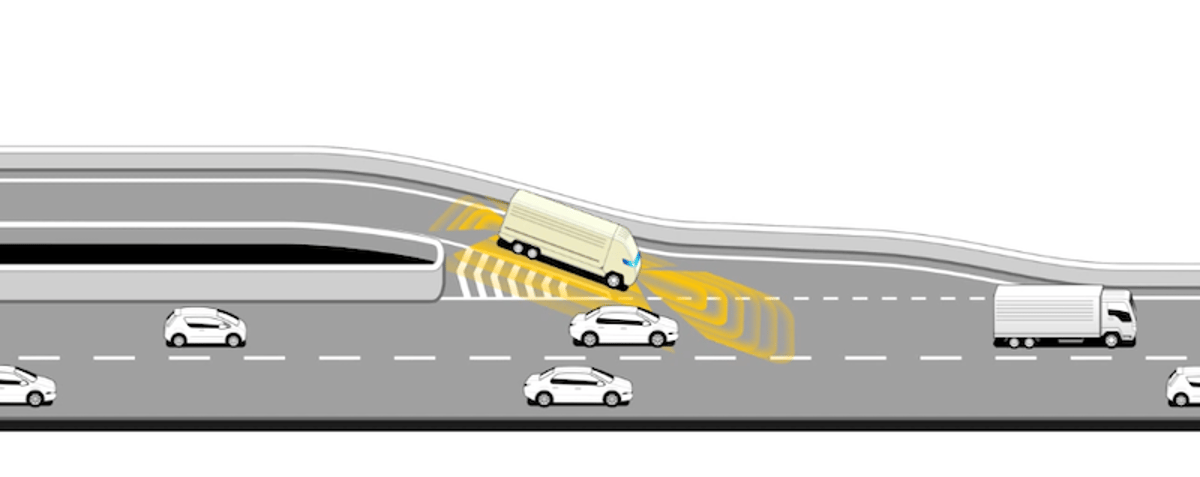
Mitsubishi Heavy Industries to Test Autonomous Vehicle Ramp-Merging System on Tokyo Expressway
•March 5, 2026
0
Why It Matters
Infrastructure‑assisted merging could resolve one of autonomous driving’s toughest safety challenges, accelerating commercial AV deployment on congested urban highways. Successful validation positions MHI as a key supplier of road‑side intelligence for next‑generation mobility ecosystems.
Key Takeaways
- •MHI to test ramp‑merging system on Tokyo expressway
- •Trial runs Sep‑Nov 2026 near Yoyogi inbound ramp
- •Infrastructure will transmit traffic data to autonomous vehicles
- •Builds on Shin‑Tomei merging‑support system experience
- •Aims to accelerate infrastructure‑assisted autonomous driving adoption
Pulse Analysis
The difficulty of merging onto high‑speed urban expressways has long been a bottleneck for fully autonomous vehicles, which rely primarily on on‑board sensors. In dense traffic, short merging zones and variable road geometry limit sensor range and decision‑making time, increasing collision risk. By shifting part of the perception workload to the roadside, vehicles can receive precise, low‑latency information about gaps, speed differentials, and lane geometry, enabling smoother, safer integration into traffic streams.
Mitsubishi Heavy Industries’ upcoming trial leverages its legacy in electronic toll collection (ETC) systems, repurposing proven sensing and communication modules to broadcast real‑time merge guidance. The Yoyogi ramp on Route 4 offers a realistic testbed with high traffic volumes, continuous curves, and elevation changes that mimic Tokyo’s broader expressway network. Partnering with the Metropolitan Expressway Company and auto manufacturers, MHI will integrate vehicle‑to‑infrastructure (V2I) messages with existing autonomous driving stacks, assessing latency, reliability, and driver‑experience metrics across a three‑month window.
If successful, the demonstration could catalyze a shift toward hybrid perception models, where infrastructure complements vehicle sensors to achieve higher safety standards. Such a model promises faster regulatory approval for autonomous fleets, reduced reliance on costly sensor suites, and new revenue streams for roadway operators through data services. The broader industry is watching, as similar V2I initiatives gain traction in Europe and North America, suggesting that MHI’s approach may become a template for global deployment of infrastructure‑enabled autonomous mobility.
Mitsubishi Heavy Industries to test autonomous vehicle ramp-merging system on Tokyo expressway
0
Comments
Want to join the conversation?
Loading comments...