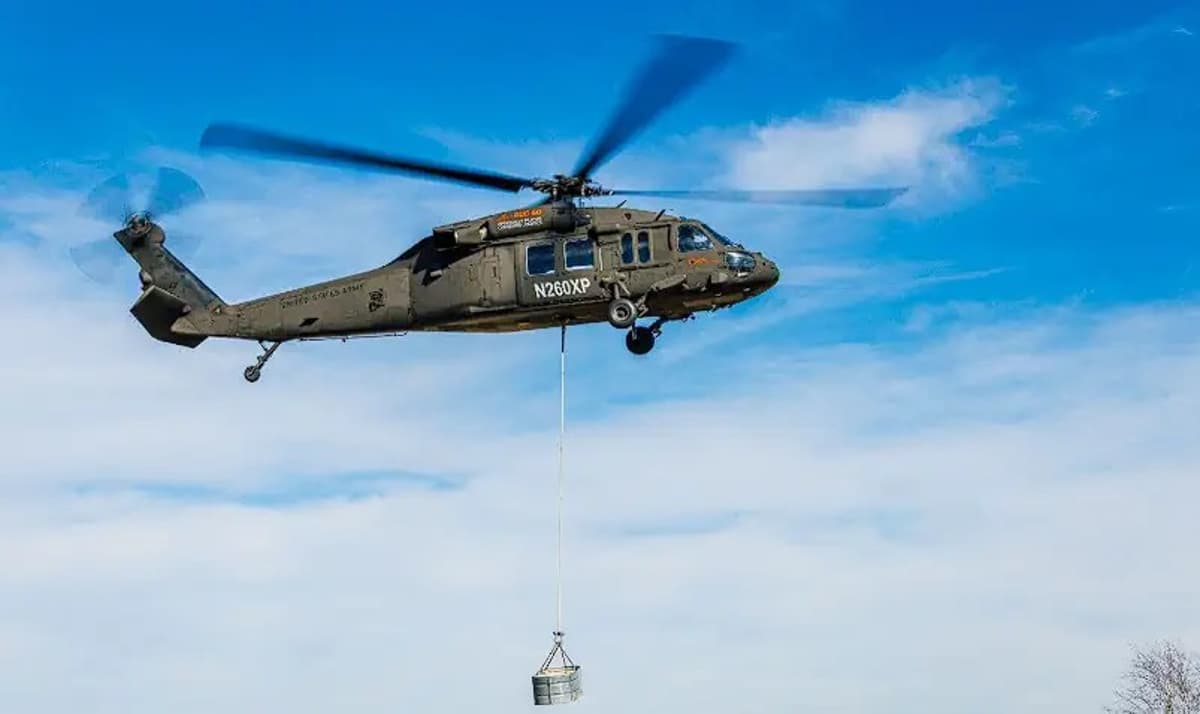
Near Earth Autonomy and Team Fly Uncrewed Logistics Black Hawks
•March 4, 2026
0

Why It Matters
The RUC‑60 promises high‑capacity, round‑the‑clock logistics without risking pilots, reshaping military sustainment in contested airspace and creating a certified dual‑use unmanned rotorcraft pathway.
Key Takeaways
- •RUC‑60 converts surplus UH‑60L Black Hawks to uncrewed
- •Captain architecture provides safety‑critical, end‑to‑end autonomy
- •Honeywell, Moog, XP Services supply certified avionics and autopilot
- •First fully automated Black Hawk flight completed summer 2024
- •Goal: operational testing through 2026 for contested logistics
Pulse Analysis
The push toward autonomous logistics reflects a broader shift in modern warfare, where contested airspace forces commanders to disperse supply lines and minimize human exposure. Converting existing UH‑60L Black Hawks into RUC‑60 platforms leverages a proven airframe while adding a high‑tempo, uncrewed capability that can operate around the clock. This approach reduces acquisition risk and accelerates fielding, offering the Department of Defense a scalable solution that aligns with distributed operations concepts and the need for resilient sustainment.
Technically, Near Earth’s Captain architecture ties together flight‑computing, perception sensors, and a certified autopilot to meet rigorous aerospace standards. Partnerships with Honeywell’s Anthem avionics suite and Moog’s Genesys GRC‑4000 autopilot have already earned FAA TSO certification, demonstrating that the system can coexist with civilian air traffic management. The modular, safety‑critical design enables rapid integration across multiple helicopter platforms, paving the way for both defense and commercial certifications. This dual‑use potential expands market opportunities beyond the military, appealing to operators seeking certified autonomous rotorcraft for cargo, emergency response, or offshore logistics.
Strategically, the RUC‑60 could redefine the logistics chain by eliminating the pilot bottleneck and allowing missions in high‑threat environments that would be prohibitive for crewed aircraft. By delivering comparable payloads to traditional Black Hawks while removing human risk, the system supports higher operational tempos and more flexible resupply routes. As the platform moves into testing through 2026, its success may spur a new generation of retrofitted, certifiable unmanned helicopters, influencing procurement strategies and accelerating the broader adoption of autonomous aerial logistics across both defense and commercial sectors.
Near Earth Autonomy and Team Fly Uncrewed Logistics Black Hawks
0
Comments
Want to join the conversation?
Loading comments...