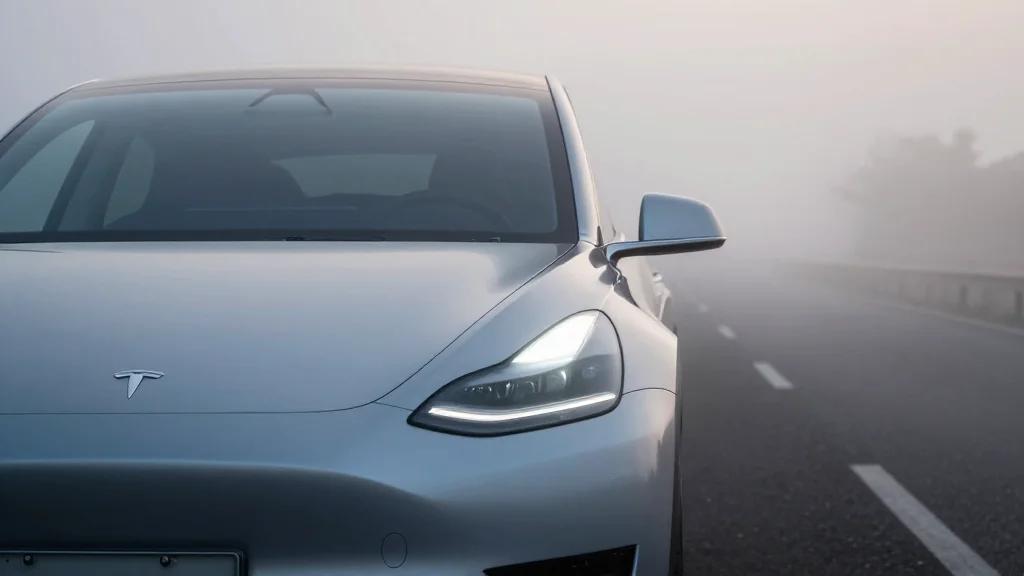
NHTSA Escalates Probe of Tesla's Full Self-Driving System Amid Visibility Concerns

Why It Matters
Regulatory scrutiny of Tesla's FSD system is a litmus test for the United States' ability to supervise a rapidly evolving autonomous technology that blurs the line between driver assistance and full autonomy. The probe forces policymakers to confront whether existing safety frameworks, designed for hardware‑centric systems, can accommodate continuous software updates and massive data streams. A decisive regulatory outcome will either validate Tesla's model—potentially accelerating industry‑wide adoption of over‑the‑air updates—or compel a shift toward more conservative, hardware‑heavy designs that could slow the rollout of autonomous features across the market. Beyond safety, the investigation influences capital allocation in the autonomous vehicle sector. Venture capital and public‑market investors watch regulatory signals closely; a stringent ruling could redirect funding toward firms that prioritize lidar or redundant sensor stacks, while a permissive stance may boost confidence in software‑first players. The balance struck by NHTSA will therefore shape the competitive dynamics, supply chains, and ultimately the timeline for consumer‑ready robotaxis in the United States.
Key Takeaways
- •NHTSA expands probe of Tesla's Full Self-Driving system, focusing on fog, glare and dust conditions.
- •Tesla's FSD is deployed in millions of vehicles, generating unprecedented real‑world data.
- •Recent NHTSA findings indicate that latest software updates have not fully resolved visibility issues.
- •Industry incidents – Baidu's Apollo Go glitch in Wuhan and Waymo outages in San Francisco – highlight broader sensor challenges.
- •Upcoming NHTSA technical hearings will require Tesla to present performance data, setting a precedent for U.S. autonomous vehicle regulation.
Pulse Analysis
The NHTSA investigation marks the first time a U.S. regulator has singled out a single consumer‑facing driver‑assist system for a deep dive into low‑visibility performance. Historically, safety agencies have evaluated autonomous technologies through broader fleet‑level statistics, but Tesla's massive deployment forces a more granular approach. This shift signals that regulators may soon demand real‑time transparency from software‑centric automakers, a requirement that could erode the competitive advantage Tesla has built on rapid iteration.
From a market perspective, the probe introduces a new risk vector for investors. Tesla's valuation has long hinged on its ability to monetize FSD as a subscription service; any regulatory mandate that curtails feature availability or forces costly hardware retrofits could compress that revenue stream. Meanwhile, competitors that have invested heavily in lidar and redundant sensor architectures—such as Waymo and Cruise—may find their longer development cycles vindicated if regulators favor safety over speed. The outcome could recalibrate the industry’s technology roadmap, nudging it toward a hybrid model that blends Tesla's data‑driven software updates with the hardware redundancy traditionally championed by legacy automakers.
Strategically, the probe also underscores a geopolitical dimension. While U.S. regulators tighten oversight, Chinese firms like Baidu continue to expand robotaxi fleets despite occasional glitches, and European regulators are drafting separate standards. The divergent regulatory environments could fragment the global autonomous market, creating pockets where different technology stacks dominate. For Tesla, navigating this patchwork will require not only technical fixes but also a diplomatic playbook to align its global rollout with varying safety expectations. The next six months will reveal whether the company can maintain its lead without compromising the regulatory goodwill essential for scaling autonomous mobility nationwide.
NHTSA Escalates Probe of Tesla's Full Self-Driving System Amid Visibility Concerns
Comments
Want to join the conversation?
Loading comments...