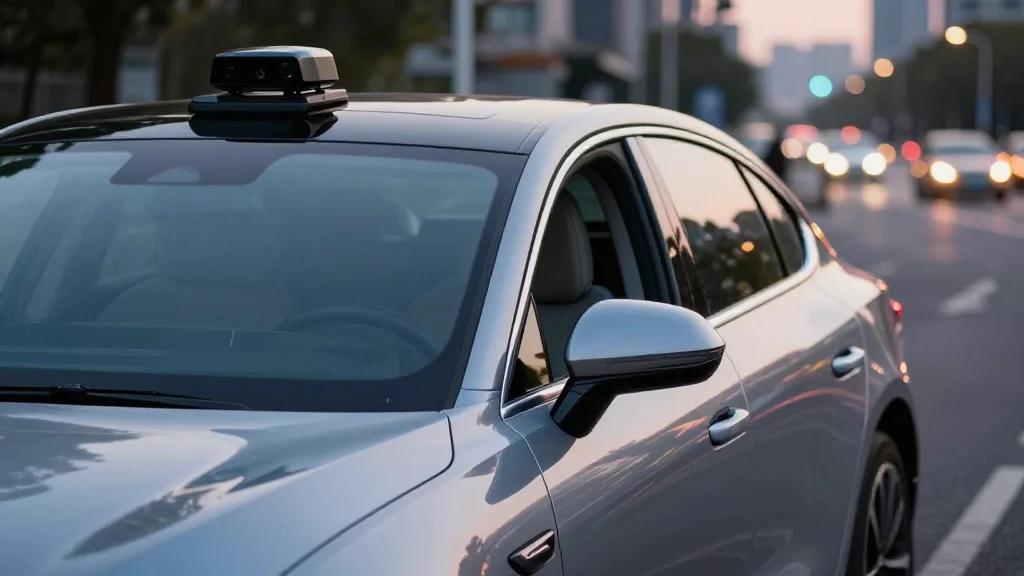
NHTSA Launches Probe Into Uber‑Partner Avride After 16 Robotaxi Crashes

Companies Mentioned
Why It Matters
The NHTSA investigation into Avride spotlights the regulatory challenges facing the burgeoning robotaxi sector. As companies race to commercialize autonomous rides, each high‑profile incident amplifies public scrutiny and can trigger tighter safety standards that affect the entire industry. For Uber, the probe tests the viability of its strategic bet on autonomous mobility and could influence future partnership models. Beyond Uber and Avride, the case may set precedents for how safety monitors are expected to intervene during autonomous operation. If regulators conclude that human oversight was insufficient, new mandates could require more robust driver‑assist systems or limit the conditions under which robotaxis can operate without active human control. Such outcomes would reshape deployment timelines and capital allocation across the autonomous‑vehicle ecosystem.
Key Takeaways
- •NHTSA opened an investigation after 16 crashes involving Avride robotaxis, one causing a minor injury.
- •All incidents occurred with a safety monitor in the driver’s seat; most were in Dallas, Texas.
- •Avride and Uber pledged up to $375 million in strategic investments to expand robotaxi services.
- •The regulator cited deficiencies in lane‑changing, response to stopped vehicles, and obstacle avoidance.
- •Avride claims incident frequency per mile has declined despite growing operational mileage.
Pulse Analysis
The Avride probe arrives at a critical juncture for autonomous‑vehicle commercialization. Historically, safety setbacks have prompted industry-wide recalibrations—Google’s Waymo, for example, tightened its testing protocols after early 2020 incidents. Avride’s partnership with Uber represents a high‑stakes attempt to leapfrog competitors by leveraging Uber’s ride‑hailing network, but the current scrutiny could force a strategic pause.
If NHTSA mandates substantive software revisions or stricter human‑monitor requirements, Avride may need to divert a portion of its $375 million investment toward compliance rather than expansion. That reallocation could delay the company’s rollout plans in other markets, giving rivals like Waymo and Cruise a competitive edge. Moreover, Uber’s brand equity is tied to safety perceptions; a prolonged investigation could pressure the ride‑hailing giant to either double‑down on its autonomous ambitions with additional oversight or retreat to more conventional models.
Looking ahead, the investigation underscores a broader market reality: scaling robotaxi services will likely depend on a hybrid safety model that blends advanced perception algorithms with reliable human oversight. Companies that can demonstrate measurable reductions in incident rates per mile—backed by transparent data—will be better positioned to secure regulator approval and public trust. Avride’s next moves, particularly its response to NHTSA’s findings, will serve as a bellwether for how quickly the industry can move from pilot programs to widespread, commercially viable autonomous mobility.
NHTSA Launches Probe into Uber‑Partner Avride After 16 Robotaxi Crashes
Comments
Want to join the conversation?
Loading comments...