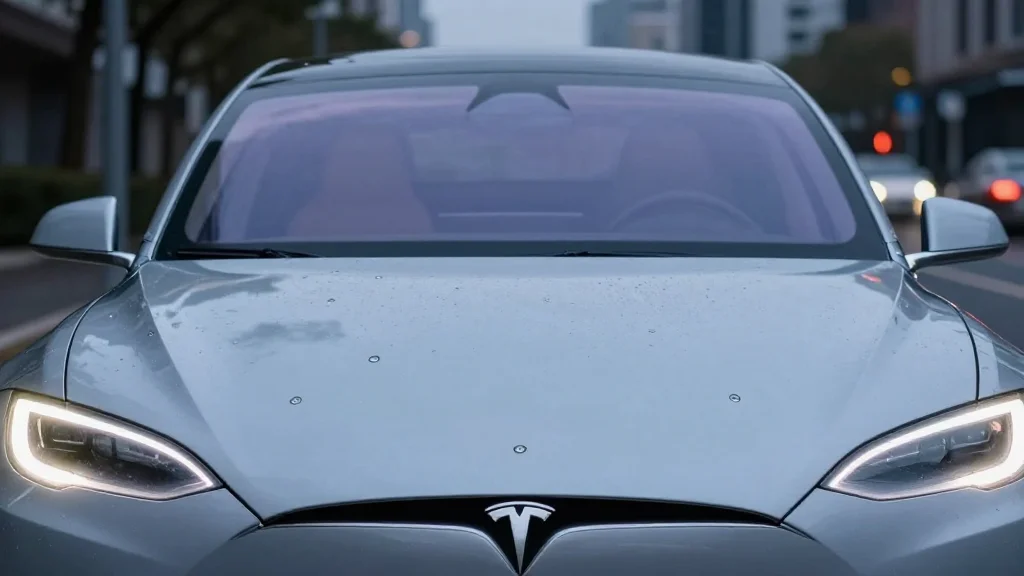
NHTSA Probes 3.2 Million Teslas over Camera Blind‑spot Claims After Musk Touts LiDAR Removal

Companies Mentioned
Why It Matters
The probe tests the viability of a camera‑only autonomy strategy at a scale that could affect millions of drivers. A recall would signal that regulators consider sensor redundancy essential for safety, potentially reshaping design priorities for all autonomous‑driving programs. Moreover, the outcome could influence investor confidence in Tesla’s autonomous‑driving ambitions, as the company’s valuation heavily depends on the perceived superiority of its FSD technology. Beyond Tesla, the case may set a precedent for how U.S. regulators assess emerging sensor configurations. If NHTSA concludes that vision‑only systems are insufficient under certain conditions, manufacturers may be compelled to adopt a hybrid sensor stack—combining cameras, radar, and LiDAR—to meet future safety standards, accelerating industry convergence on more robust autonomy architectures.
Key Takeaways
- •NHTSA opened a probe into 3.2 million Teslas equipped with Full Self‑Driving.
- •Investigation stems from nine incidents, including a fatal crash, where cameras may have failed in low‑visibility conditions.
- •Elon Musk recently claimed Tesla removed LiDAR, emphasizing a vision‑only approach.
- •A confirmed failure could trigger the largest recall in U.S. automotive history.
- •Regulatory outcome may force Tesla and rivals to adopt multi‑modal sensor suites.
Pulse Analysis
Tesla’s bet on a vision‑only stack has always been a double‑edged sword. On one hand, it simplifies hardware, reduces cost, and aligns with Musk’s narrative of software‑driven progress. On the other, it places the entire safety burden on cameras, which are inherently vulnerable to glare, dust and weather. The NHTSA investigation is the first large‑scale regulatory test of that philosophy. Historically, automakers have relied on radar and, more recently, LiDAR to provide redundancy; Tesla’s departure from that norm has been both a marketing differentiator and a risk factor.
If the agency finds that the camera suite cannot meet minimum safety thresholds, the fallout could be swift. A recall would not only impose direct costs—parts, labor, logistics—but also erode consumer trust in a brand that markets its autonomy as a premium feature. Competitors such as Waymo, Cruise, and traditional OEMs that already employ multi‑sensor arrays would gain a comparative advantage, reinforcing the industry trend toward sensor fusion.
Strategically, Tesla may respond by re‑introducing radar or a limited LiDAR capability, or by accelerating software upgrades that improve low‑light perception. Either path would signal a shift away from the pure‑vision narrative that has defined its autonomous‑driving brand. Investors will be watching the timeline of NHTSA’s findings closely; a favorable ruling could validate Tesla’s approach and sustain its market premium, while a negative outcome could trigger a re‑valuation of its autonomous‑driving roadmap and broader stock performance.
NHTSA probes 3.2 million Teslas over camera blind‑spot claims after Musk touts LiDAR removal
Comments
Want to join the conversation?
Loading comments...